

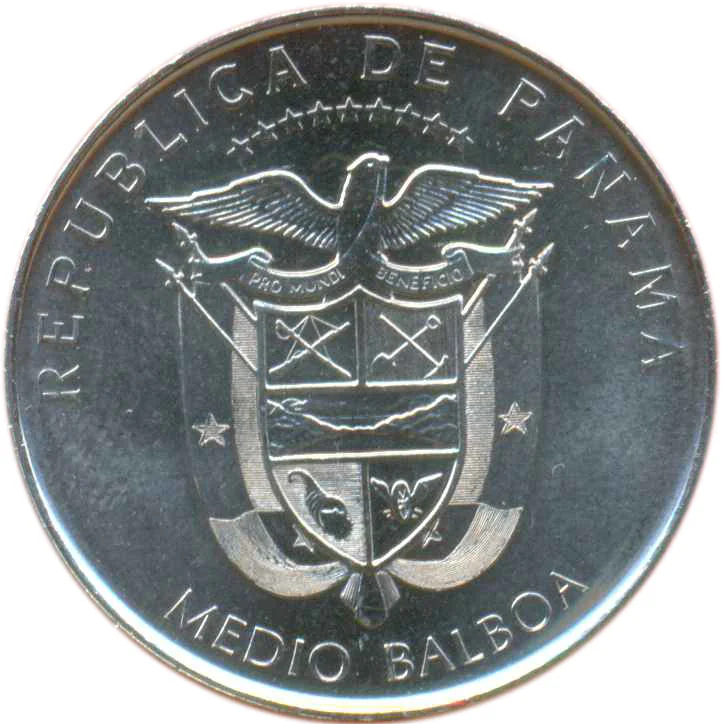
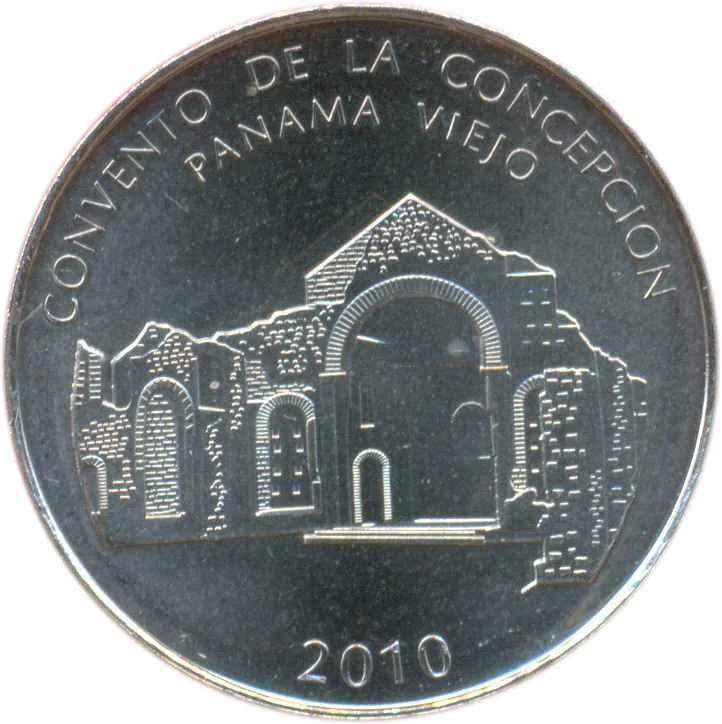
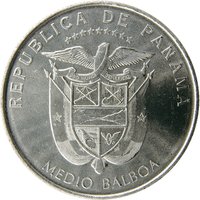
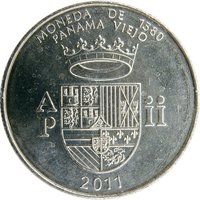
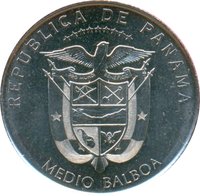
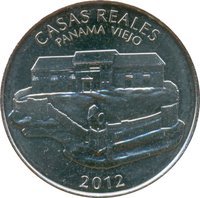
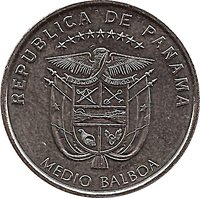
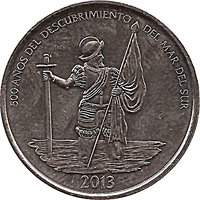
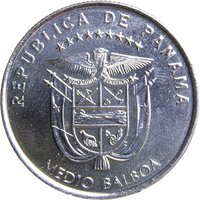
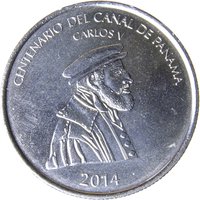
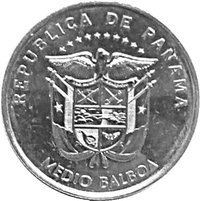
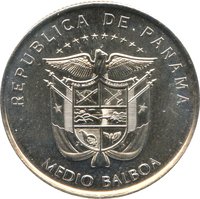
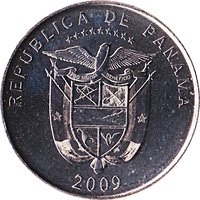
Obverse
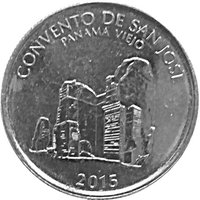
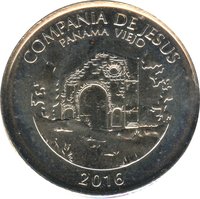
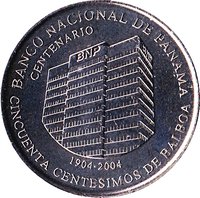
Reverse
Edge
Reeded
Categories
| Building> Religious building |
| Symbols> Coat of Arms |
Mints
| Name | Mark |
|---|---|
| Royal Canadian Mint of Winnipeg | — |
Mintings
| Year | Mint Mark | Mintage | Quality | Collection |
|---|---|---|---|---|
| 2010 | — | 3,000,000 |
Historical background
Panama’s currency situation in 2010 was defined by its unique and long-standing dual-currency system, anchored by the US dollar. Since 1904, following independence from Colombia, the US dollar has served as Panama’s official legal tender. While the country also mints its own coinage, the Balboa, which is pegged at parity with the dollar (1:1), it exists only in coin form. All paper currency in circulation is the US dollar, and the economy is fully dollarized. This framework provided notable stability in 2010, insulating Panama from the direct currency volatility and inflationary pressures affecting many of its regional neighbors.
The year 2010 fell within a period of robust economic growth for Panama, driven largely by the expansion of the Panama Canal and a booming services sector. This growth, however, presented its own challenges within the dollarized context. As a non-sovereign currency user, Panama’s central bank (Banco Nacional de Panamá) cannot conduct independent monetary policy, meaning it cannot print money or set interest rates to manage the economy. Consequently, the government relied heavily on fiscal policy and regulation to manage liquidity and credit growth, which was accelerating rapidly due to a construction boom and easy access to dollar-denominated credit.
Globally, 2010 was a period of monetary easing in the United States following the 2008-09 financial crisis, with the US Federal Reserve keeping interest rates near zero. For Panama, this meant access to cheap dollar liquidity, which further fueled domestic credit and economic overheating risks. While the dollarization system provided credibility and low inflation, it also meant Panama had to absorb the US monetary policy stance regardless of its own cyclical needs. Thus, the currency situation in 2010 was one of inherent stability but also of limited policy tools, as the country navigated strong economic growth within the constraints of its adopted currency regime.
The year 2010 fell within a period of robust economic growth for Panama, driven largely by the expansion of the Panama Canal and a booming services sector. This growth, however, presented its own challenges within the dollarized context. As a non-sovereign currency user, Panama’s central bank (Banco Nacional de Panamá) cannot conduct independent monetary policy, meaning it cannot print money or set interest rates to manage the economy. Consequently, the government relied heavily on fiscal policy and regulation to manage liquidity and credit growth, which was accelerating rapidly due to a construction boom and easy access to dollar-denominated credit.
Globally, 2010 was a period of monetary easing in the United States following the 2008-09 financial crisis, with the US Federal Reserve keeping interest rates near zero. For Panama, this meant access to cheap dollar liquidity, which further fueled domestic credit and economic overheating risks. While the dollarization system provided credibility and low inflation, it also meant Panama had to absorb the US monetary policy stance regardless of its own cyclical needs. Thus, the currency situation in 2010 was one of inherent stability but also of limited policy tools, as the country navigated strong economic growth within the constraints of its adopted currency regime.
Series: Panama Viejo
🌱 Fairly Common