

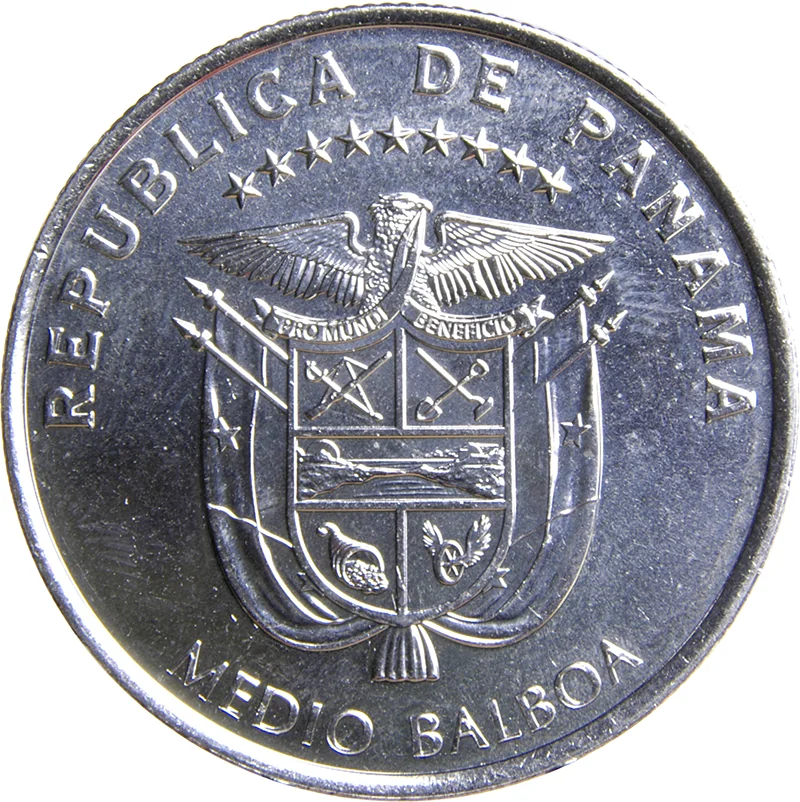
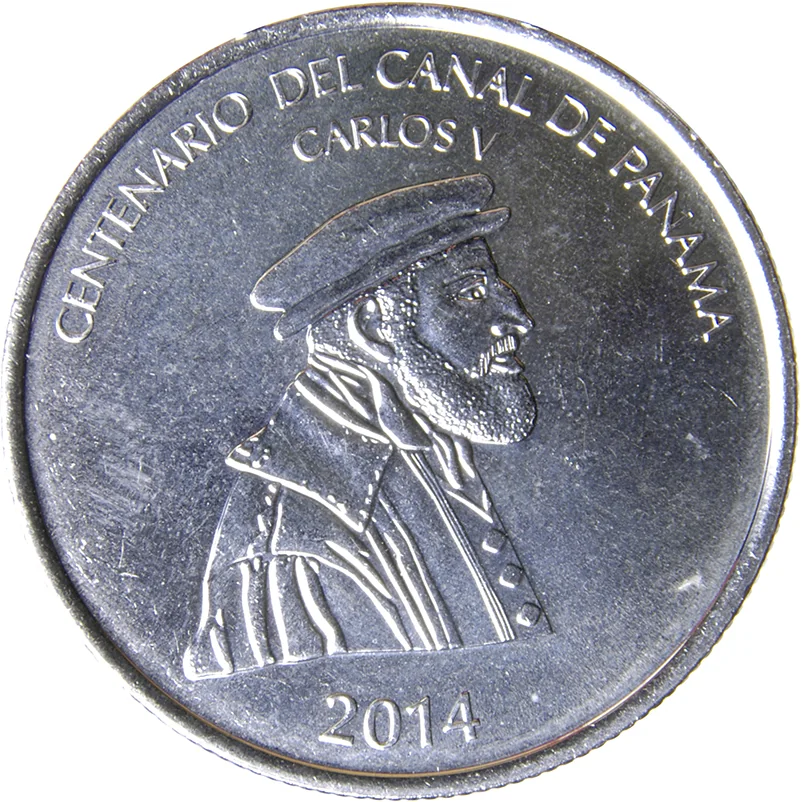
½ balboa (Panama Canal) – Panama
Add to wishlist
Circulating commemorative coins
Commemoration: 100th Anniversary of the Panama Canal
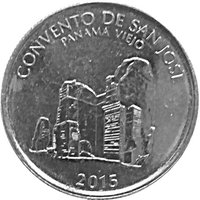
Series: Panama Viejo
Panama
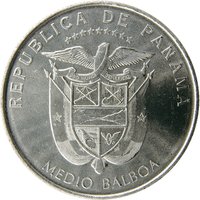
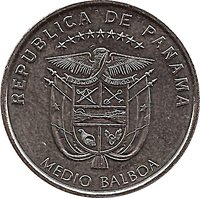
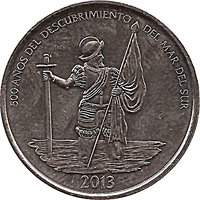
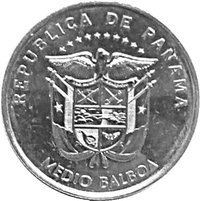
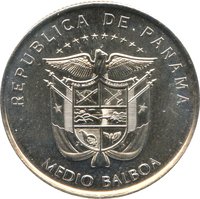
Obverse
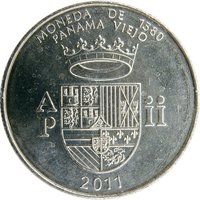
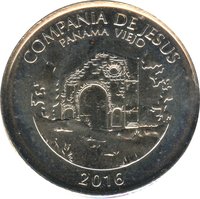
Reverse
Edge
Reeded
Categories
| Symbols> Coat of Arms |
| Person> Monarch |
Mints
| Name | Mark |
|---|---|
| Royal Canadian Mint of Winnipeg | — |
Mintings
| Year | Mint Mark | Mintage | Quality | Collection |
|---|---|---|---|---|
| 2014 | — | 3,000,000 |
Historical background
In 2014, Panama's currency situation was defined by its unique and long-standing monetary framework, which remained a cornerstone of its economic stability. The country is officially "dollarized," having used the US dollar as its legal tender since 1904 alongside the Panamanian balboa, a local currency that exists only in coin form and is pegged at a 1:1 ratio with the dollar. This system, established by the Constitution, meant Panama did not have a central bank to issue paper currency or conduct independent monetary policy, effectively outsourcing its monetary stability to the United States Federal Reserve.
The year saw this framework continue to support robust economic growth, with Panama's GDP expanding by over 6%. The full adoption of the US dollar provided low inflation, reduced exchange rate risk, and facilitated international trade and investment, which were vital for major projects like the ongoing Panama Canal expansion. However, this system also meant Panama had no ability to devalue its currency to boost competitiveness and was vulnerable to shifts in US monetary policy. As the US Federal Reserve began tapering its quantitative easing program in 2013-2014, concerns arose about potential capital outflows and rising interest rates impacting Panama's credit-driven economy.
Overall, 2014 highlighted the dual nature of Panama's dollarization: it was a key pillar of macroeconomic stability and confidence, insulating the country from the currency volatility experienced by some regional neighbors, but it also represented a structural rigidity. The government's main economic tools were constrained to fiscal policy and banking regulation, with the Superintendency of Banks playing a crucial role in overseeing a large and internationally integrated financial center that operated seamlessly within the dollarized system.
The year saw this framework continue to support robust economic growth, with Panama's GDP expanding by over 6%. The full adoption of the US dollar provided low inflation, reduced exchange rate risk, and facilitated international trade and investment, which were vital for major projects like the ongoing Panama Canal expansion. However, this system also meant Panama had no ability to devalue its currency to boost competitiveness and was vulnerable to shifts in US monetary policy. As the US Federal Reserve began tapering its quantitative easing program in 2013-2014, concerns arose about potential capital outflows and rising interest rates impacting Panama's credit-driven economy.
Overall, 2014 highlighted the dual nature of Panama's dollarization: it was a key pillar of macroeconomic stability and confidence, insulating the country from the currency volatility experienced by some regional neighbors, but it also represented a structural rigidity. The government's main economic tools were constrained to fiscal policy and banking regulation, with the Superintendency of Banks playing a crucial role in overseeing a large and internationally integrated financial center that operated seamlessly within the dollarized system.
Series: Panama Viejo
🌱 Common