

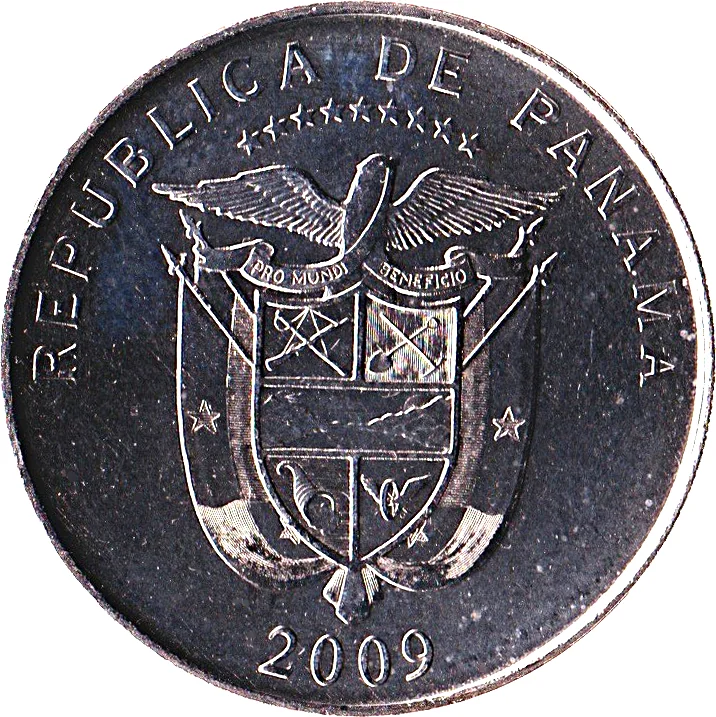
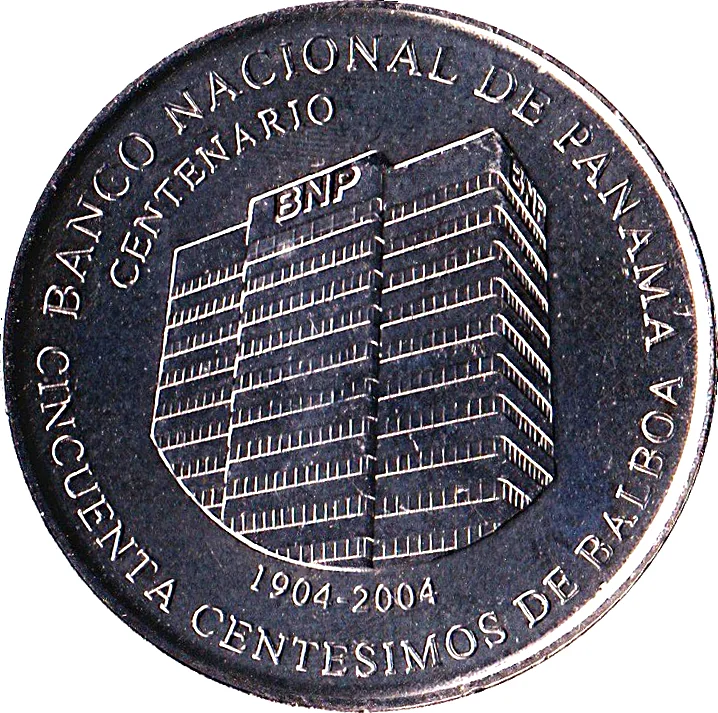
50 centesimos (National Bank of Panama) – Panama
Add to wishlist
Circulating commemorative coins
Commemoration: Centenary of the National Bank of Panama
Panama
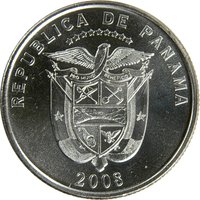
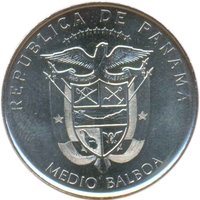
Obverse
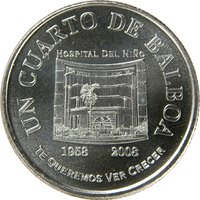
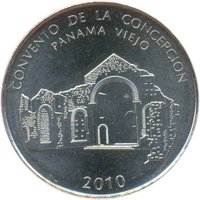
Reverse
Edge
Reeded
Categories
| Building |
| Symbols> Coat of Arms |
Mints
| Name | Mark |
|---|---|
| Royal Canadian Mint of Winnipeg | — |
Mintings
| Year | Mint Mark | Mintage | Quality | Collection |
|---|---|---|---|---|
| 2009 | — | 2,000,000 | ||
| 2009 | — | 2,000 | Proof |
Historical background
Panama's currency situation in 2009 was unique and stable, largely insulated from the regional financial turbulence due to its long-standing dollarized economy. Since 1904, the country has used the US dollar as its official legal tender, a system known as full dollarization. While Panama mints its own coins (the Balboa, pegged 1:1 to the dollar), all paper currency in circulation is the US dollar. This framework provided a critical anchor in 2009, preventing the currency devaluations and exchange rate volatility that affected many neighboring countries during the global financial crisis. Panama's financial system remained liquid, and there was no domestic currency to defend, which eliminated a significant source of potential economic vulnerability.
However, the nation was not immune to the crisis's effects. The global economic downturn impacted Panama through trade and finance channels, leading to a slowdown in its previously booming economy, particularly in the key Colon Free Zone and the Panama Canal. Crucially, the dollarization system meant Panama had no independent monetary policy; it could not adjust interest rates or print money to stimulate the economy, as these tools are controlled by the US Federal Reserve. Fiscal policy became the sole instrument for domestic response, leading the government to implement counter-cyclical spending on infrastructure projects, most notably the ambitious Panama Canal expansion, to boost employment and demand.
Thus, the 2009 currency "situation" was characterized by structural stability but policy constraint. The dollarization provided confidence and prevented a banking crisis, but it also meant Panama had to navigate the global recession without the traditional tools of a central bank. The government's reliance on fiscal stimulus, funded by access to international bond markets, proved successful in cushioning the blow. By the end of 2009, Panama's economy was already showing signs of a strong recovery, outperforming most of Latin America and validating the resilience of its dollarized regime even during a severe global financial shock.
However, the nation was not immune to the crisis's effects. The global economic downturn impacted Panama through trade and finance channels, leading to a slowdown in its previously booming economy, particularly in the key Colon Free Zone and the Panama Canal. Crucially, the dollarization system meant Panama had no independent monetary policy; it could not adjust interest rates or print money to stimulate the economy, as these tools are controlled by the US Federal Reserve. Fiscal policy became the sole instrument for domestic response, leading the government to implement counter-cyclical spending on infrastructure projects, most notably the ambitious Panama Canal expansion, to boost employment and demand.
Thus, the 2009 currency "situation" was characterized by structural stability but policy constraint. The dollarization provided confidence and prevented a banking crisis, but it also meant Panama had to navigate the global recession without the traditional tools of a central bank. The government's reliance on fiscal stimulus, funded by access to international bond markets, proved successful in cushioning the blow. By the end of 2009, Panama's economy was already showing signs of a strong recovery, outperforming most of Latin America and validating the resilience of its dollarized regime even during a severe global financial shock.
🌱 Common