

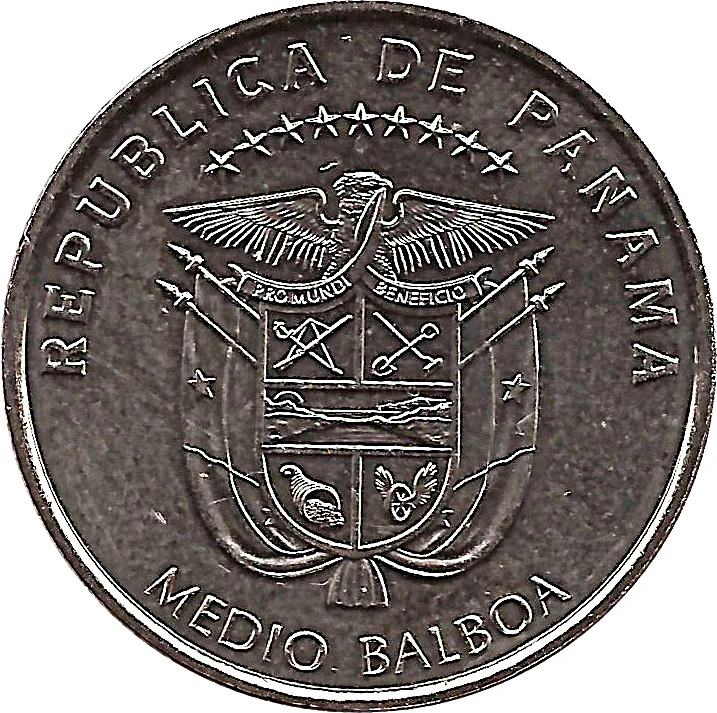
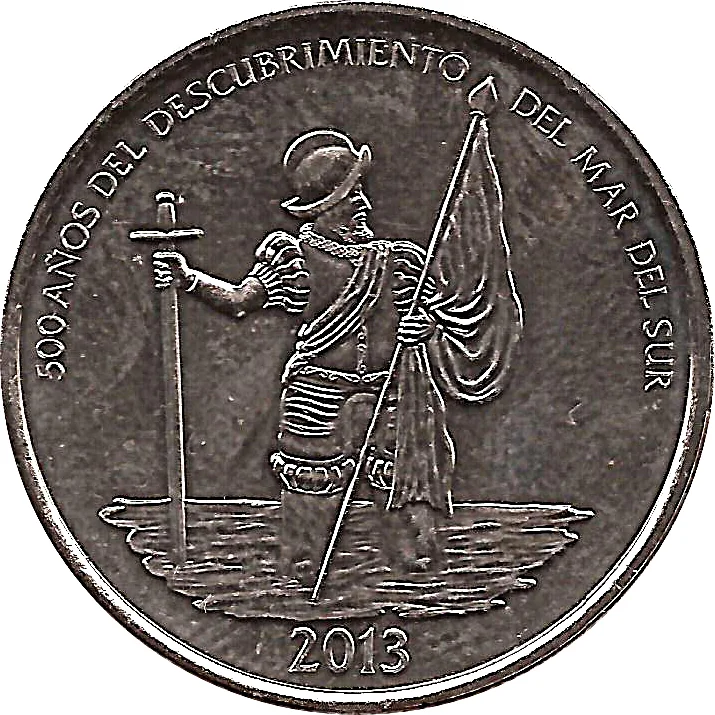
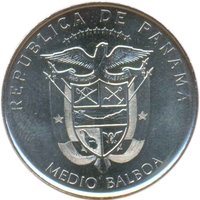
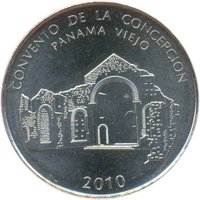
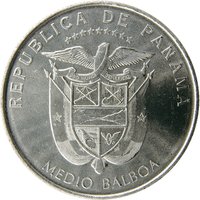
½ balboa (Discovery of the Pacific Ocean) – Panama
Add to wishlist
Circulating commemorative coins
Commemoration: 500th Anniversary of the Discovery of the Pacific Ocean
Series: Panama Viejo
Panama
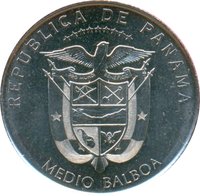
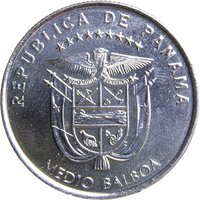
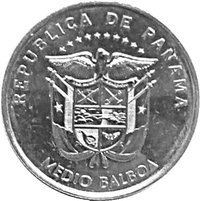
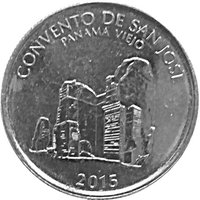
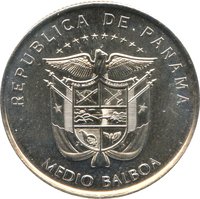
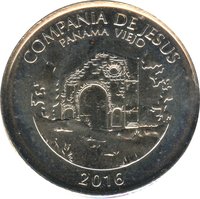
Obverse
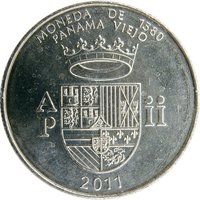
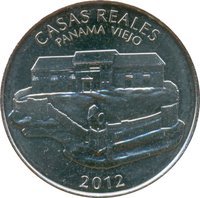
Reverse
Edge
Reeded
Mints
| Name | Mark |
|---|---|
| Royal Canadian Mint of Winnipeg | — |
Mintings
| Year | Mint Mark | Mintage | Quality | Collection |
|---|---|---|---|---|
| 2013 | — | 3,000,000 |
Historical background
Panama's currency situation in 2013 was defined by its unique and long-standing monetary framework, which remained a cornerstone of its economic stability. Since 1904, the country has used the US dollar as its official legal tender, a system known as "full dollarization." This means the US dollar is used for all daily transactions, contracts, and financial accounts. Consequently, Panama does not have a central bank to issue a domestic currency or conduct independent monetary policy. Alongside the dollar, Panama mints its own fractional currency, the Balboa, which exists only in coin form and is pegged at a strict 1:1 parity with the US dollar.
The primary benefit of this system, evident in 2013, was macroeconomic stability. Dollarization effectively imported the low inflation and credibility of the US Federal Reserve, shielding Panama from the currency volatility and devaluation risks faced by many of its regional neighbors. This stability, combined with the country's strategic location and the expanded Panama Canal, supported robust economic growth, which was among the highest in Latin America that year. The framework also facilitated international trade and investment, as financial transactions required no currency conversion.
However, this arrangement also presented significant constraints. Panama relinquished control over its monetary policy tools, meaning it could not adjust interest rates or influence the money supply to manage domestic economic cycles. In 2013, this meant the country had to absorb the effects of the US Federal Reserve's ultra-loose monetary policy (quantitative easing), which contributed to concerns about potential asset bubbles and high levels of private credit growth within Panama. Furthermore, the country could not devalue its currency to regain competitiveness, placing the full burden of economic adjustment on fiscal policy and internal prices and wages. Thus, in 2013, Panama's currency situation was a double-edged sword: a key pillar of stability and confidence, but also a source of structural policy limitations.
The primary benefit of this system, evident in 2013, was macroeconomic stability. Dollarization effectively imported the low inflation and credibility of the US Federal Reserve, shielding Panama from the currency volatility and devaluation risks faced by many of its regional neighbors. This stability, combined with the country's strategic location and the expanded Panama Canal, supported robust economic growth, which was among the highest in Latin America that year. The framework also facilitated international trade and investment, as financial transactions required no currency conversion.
However, this arrangement also presented significant constraints. Panama relinquished control over its monetary policy tools, meaning it could not adjust interest rates or influence the money supply to manage domestic economic cycles. In 2013, this meant the country had to absorb the effects of the US Federal Reserve's ultra-loose monetary policy (quantitative easing), which contributed to concerns about potential asset bubbles and high levels of private credit growth within Panama. Furthermore, the country could not devalue its currency to regain competitiveness, placing the full burden of economic adjustment on fiscal policy and internal prices and wages. Thus, in 2013, Panama's currency situation was a double-edged sword: a key pillar of stability and confidence, but also a source of structural policy limitations.
Series: Panama Viejo
🌱 Fairly Common