

½ balboa (Panama Viejo) – Panama
Add to wishlist
Circulating commemorative coins
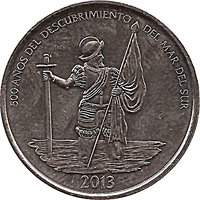
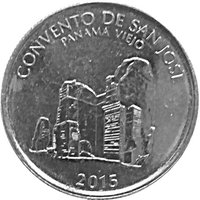
Commemoration: Monumental Historical Set of Panama Viejo / 500 years of Foundation of Panama City
Series: Panama Viejo
Panama

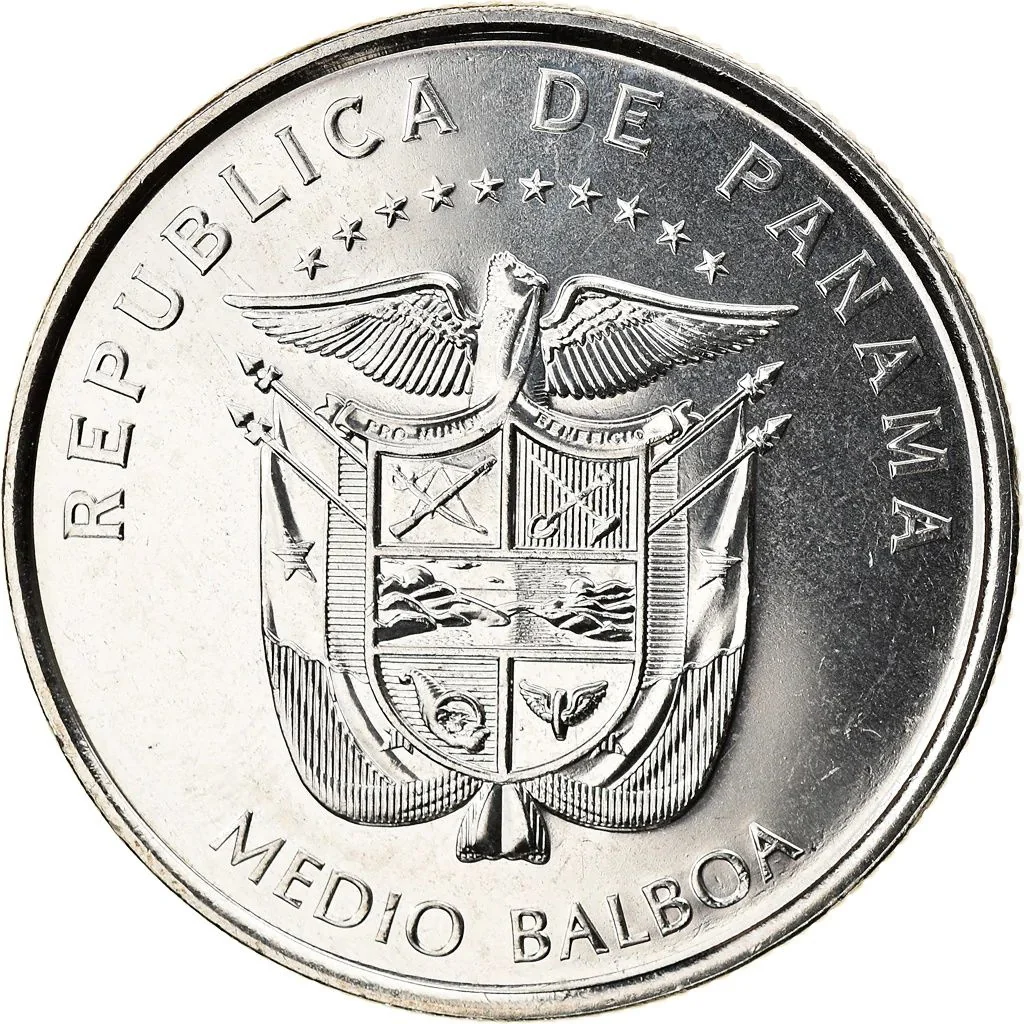
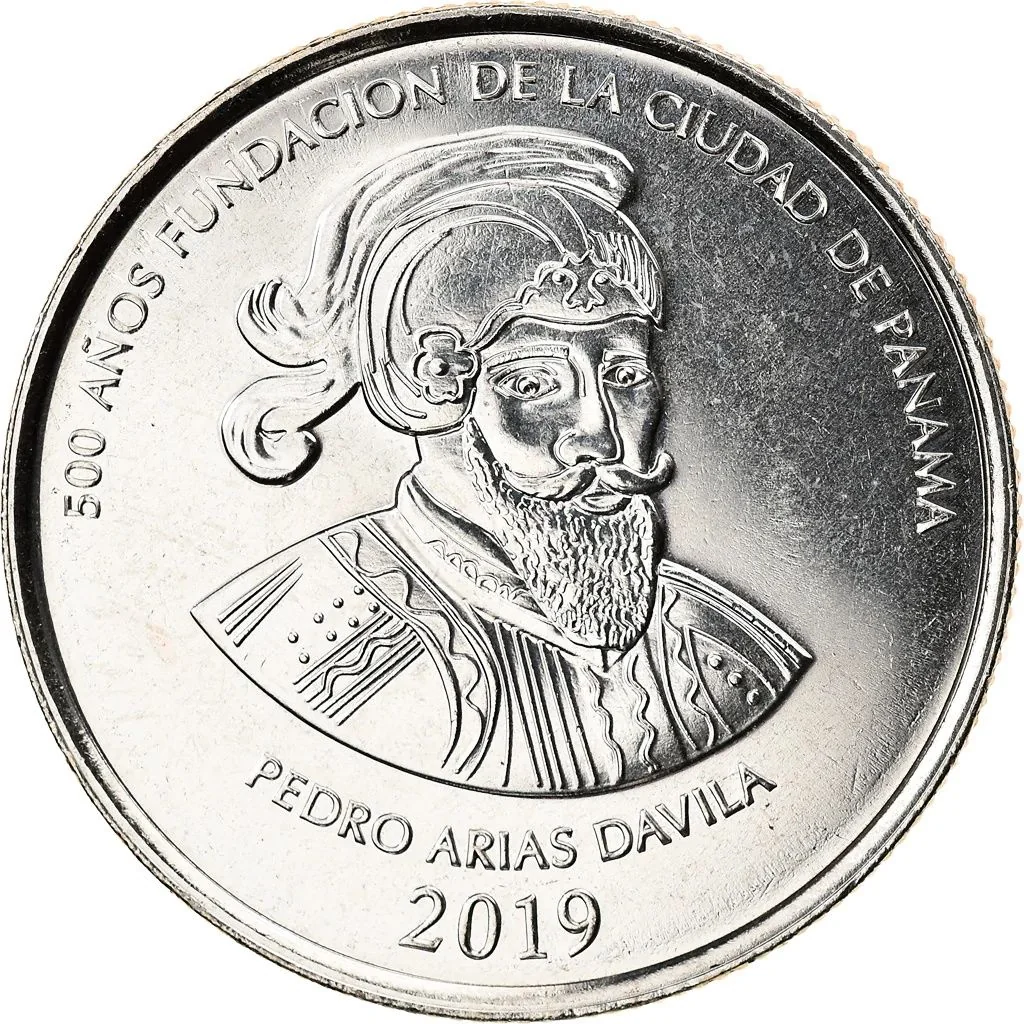
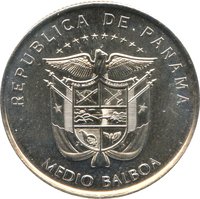
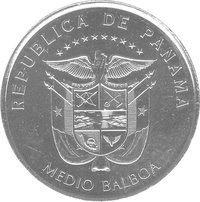
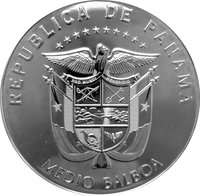
Obverse
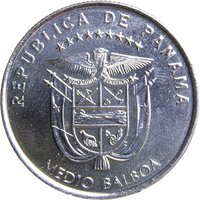
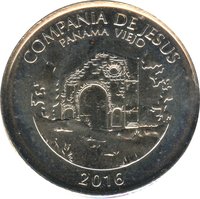
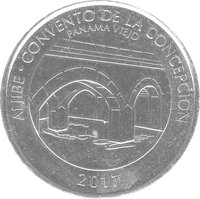
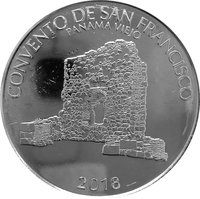
Reverse
Edge
Reeded
Categories
| Symbols> Coat of Arms |
| Person> Explorer |
| Person> Politician |
Mints
| Name | Mark |
|---|---|
| Royal Canadian Mint of Winnipeg | — |
Mintings
| Year | Mint Mark | Mintage | Quality | Collection |
|---|---|---|---|---|
| 2019 | — | — |
Historical background
Panama’s currency situation in 2019 was defined by its unique and long-standing monetary framework, which remained a cornerstone of economic stability. The country is officially "dollarized," using the US dollar as its legal tender since 1904, while also issuing its own fractional currency, the Panamanian balboa, which is pegged at par to the dollar. This system eliminates Panama's independent monetary policy and central bank, effectively outsourcing inflation control to the US Federal Reserve. In 2019, this framework continued to provide low inflation and facilitated international trade, but it also meant Panama had no ability to adjust interest rates or devalue its currency to respond to domestic economic shocks.
Economically, 2019 was a year of moderate growth for Panama, though at a slower pace than the boom years of the previous decade. The dollarized environment contributed to macroeconomic stability, with inflation remaining low at around 1-2%. However, this stability came with inherent constraints. The country's fiscal policy was the primary tool for economic management, and concerns persisted regarding public debt levels, which had risen significantly due to major infrastructure projects like the Metro. The reliance on the US dollar also meant Panama was directly affected by US monetary policy tightening in prior years, potentially increasing borrowing costs.
Looking forward, the key discussions in 2019 were not about abandoning dollarization—which enjoyed broad public and political support—but about ensuring fiscal discipline within its rigid framework. Analysts emphasized that without a central bank to act as a lender of last resort, maintaining strong fiscal buffers and a sound banking sector was crucial. The currency system's success was seen as inextricably linked to responsible governance, as the lack of monetary tools made the economy more vulnerable to fiscal mismanagement and external financial volatility.
Economically, 2019 was a year of moderate growth for Panama, though at a slower pace than the boom years of the previous decade. The dollarized environment contributed to macroeconomic stability, with inflation remaining low at around 1-2%. However, this stability came with inherent constraints. The country's fiscal policy was the primary tool for economic management, and concerns persisted regarding public debt levels, which had risen significantly due to major infrastructure projects like the Metro. The reliance on the US dollar also meant Panama was directly affected by US monetary policy tightening in prior years, potentially increasing borrowing costs.
Looking forward, the key discussions in 2019 were not about abandoning dollarization—which enjoyed broad public and political support—but about ensuring fiscal discipline within its rigid framework. Analysts emphasized that without a central bank to act as a lender of last resort, maintaining strong fiscal buffers and a sound banking sector was crucial. The currency system's success was seen as inextricably linked to responsible governance, as the lack of monetary tools made the economy more vulnerable to fiscal mismanagement and external financial volatility.
Series: Panama Viejo


🌱 Fairly Common