

50 Centavos – Guatemala
Guatemala
Context
Material
References
KM: #Click to copy to clipboard264
Numista: #8775
Value
Exchange value: 0.50 GTQ
Bullion value: $23.83
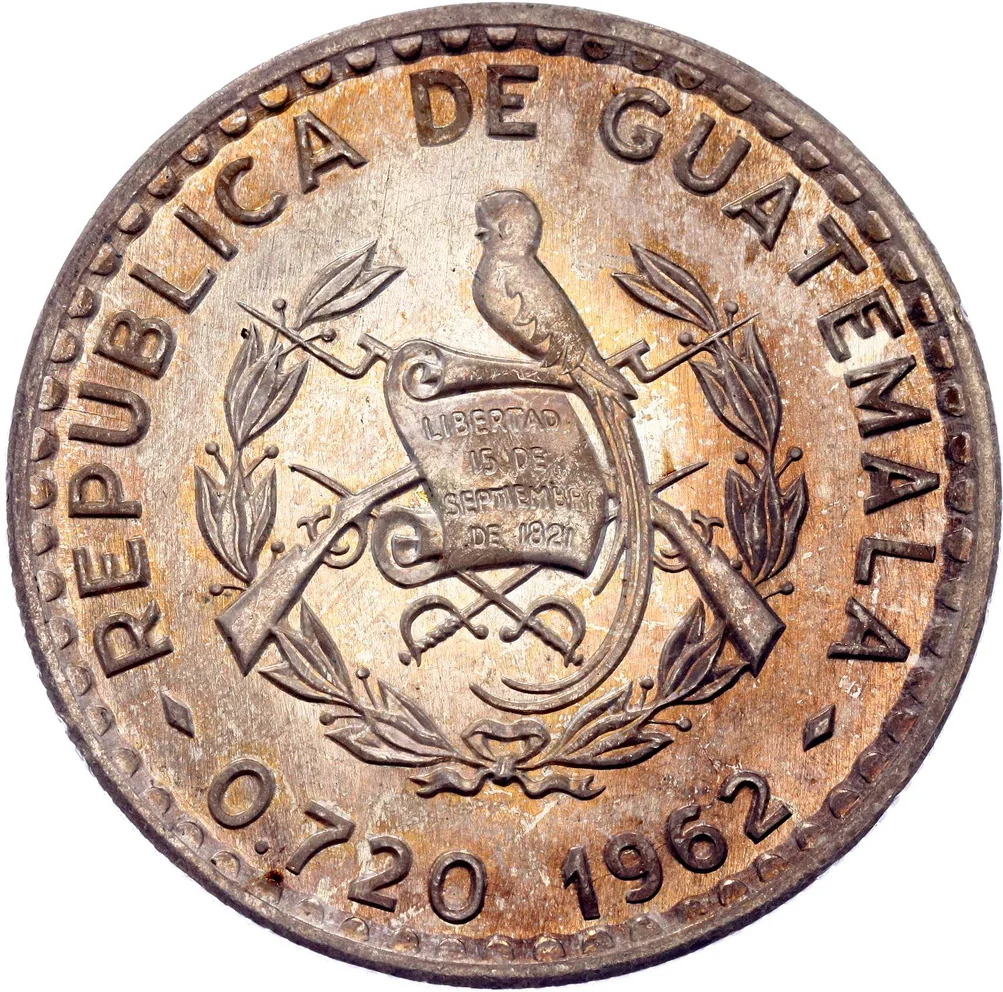
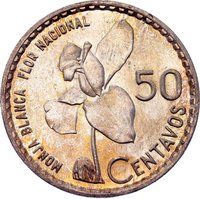
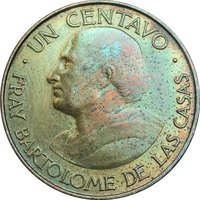
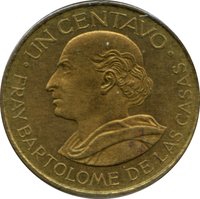
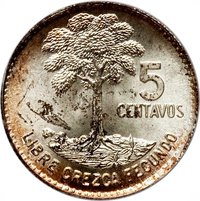
Obverse
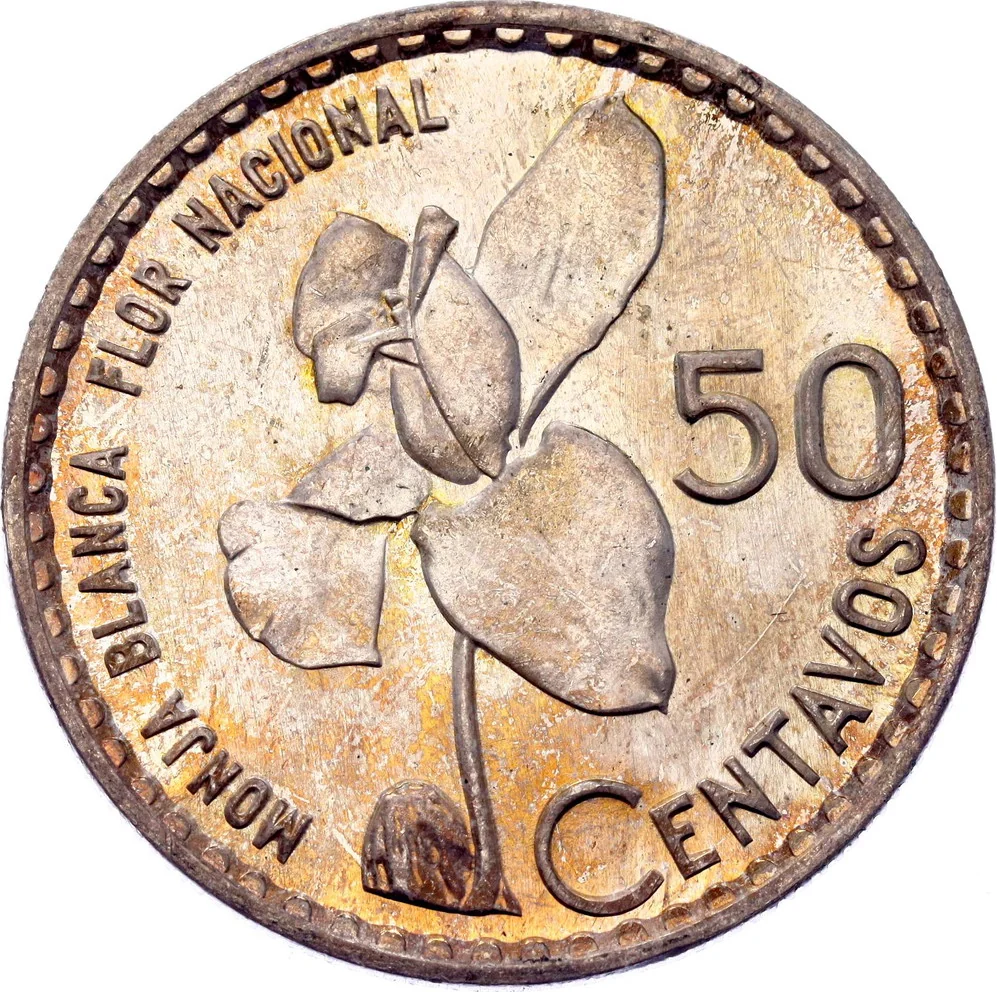
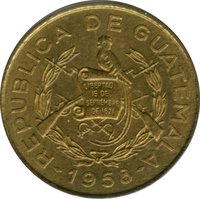
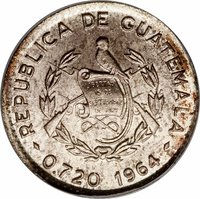
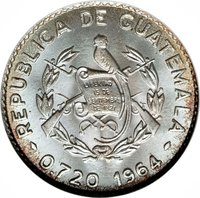
Reverse
Edge
Reeded
Categories
| Symbols> Coat of Arms |
| Plants> Flower |
Mints
| Name | Mark |
|---|---|
| Casa de Moneda de Guatemala | — |
Mintings
| Year | Mint Mark | Mintage | Quality | Collection |
|---|---|---|---|---|
| 1962 | — | 1,983,486 | ||
| 1963 | — | 350,200 |
Historical background
In 1962, Guatemala's currency, the quetzal, was a notable exception in Latin America, maintaining a reputation for remarkable stability and a fixed exchange rate of 1:1 with the United States dollar. This parity, established in 1925 and named after the national bird, was a cornerstone of the country's economic identity. The stability was rigorously defended by the Bank of Guatemala, which operated under a currency board-like system requiring near-full foreign reserve backing for the monetary base. This discipline fostered domestic and international confidence, controlling inflation and providing a predictable environment for the powerful agricultural export sector, dominated by coffee, bananas, and cotton.
However, this rigid stability existed within a context of significant social and political strain. The country was still reeling from the U.S.-backed coup of 1954, which had overthrown the reformist government of Jacobo Árbenz. Subsequent authoritarian regimes, including that of General Miguel Ydígoras Fuentes (in power until 1963), prioritized the interests of the landholding elite and foreign companies. While the currency itself was stable, the broader economy was characterized by extreme inequality, limited industrialization, and widespread rural poverty. The fixed exchange rate arguably benefited the import-export oligarchy but offered less flexibility for developmental state intervention or addressing deep structural economic problems.
Furthermore, the early 1960s marked the beginning of a brutal internal conflict. In 1962, leftist insurgent groups and right-wing military factions began a confrontation that would escalate into a 36-year civil war. While not causing an immediate monetary crisis, this growing instability created long-term pressures on the state's finances and governance. The government's heavy spending on security, coupled with the structural economic weaknesses masked by the strong quetzal, would eventually challenge the sustainability of the fixed parity in the decades to follow, though the regime successfully maintained the iconic 1:1 rate throughout 1962.
However, this rigid stability existed within a context of significant social and political strain. The country was still reeling from the U.S.-backed coup of 1954, which had overthrown the reformist government of Jacobo Árbenz. Subsequent authoritarian regimes, including that of General Miguel Ydígoras Fuentes (in power until 1963), prioritized the interests of the landholding elite and foreign companies. While the currency itself was stable, the broader economy was characterized by extreme inequality, limited industrialization, and widespread rural poverty. The fixed exchange rate arguably benefited the import-export oligarchy but offered less flexibility for developmental state intervention or addressing deep structural economic problems.
Furthermore, the early 1960s marked the beginning of a brutal internal conflict. In 1962, leftist insurgent groups and right-wing military factions began a confrontation that would escalate into a 36-year civil war. While not causing an immediate monetary crisis, this growing instability created long-term pressures on the state's finances and governance. The government's heavy spending on security, coupled with the structural economic weaknesses masked by the strong quetzal, would eventually challenge the sustainability of the fixed parity in the decades to follow, though the regime successfully maintained the iconic 1:1 rate throughout 1962.
Series: System: 1949-1964
🌱 Common