

10 centavos – Guatemala
Add to wishlist
Guatemala
Context
Material
References
KM: #
Numista: #7370
Value
Exchange value: 0.10 GTQ
Bullion value: $5.98
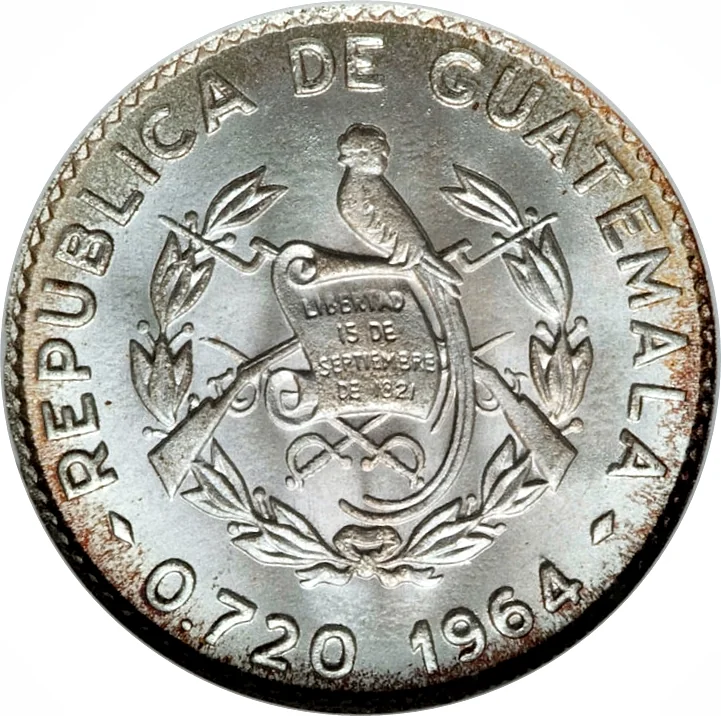
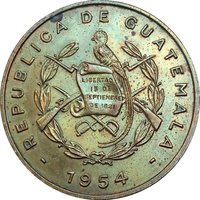
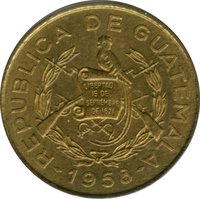
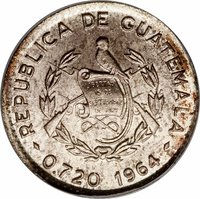
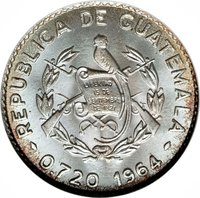
Obverse
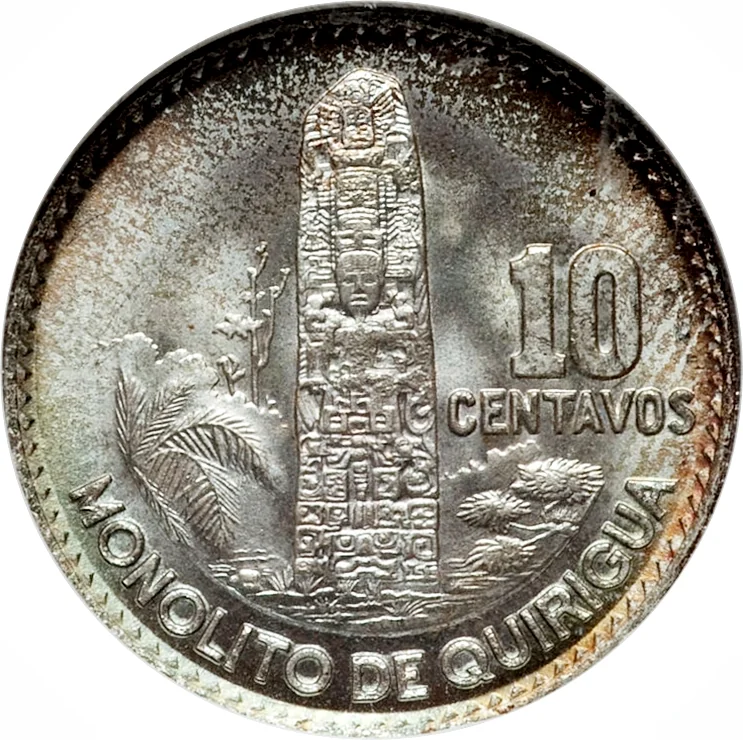
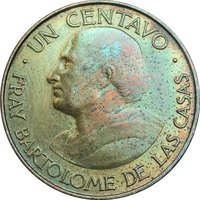
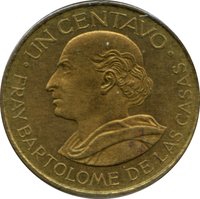
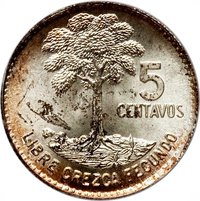
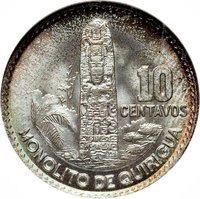
Reverse
Edge
Reeded
Categories
| Art> Sculpture |
| Symbols> Coat of Arms |
Mints
| Name | Mark |
|---|---|
| Casa de Moneda de Guatemala | — |
Mintings
| Year | Mint Mark | Mintage | Quality | Collection |
|---|---|---|---|---|
| 1960 | — | 1,522,701 | ||
| 1961 | — | 1,327,253 | ||
| 1964 | — | 964,259 |
Historical background
In 1960, Guatemala's currency situation was defined by the Quetzal (GTQ), which had been established in 1925 during a period of economic modernization. The currency was uniquely strong and stable, as it was pegged to the US dollar at a fixed 1:1 exchange rate, a parity it maintained from its inception. This stability was underpinned by conservative fiscal management and a legal requirement that the currency be backed by at least 50% gold and foreign exchange reserves, primarily US dollars. The system fostered confidence in both domestic and international trade, insulating the economy from the hyperinflation that affected other Latin American nations.
However, this formal stability existed within a context of significant political and social turbulence. The country was still grappling with the aftermath of the 1954 CIA-backed coup that overthrew the reformist government of Jacobo Árbenz. The subsequent authoritarian regimes reversed land reforms and aligned closely with US interests, leading to social unrest and the spark of a civil conflict that would formally begin that same year. While the currency itself remained hard and convertible, the broader economy was characterized by deep inequality, with a large portion of the population engaged in subsistence agriculture, limiting the domestic economy's dynamism and the benefits of a strong currency for the majority.
Consequently, 1960 represents a point of contrast between a robust, traditional monetary framework and a fractured socio-political reality. The quetzal's peg provided a reliable unit of account for the export sector (dominated by coffee, bananas, and cotton) and the urban elite. Yet, this very strength also reflected and perhaps reinforced the dualistic nature of the economy. The fixed exchange rate and strict backing rules limited monetary policy tools, making the system dependent on continued political stability and consistent foreign exchange earnings—conditions that would be tested in the decades of guerrilla warfare and political violence that followed.
However, this formal stability existed within a context of significant political and social turbulence. The country was still grappling with the aftermath of the 1954 CIA-backed coup that overthrew the reformist government of Jacobo Árbenz. The subsequent authoritarian regimes reversed land reforms and aligned closely with US interests, leading to social unrest and the spark of a civil conflict that would formally begin that same year. While the currency itself remained hard and convertible, the broader economy was characterized by deep inequality, with a large portion of the population engaged in subsistence agriculture, limiting the domestic economy's dynamism and the benefits of a strong currency for the majority.
Consequently, 1960 represents a point of contrast between a robust, traditional monetary framework and a fractured socio-political reality. The quetzal's peg provided a reliable unit of account for the export sector (dominated by coffee, bananas, and cotton) and the urban elite. Yet, this very strength also reflected and perhaps reinforced the dualistic nature of the economy. The fixed exchange rate and strict backing rules limited monetary policy tools, making the system dependent on continued political stability and consistent foreign exchange earnings—conditions that would be tested in the decades of guerrilla warfare and political violence that followed.
Series: System: 1949-1964
🌱 Common