

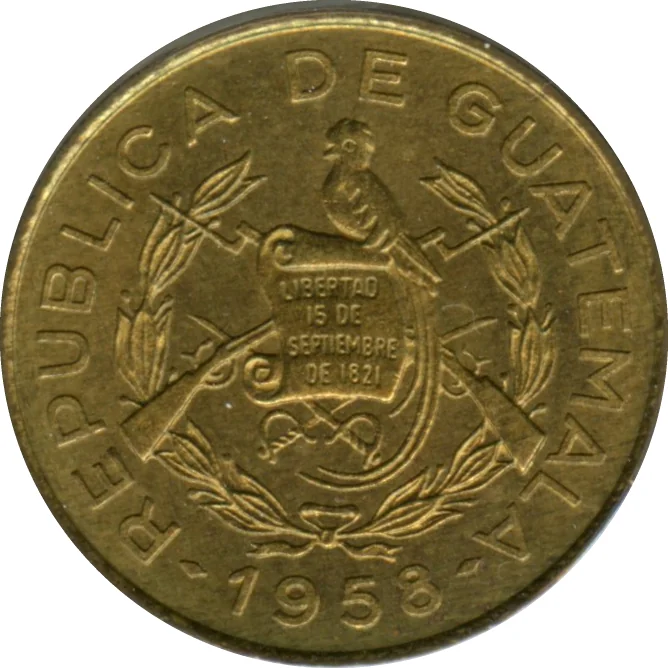
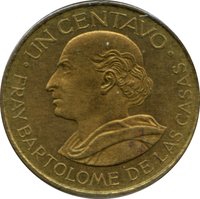
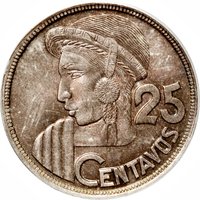
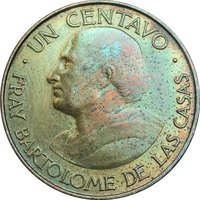
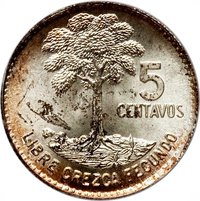
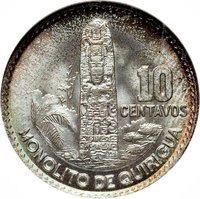
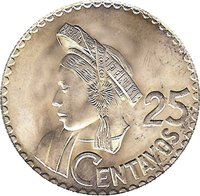
Obverse
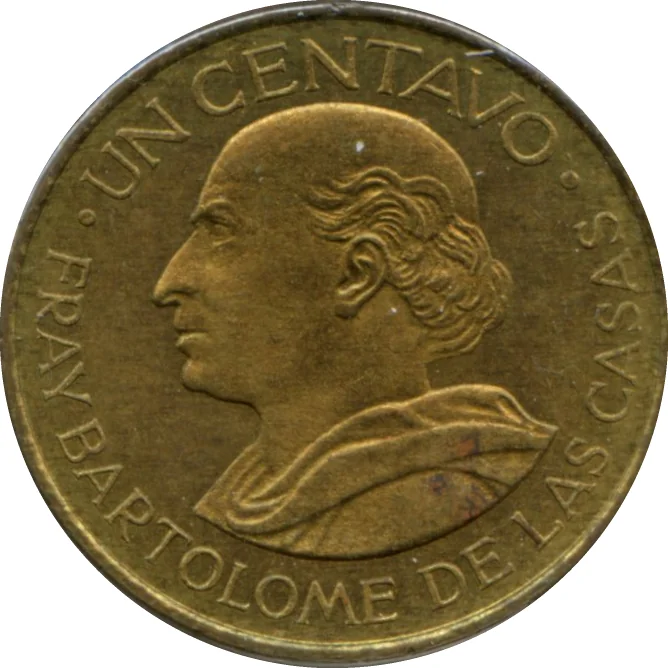
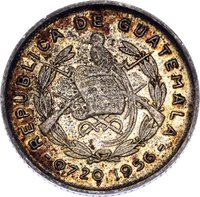
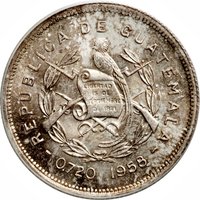
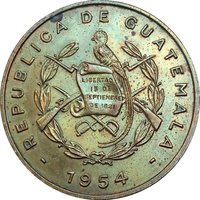
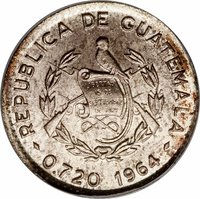
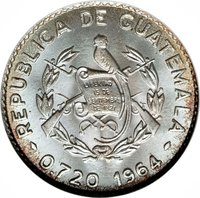
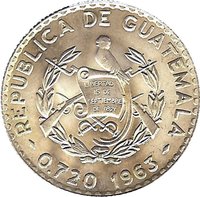
Reverse
Edge
Plain
Categories
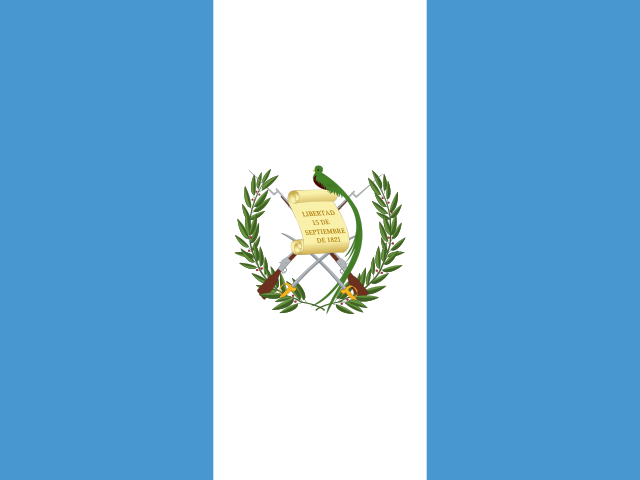
| Symbols> Coat of Arms |
| Person> Religious figure |
Mintings
| Year | Mint Mark | Mintage | Quality | Collection |
|---|---|---|---|---|
| 1958 | — | 10,001,000 | ||
| 1961 | — | 1,826,320 | ||
| 1963 | — | 4,178,187 | ||
| 1964 | — | 5,162,010 |
Historical background
In 1958, Guatemala's currency situation was defined by the stability of the quetzal, which was uniquely pegged at par to the United States dollar. This fixed exchange rate, established in 1925, was a point of national pride and a cornerstone of monetary policy, managed conservatively by the Bank of Guatemala (founded in 1946). The quetzal's strength was traditionally backed by substantial international reserves, primarily from coffee exports, which provided confidence in its convertibility.
However, this apparent stability existed within a context of underlying political and economic strain. The government of President Miguel Ydígoras Fuentes, who took office in 1958, inherited fiscal pressures and the lingering social upheaval from the 1954 coup that overthrew President Jacobo Árbenz. While not in a crisis, the economy faced challenges from fluctuating global commodity prices and the beginnings of increased public spending. Maintaining the dollar peg required strict fiscal discipline to avoid depleting reserves, a policy that often conflicted with developmental and political demands.
Consequently, the currency situation in 1958 was one of cautious management, where the primary goal was to defend the fixed exchange rate. The Bank of Guatemala's policies focused on controlling inflation and preserving the value of the quetzal, prioritizing monetary stability over aggressive economic expansion. This approach successfully prevented a currency crisis in the immediate term, but it set the stage for future debates about the rigidity of the peg as the country navigated the economic transformations of the 1960s.
However, this apparent stability existed within a context of underlying political and economic strain. The government of President Miguel Ydígoras Fuentes, who took office in 1958, inherited fiscal pressures and the lingering social upheaval from the 1954 coup that overthrew President Jacobo Árbenz. While not in a crisis, the economy faced challenges from fluctuating global commodity prices and the beginnings of increased public spending. Maintaining the dollar peg required strict fiscal discipline to avoid depleting reserves, a policy that often conflicted with developmental and political demands.
Consequently, the currency situation in 1958 was one of cautious management, where the primary goal was to defend the fixed exchange rate. The Bank of Guatemala's policies focused on controlling inflation and preserving the value of the quetzal, prioritizing monetary stability over aggressive economic expansion. This approach successfully prevented a currency crisis in the immediate term, but it set the stage for future debates about the rigidity of the peg as the country navigated the economic transformations of the 1960s.
Series: System: 1949-1964
🌱 Common