

10 escudos – Portugal
Add to wishlist
Portugal
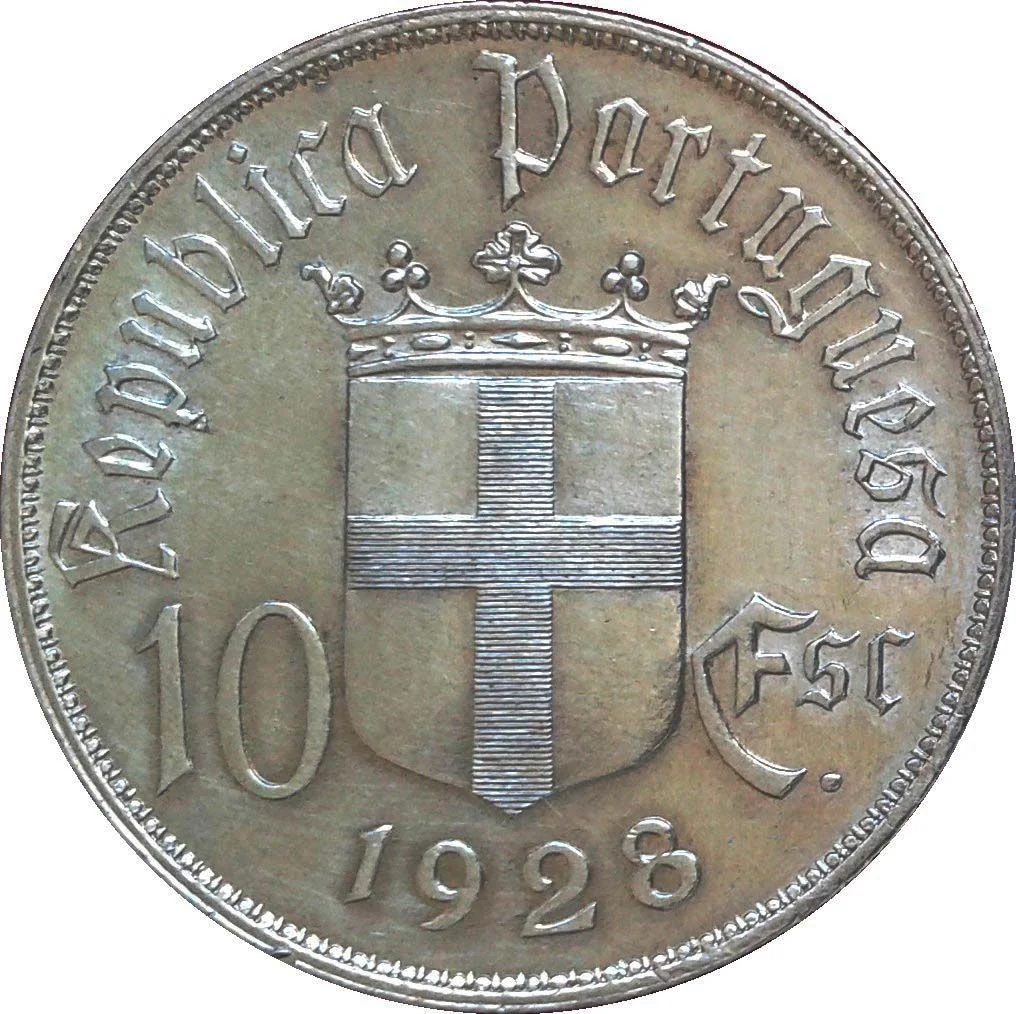
Obverse
Description:
Shield with crown between numbers.
Inscription:
REPUBLICA PORTUGUESA
10 Esc.
1928
10 Esc.
1928
Translation:
Portuguese Republic
10 Escudos
1928
10 Escudos
1928
Script: Latin
Language: Portuguese
Engraver: Simões Almeida
Reverse
Description:
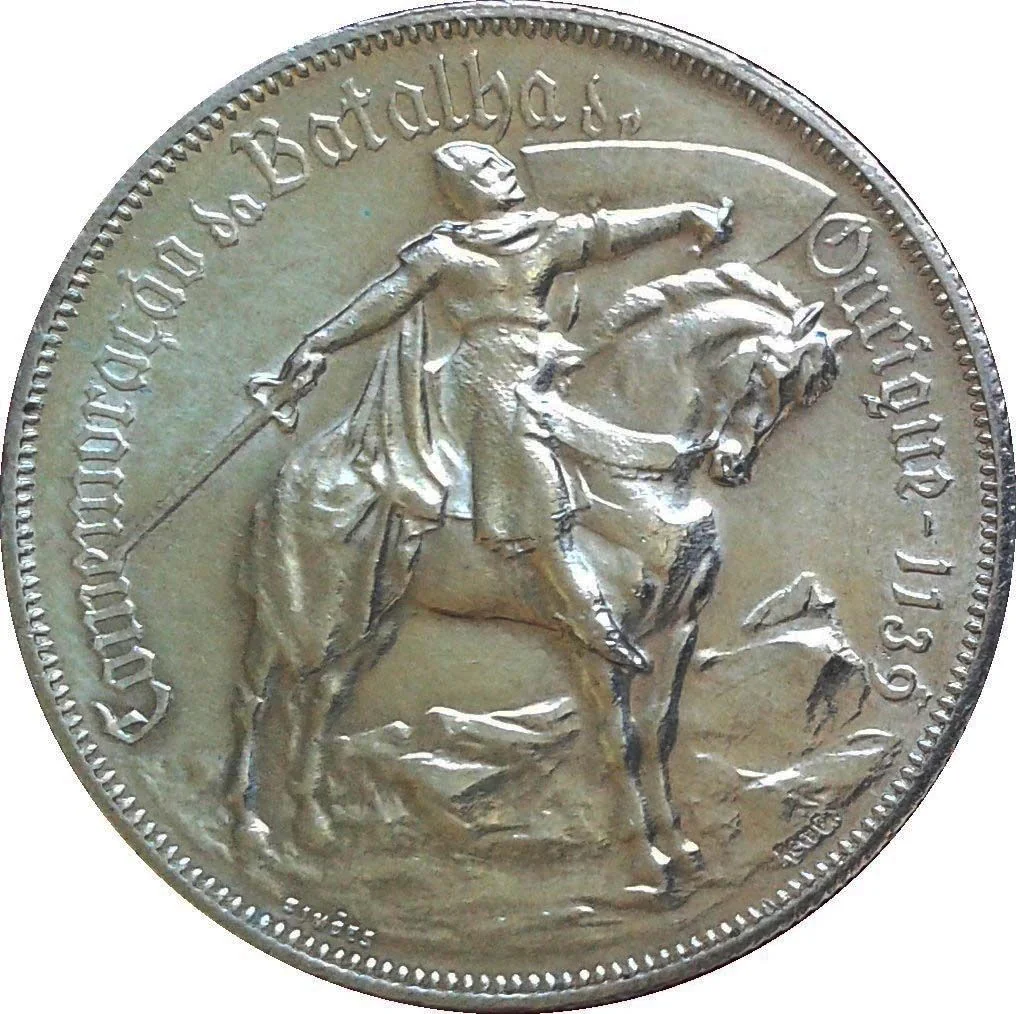
King Afonso I of Portugal, armored and mounted, with sword and shield.
Inscription:
Comemoração da Batalha de Ourique - 1139
Translation:
Commemoration of the Battle of Ourique - 1139
Script: Latin
Language: Portuguese
Engraver: Simões Almeida
Edge
Reeded
Categories
| Animal> Horse |
| Object> Cold weapons |
| Symbols> Coat of Arms |
Mints
| Name | Mark |
|---|---|
| Imprensa Nacional - Casa da Moeda | — |
Mintings
| Year | Mint Mark | Mintage | Quality | Collection |
|---|---|---|---|---|
| 1928 | — | 200,000 |
Historical background
In 1928, Portugal’s currency situation was one of profound instability and devaluation, a legacy of the First Republic (1910-1926) and its chronic political and financial turmoil. The Portuguese escudo, introduced in 1911, had been severely weakened by years of budget deficits, rampant inflation, and excessive money printing to finance public debt and World War I expenditures. By the mid-1920s, the escudo had lost most of its external value, confidence in the financial system was low, and Portugal faced a severe balance of payments crisis, struggling to maintain gold convertibility.
This economic disarray set the critical backdrop for the newly established Ditadura Nacional (National Dictatorship), which emerged from the military coup of 1926. The new authoritarian government, recognizing that financial chaos threatened its survival, took a decisive step in 1928 by appointing António de Oliveira Salazar as Minister of Finance. Salazar, an economics professor, was granted unprecedented control over the entire state budget. His immediate priority was to stabilize the currency through radical austerity, strict control over public spending, and the accumulation of gold and foreign exchange reserves.
Therefore, the currency situation in 1928 marked a pivotal turning point. It was the chaotic low point from which Salazar began his project of financial orthodoxy and authoritarian restructuring. His successful stabilization of the escudo in the following years, leading to the creation of a new gold-backed escudo in 1931, became the foundational myth of the Estado Novo regime, cementing his power and setting Portugal on a path of fiscal discipline at the cost of economic development and social progress.
This economic disarray set the critical backdrop for the newly established Ditadura Nacional (National Dictatorship), which emerged from the military coup of 1926. The new authoritarian government, recognizing that financial chaos threatened its survival, took a decisive step in 1928 by appointing António de Oliveira Salazar as Minister of Finance. Salazar, an economics professor, was granted unprecedented control over the entire state budget. His immediate priority was to stabilize the currency through radical austerity, strict control over public spending, and the accumulation of gold and foreign exchange reserves.
Therefore, the currency situation in 1928 marked a pivotal turning point. It was the chaotic low point from which Salazar began his project of financial orthodoxy and authoritarian restructuring. His successful stabilization of the escudo in the following years, leading to the creation of a new gold-backed escudo in 1931, became the foundational myth of the Estado Novo regime, cementing his power and setting Portugal on a path of fiscal discipline at the cost of economic development and social progress.
Series: System 1927-1968
🌱 Common