

Obverse
Description:
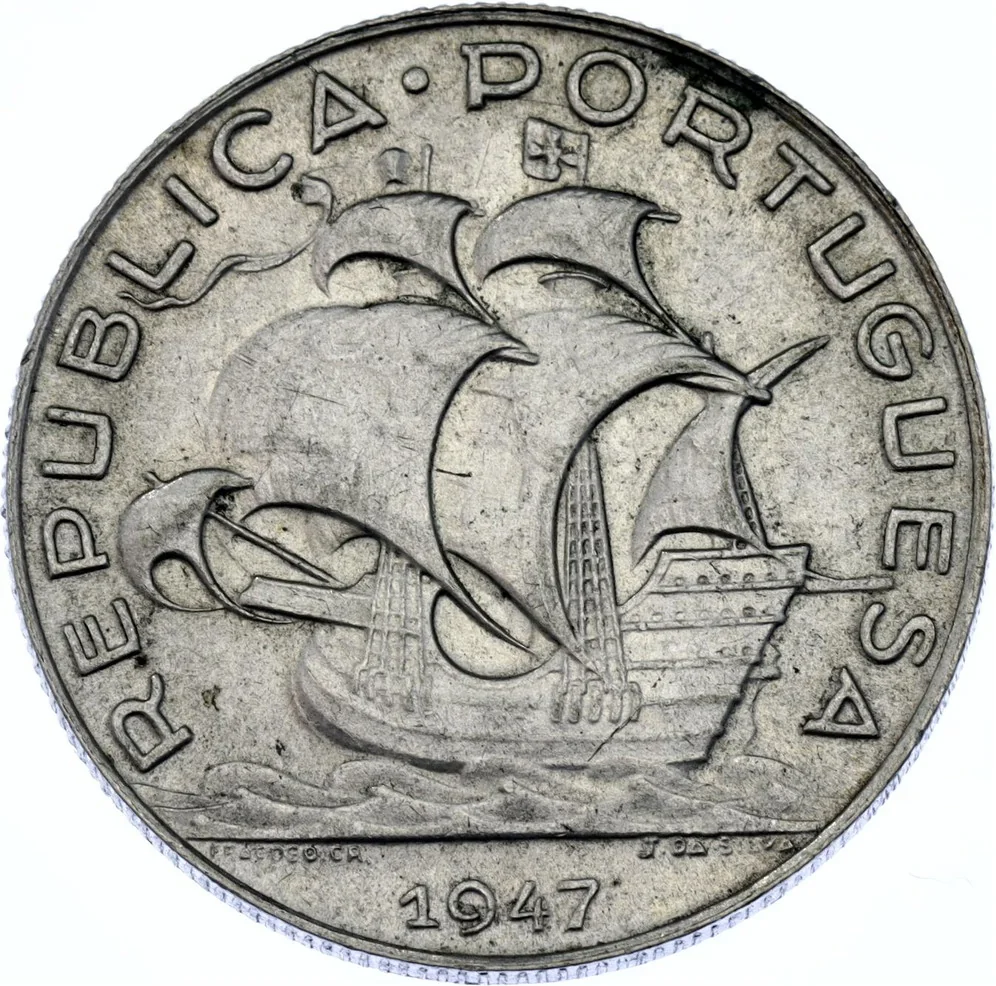
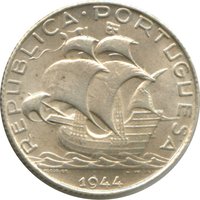
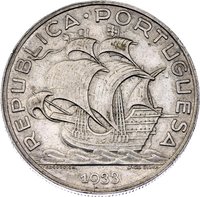
The Caravelle: a 15th-century sailing ship.
Inscription:
REPUBLICA PORTUGUESA
FRAGOSO. GR. J. DA SILVA
1948
FRAGOSO. GR. J. DA SILVA
1948
Translation:
Portuguese Republic
Fragoso. J. da Silva, Engraver
1948
Fragoso. J. da Silva, Engraver
1948
Script: Latin
Languages: Latin, Portuguese
Engraver: João da Silva
Reverse
Description:
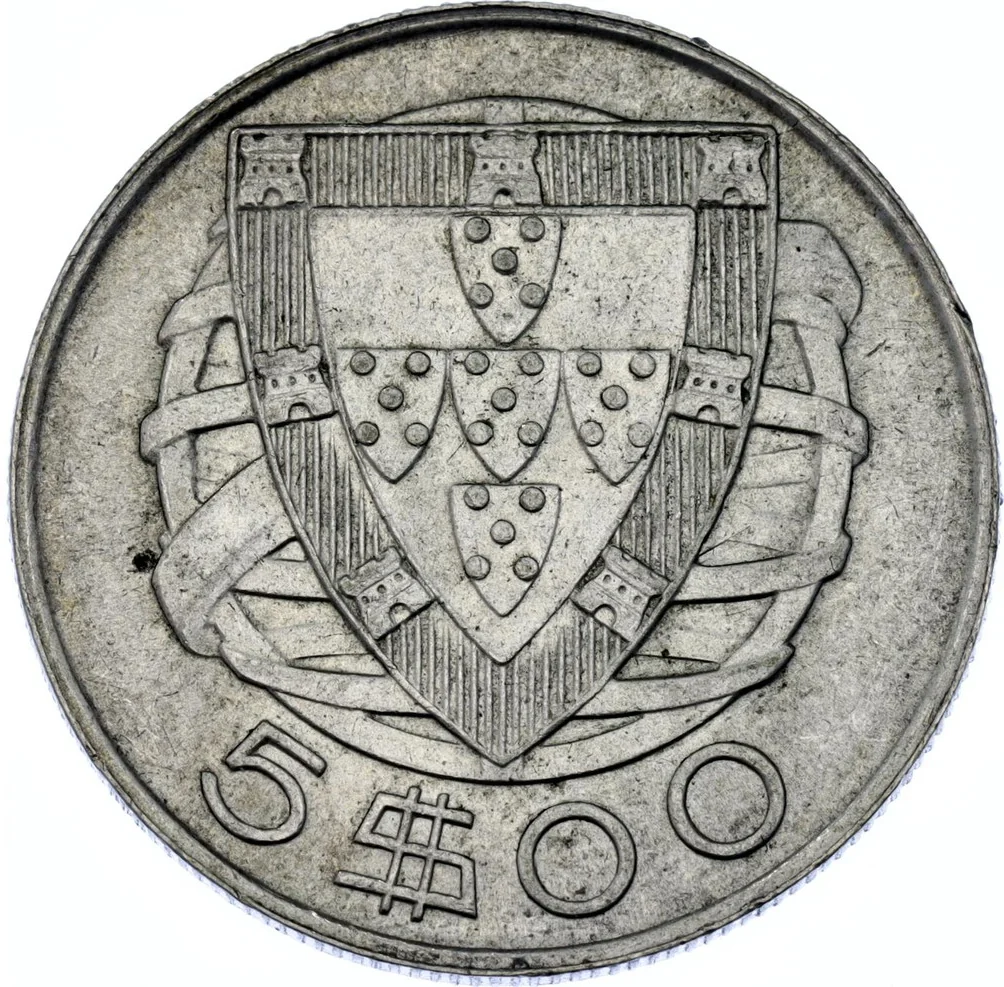
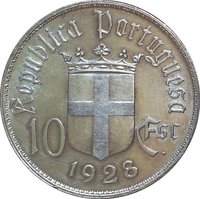
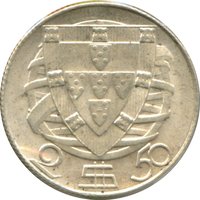
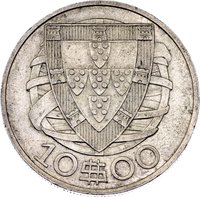
Portuguese coat of arms (shield on circular design) with value below.
Inscription:
5$00
Translation:
Five Dollars and Zero Cents.
Script: Latin
Language: Portuguese
Engraver: João da Silva
Edge
Reeded
Categories
| Symbols> Coat of Arms |
| Transportation> Watercraft |
Mints
| Name | Mark |
|---|---|
| Imprensa Nacional - Casa da Moeda | — |
Mintings
| Year | Mint Mark | Mintage | Quality | Collection |
|---|---|---|---|---|
| 1932 | — | 800,000 | ||
| 1933 | — | 6,717,251 | ||
| 1934 | — | 1,012,152 | ||
| 1937 | — | 1,500,000 | ||
| 1940 | — | 1,500,000 | ||
| 1942 | — | 2,051,247 | ||
| 1943 | — | 1,353,742 | ||
| 1946 | — | 404,000 | ||
| 1947 | — | 2,419,590 | ||
| 1948 | — | 2,017,874 | ||
| 1951 | — | 965,836 |
Historical background
In 1932, Portugal's currency situation was characterized by the enduring dominance of the escudo, which had been the nation's currency since 1911, replacing the historic real. The country was under the authoritarian Estado Novo regime, led by António de Salazar, who had become Minister of Finance in 1928 with a mandate to stabilize the economy. A primary focus of his early policy was achieving monetary stability and defending the escudo's value after a period of post-World War I inflation and fiscal disorder. The escudo was officially placed on the gold standard, but in practice operated under a gold exchange standard, with its value pegged to both gold and stable foreign currencies like the British pound.
This period was one of rigorous deflationary policy. Salazar prioritized a strong escudo, balanced budgets, and the accumulation of gold and foreign exchange reserves, even at the cost of domestic economic growth and living standards. The Banco de Portugal, under strict government control, maintained high interest rates and tight credit to defend the fixed parity. Consequently, Portugal avoided the hyperinflation that plagued some European nations, but the strong currency and conservative monetary policy also stifled industrial development and contributed to low wages and emigration.
The currency stability of 1932 must be viewed as a cornerstone of Salazar's wider political project. A strong escudo was symbolic of national pride and regime credibility, projecting an image of order and discipline. This rigid framework would, however, face significant tests in the coming years with the global impacts of the Great Depression and the impending economic disruptions of World War II. Nevertheless, in 1932, the Portuguese escudo was a tightly controlled instrument of state policy, reflecting the regime's austere financial orthodoxy and its isolation from the more volatile monetary experiments seen elsewhere in interwar Europe.
This period was one of rigorous deflationary policy. Salazar prioritized a strong escudo, balanced budgets, and the accumulation of gold and foreign exchange reserves, even at the cost of domestic economic growth and living standards. The Banco de Portugal, under strict government control, maintained high interest rates and tight credit to defend the fixed parity. Consequently, Portugal avoided the hyperinflation that plagued some European nations, but the strong currency and conservative monetary policy also stifled industrial development and contributed to low wages and emigration.
The currency stability of 1932 must be viewed as a cornerstone of Salazar's wider political project. A strong escudo was symbolic of national pride and regime credibility, projecting an image of order and discipline. This rigid framework would, however, face significant tests in the coming years with the global impacts of the Great Depression and the impending economic disruptions of World War II. Nevertheless, in 1932, the Portuguese escudo was a tightly controlled instrument of state policy, reflecting the regime's austere financial orthodoxy and its isolation from the more volatile monetary experiments seen elsewhere in interwar Europe.
Series: System 1927-1968
🌱 Very Common