

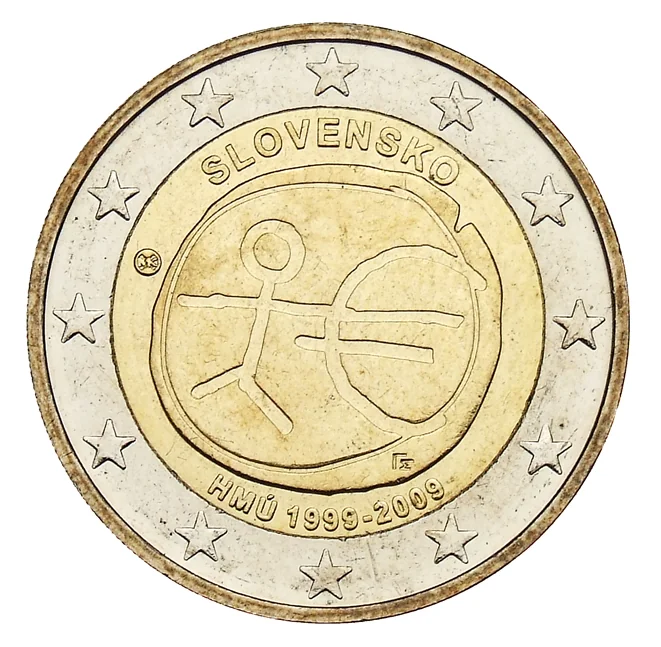
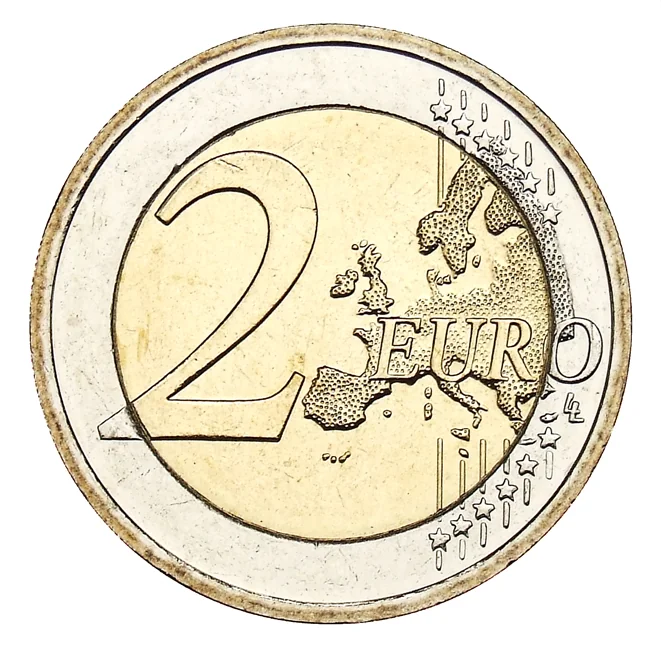
2 euro (Economic and Monetary Union) – Slovakia
Add to wishlist
Circulating commemorative coins
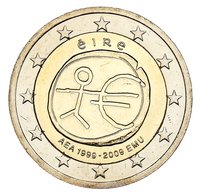
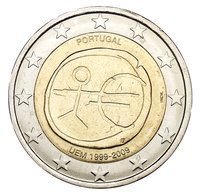
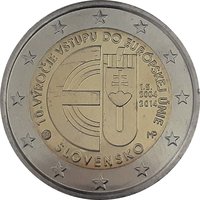
Commemoration: 10th anniversary of Economic and Monetary Union
Slovakia
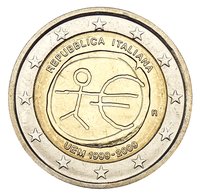
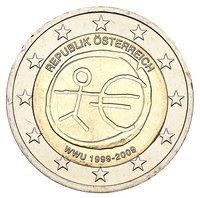
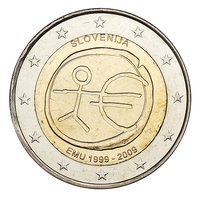
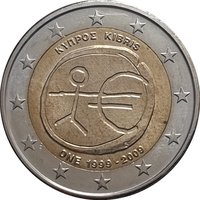
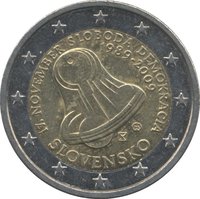
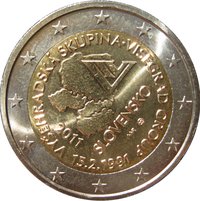
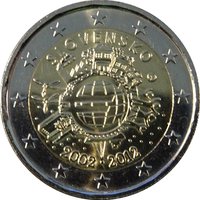
Obverse
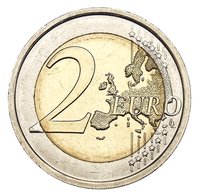
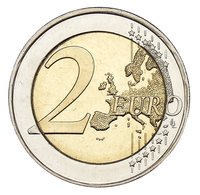
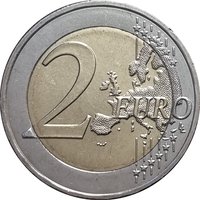
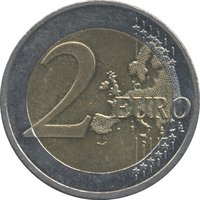
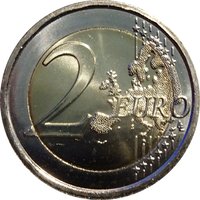
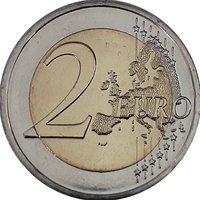
Reverse
Edge
Mints
| Name | Mark |
|---|---|
| Kremnica | — |
Mintings
| Year | Mint Mark | Mintage | Quality | Collection |
|---|---|---|---|---|
| 2009 | MK | 7,000 | BU | |
| 2009 | MK | 2,493,000 |
Historical background
In 2009, Slovakia navigated a significant currency transition, becoming the first post-communist country in Central Europe to adopt the euro on January 1st. This move came after a decade of using the Slovak koruna (SKK) and followed a rigorous convergence process to meet the EU's Maastricht criteria. The adoption was seen as a strategic step to deepen integration with the European core, enhance monetary stability, and attract foreign investment, particularly in the crucial automotive sector. The changeover was executed smoothly, with a fixed conversion rate of 30.126 SKK to 1 euro, and was largely supported by the public as a symbol of economic maturity and security.
The timing of euro adoption, however, was immediately tested by the global financial crisis, which hit Slovakia's export-oriented economy hard in 2009. While the new currency provided stability and eliminated exchange rate risk within the Eurozone, it also removed the tool of independent monetary policy and currency devaluation—options neighboring countries like Poland and the Czech Republic used to cushion the economic blow. Slovakia entered a severe recession in 2009, with GDP contracting by approximately 5.5%, highlighting the dual reality of gaining euro stability while losing national flexibility during an external shock.
Despite the recession, the long-term strategic rationale for euro membership held firm. The currency switch eliminated transaction costs and exchange rate uncertainty for Slovakia's major trading partners, primarily within the Eurozone. Furthermore, it was viewed as a successful culmination of the country's post-1993 transition and a definitive anchor for future economic policy. Thus, the 2009 currency situation encapsulated a pivotal year of both achievement and challenge, marking Slovakia's full entry into the European monetary union at a moment of profound global economic turmoil.
The timing of euro adoption, however, was immediately tested by the global financial crisis, which hit Slovakia's export-oriented economy hard in 2009. While the new currency provided stability and eliminated exchange rate risk within the Eurozone, it also removed the tool of independent monetary policy and currency devaluation—options neighboring countries like Poland and the Czech Republic used to cushion the economic blow. Slovakia entered a severe recession in 2009, with GDP contracting by approximately 5.5%, highlighting the dual reality of gaining euro stability while losing national flexibility during an external shock.
Despite the recession, the long-term strategic rationale for euro membership held firm. The currency switch eliminated transaction costs and exchange rate uncertainty for Slovakia's major trading partners, primarily within the Eurozone. Furthermore, it was viewed as a successful culmination of the country's post-1993 transition and a definitive anchor for future economic policy. Thus, the 2009 currency situation encapsulated a pivotal year of both achievement and challenge, marking Slovakia's full entry into the European monetary union at a moment of profound global economic turmoil.
Series: Slovakia 2 euro commemoratives
🌱 Very Common