

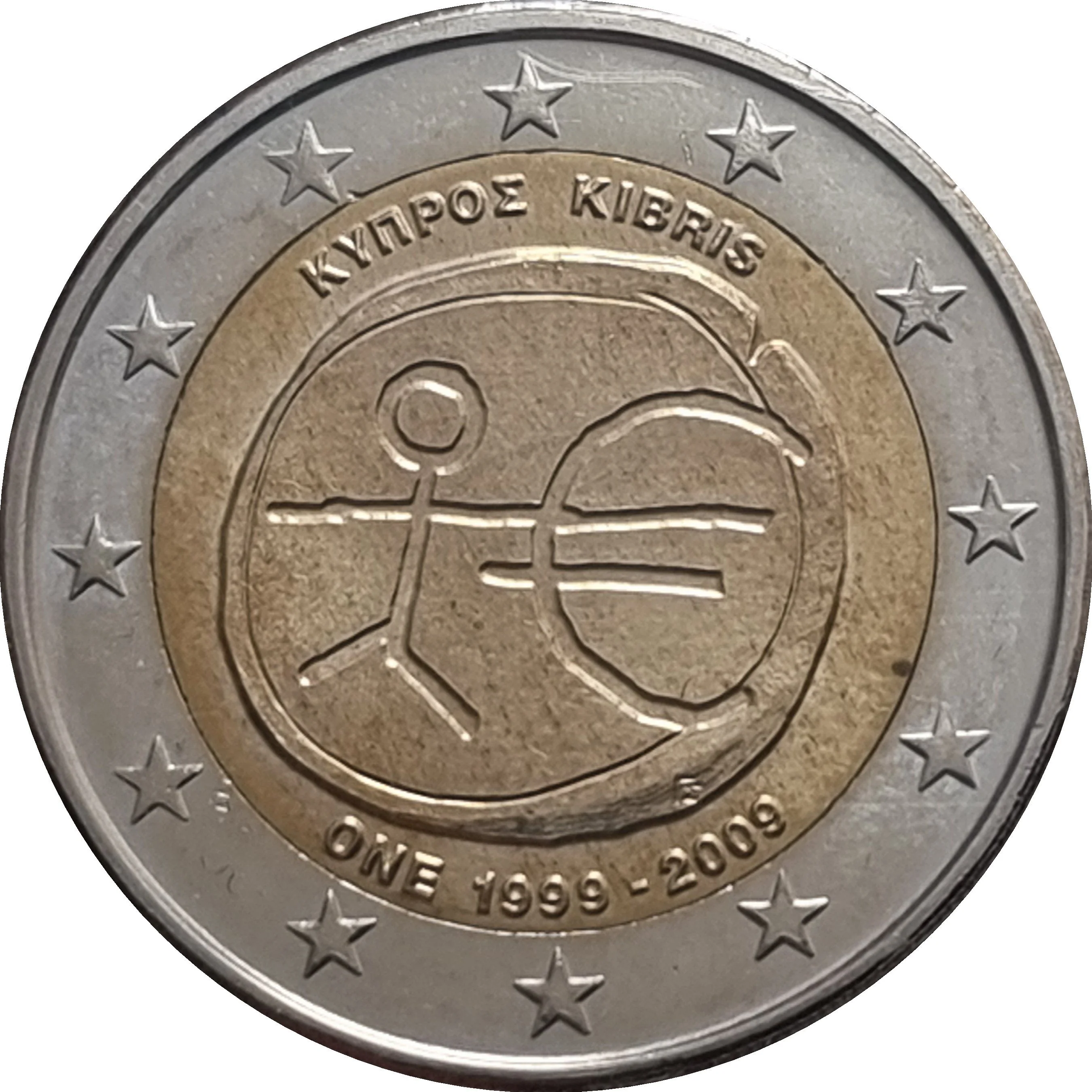
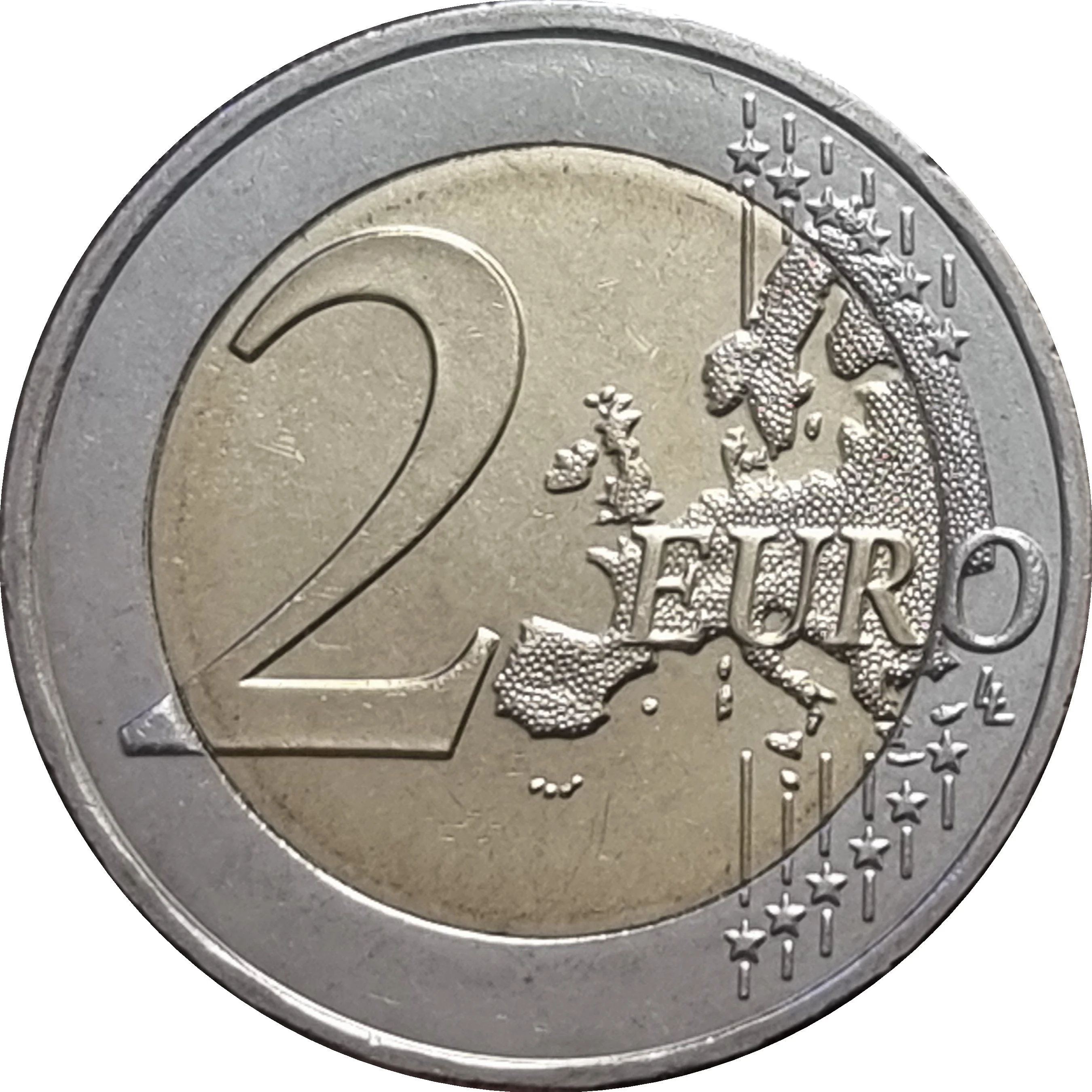
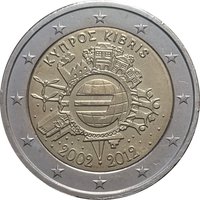
2 euro (Economic and Monetary Union) – Cyprus
Add to wishlist
Circulating commemorative coins
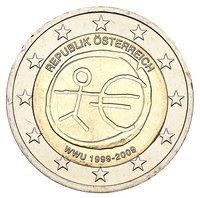
Commemoration: 10th anniversary of Economic and Monetary Union
Cyprus

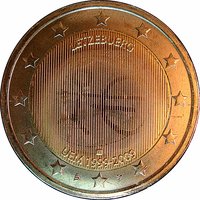
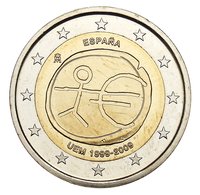
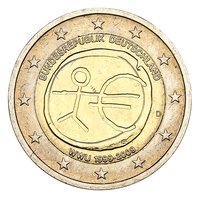
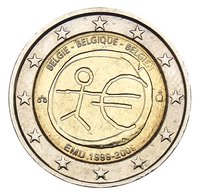
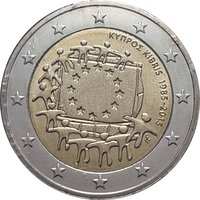
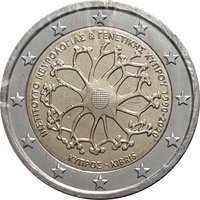
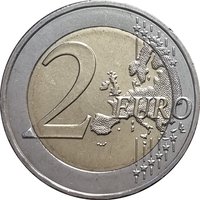
Obverse
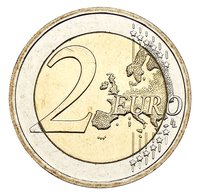
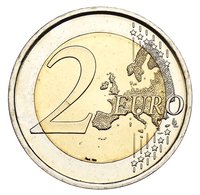
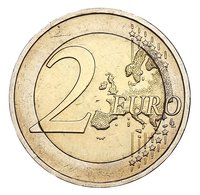
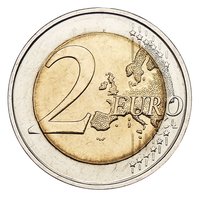
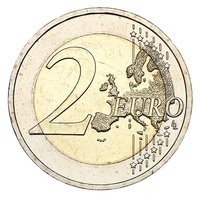
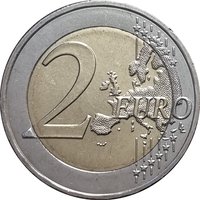
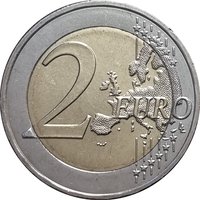
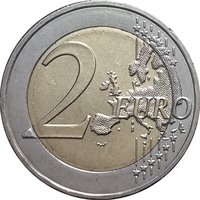
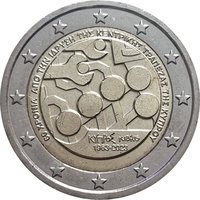
Reverse
Mints
| Name | Mark |
|---|---|
| Royal Dutch Mint | — |
Mintings
| Year | Mint Mark | Mintage | Quality | Collection |
|---|---|---|---|---|
| 2009 | — | 965,000 | ||
| 2009 | — | 13,000 | BU | |
| 2009 | — | 7,000 | Proof |
Historical background
In 2009, Cyprus entered a severe economic crisis, with its currency situation intrinsically tied to its membership in the Eurozone. Having adopted the euro in 2008, the Republic of Cyprus no longer controlled its own monetary policy or currency valuation. This meant it could not devalue its currency to regain competitiveness, a traditional tool for economies in distress. The global financial crisis of 2008-2009 exposed profound weaknesses in the Cypriot economy, including a bloated public sector, loss of competitiveness, and a large current account deficit. Crucially, the crisis heavily impacted its oversized banking sector, which held assets many times the size of the nation's GDP.
The core of the currency-related vulnerability lay in the banking sector's business model. Cypriot banks, particularly the two largest, had aggressively expanded abroad, especially in Greece, and were heavily exposed to Greek government bonds. As the Greek debt crisis intensified in 2009, the value of these holdings plummeted, creating massive losses that eroded the capital bases of Cypriot banks. This created a vicious cycle: doubts about the banks' stability led to rising borrowing costs for the Cypriot government itself when it tried to support them, pushing the state toward a sovereign debt crisis.
Therefore, while the currency itself—the euro—was stable, the situation surrounding it was one of extreme peril. Cyprus was trapped within a monetary union without the fiscal backstop or economic flexibility to manage the twin shocks hitting its financial system and public finances. The events of 2009 set the stage for the subsequent and more acute crisis, where in 2013 the Eurogroup would mandate an unprecedented "bail-in" of uninsured bank depositors as part of an international rescue package, a direct consequence of the vulnerabilities exposed in the years immediately following euro adoption.
The core of the currency-related vulnerability lay in the banking sector's business model. Cypriot banks, particularly the two largest, had aggressively expanded abroad, especially in Greece, and were heavily exposed to Greek government bonds. As the Greek debt crisis intensified in 2009, the value of these holdings plummeted, creating massive losses that eroded the capital bases of Cypriot banks. This created a vicious cycle: doubts about the banks' stability led to rising borrowing costs for the Cypriot government itself when it tried to support them, pushing the state toward a sovereign debt crisis.
Therefore, while the currency itself—the euro—was stable, the situation surrounding it was one of extreme peril. Cyprus was trapped within a monetary union without the fiscal backstop or economic flexibility to manage the twin shocks hitting its financial system and public finances. The events of 2009 set the stage for the subsequent and more acute crisis, where in 2013 the Eurogroup would mandate an unprecedented "bail-in" of uninsured bank depositors as part of an international rescue package, a direct consequence of the vulnerabilities exposed in the years immediately following euro adoption.
Series: Cyprus 2 euro commemoratives
🌱 Very Common