

2 Euro (Erasmus Programme) – Ireland
Circulating commemorative coins
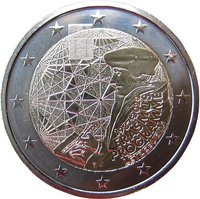
Commemoration: 35 Years of the Erasmus Programme.
Series: Erasmus Programme
Ireland
Context
Year: 2022
Issuer: Ireland 
Issuing organization: Central bank of Ireland
Period:
(since 1937)
Currency:
(since 2002)
Total mintage: 500,000
Material
References
KM: #Click to copy to clipboard103
Numista: #319135
Value
Exchange value: 2 EUR = $2.36
Inflation-adjusted value: 2.42 EUR
Obverse
Description:
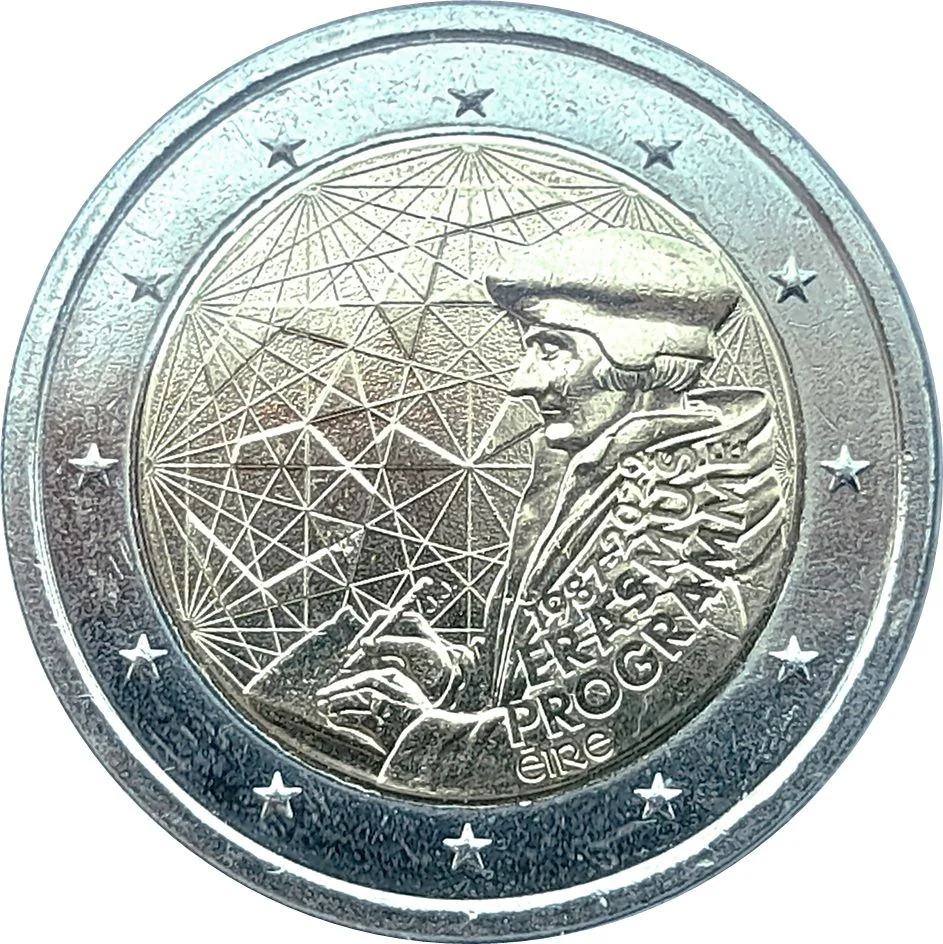
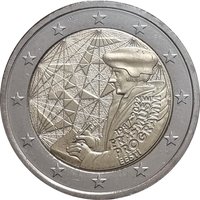
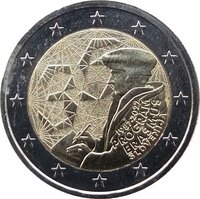
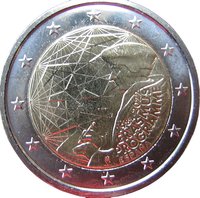
The design combines a portrait of Erasmus with a network of connecting beams, symbolizing the programme’s intellectual exchanges across Europe. Emerging stars from these links form the contemporary number 35, marking the anniversary. The outer ring features the twelve stars of the European flag.
Inscription:
35
1987-2022
ERASMUS
PROGRAMME
éıre
J.J.
1987-2022
ERASMUS
PROGRAMME
éıre
J.J.
Translation:
Thirty-Five
1987-2022
ERASMUS
PROGRAMME
Peace
1987-2022
ERASMUS
PROGRAMME
Peace
Scripts: Latin (Gaelic), Latin
Designer: Joaquin Jimenez
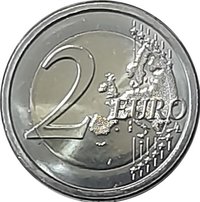
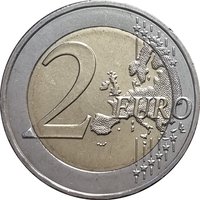
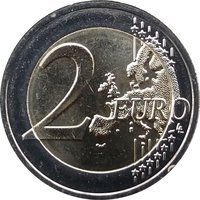
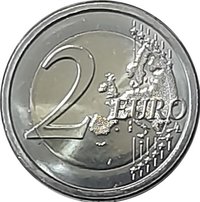
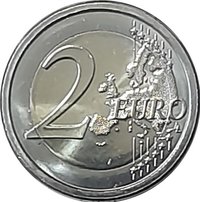
Reverse
Edge
Legend:
2 ** 2 ** 2 ** 2 ** 2 ** 2 **
Mints
| Name | Mark |
|---|---|
| Irish Mint | — |
Mintings
| Year | Mint Mark | Mintage | Quality | Collection |
|---|---|---|---|---|
| 2022 | — | 500,000 |
Historical background
In 2022, Ireland operated as a full member of the Eurozone, with the euro (€) as its sole legal tender. This integration, established in 1999 for electronic transactions and with physical notes and coins introduced in 2002, meant Ireland's monetary policy was set by the European Central Bank (ECB) in Frankfurt. The key domestic concern for businesses and households was therefore not a distinct national currency policy, but the impact of the ECB's decisions aimed at tackling soaring inflation across the continent, which reached multi-decade highs.
The year was marked by significant inflationary pressures, largely driven by global factors such as the aftermath of the COVID-19 pandemic and the war in Ukraine, which disrupted supply chains and spiked energy costs. While the Irish economy remained robust with strong growth and near-full employment, the rising cost of living became the dominant economic issue. The ECB responded by initiating a series of interest rate hikes in July 2022—the first in over a decade—beginning a tightening cycle that increased borrowing costs for mortgages and business loans.
Consequently, the domestic "currency situation" was characterised by navigating these external monetary decisions. There was no debate about leaving the euro, but rather focused discussion on the national budgetary response to inflation through government supports, and on managing the practical challenges for a small, open economy within a larger currency union. The strong euro also had mixed effects, making imports like energy slightly cheaper in euro terms but posing challenges for export competitiveness outside the Eurozone. Overall, Ireland's currency landscape in 2022 was one of stability in its monetary framework, but adjustment to the significant economic headwinds managed by that shared framework.
The year was marked by significant inflationary pressures, largely driven by global factors such as the aftermath of the COVID-19 pandemic and the war in Ukraine, which disrupted supply chains and spiked energy costs. While the Irish economy remained robust with strong growth and near-full employment, the rising cost of living became the dominant economic issue. The ECB responded by initiating a series of interest rate hikes in July 2022—the first in over a decade—beginning a tightening cycle that increased borrowing costs for mortgages and business loans.
Consequently, the domestic "currency situation" was characterised by navigating these external monetary decisions. There was no debate about leaving the euro, but rather focused discussion on the national budgetary response to inflation through government supports, and on managing the practical challenges for a small, open economy within a larger currency union. The strong euro also had mixed effects, making imports like energy slightly cheaper in euro terms but posing challenges for export competitiveness outside the Eurozone. Overall, Ireland's currency landscape in 2022 was one of stability in its monetary framework, but adjustment to the significant economic headwinds managed by that shared framework.
Series: Erasmus Programme
Series: Ireland 2 euro commemoratives
🌱 Common