

2 euro (Dail Eireann first meeting) – Ireland
Add to wishlist
Circulating commemorative coins
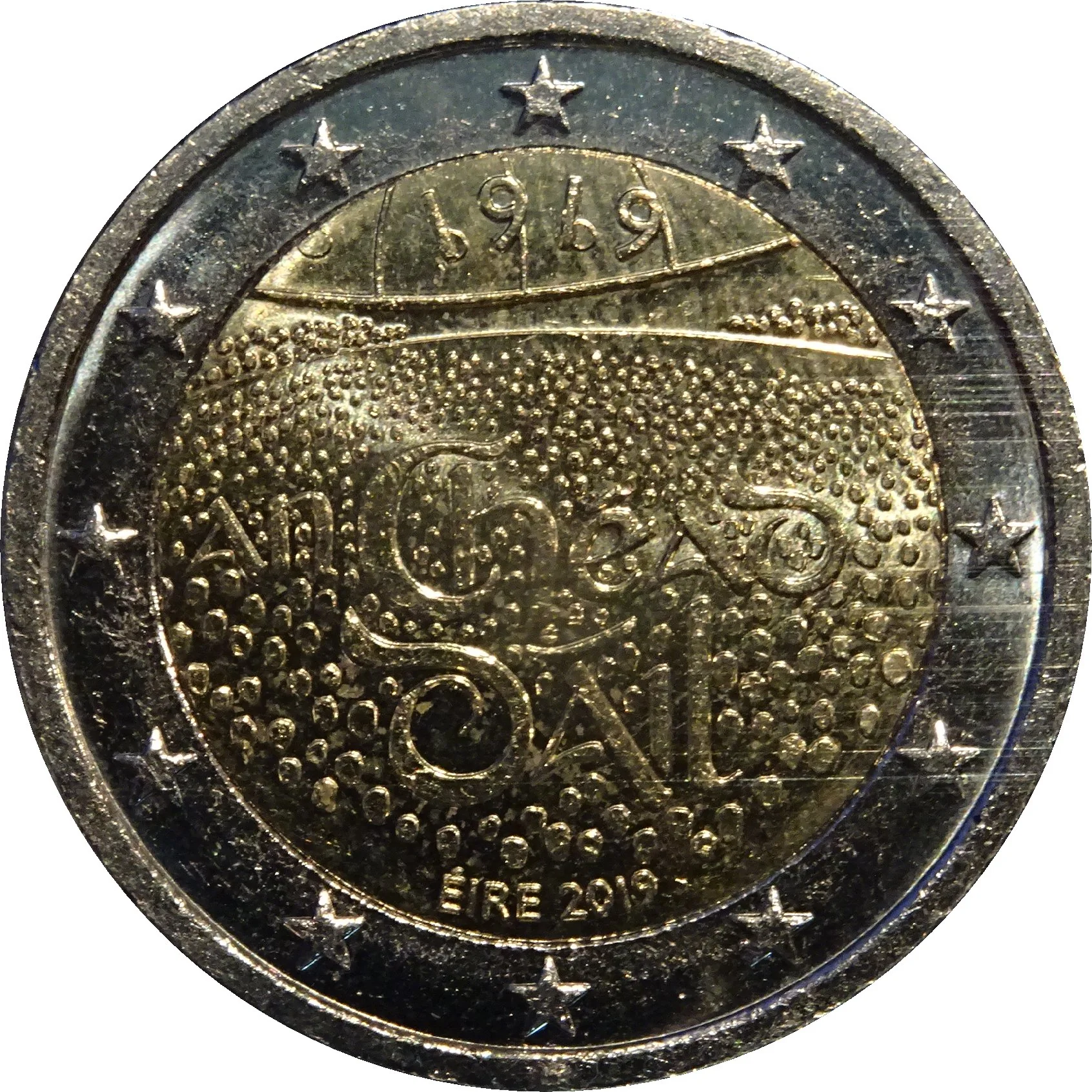
Commemoration: Centenary of the 1st. Meeting of Dail Eireann.
Ireland
Obverse
Description:
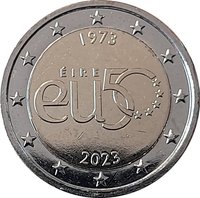
The design shows the first Dáil Éireann sitting in the Mansion House's Round Room on 21 January 1919, conducted in Irish. "An Chéad Dáil" and "1919" appear in uncial font, with "ÉIRE 2019" below. The outer ring features the 12 stars of the European flag.
Inscription:
1919
An Chéad Dáil
ÉIRE
An Chéad Dáil
ÉIRE
Translation:
1919
The First Dáil
IRELAND
The First Dáil
IRELAND
Script: Latin
Reverse
Edge
Legend:
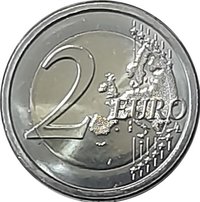
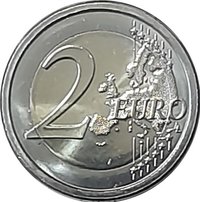
2 ** 2 ** 2 ** 2 ** 2 ** 2 **
Categories
| Map |
Mints
| Name | Mark |
|---|---|
| Irish Mint | — |
| Mint of Poland | — |
| Royal Dutch Mint | — |
Mintings
| Year | Mint Mark | Mintage | Quality | Collection |
|---|---|---|---|---|
| 2019 | — | 1,000,000 | ||
| 2019 | — | 1,000 | Proof |
Historical background
In 2019, Ireland’s currency situation was defined by its continued and stable membership in the Eurozone. The country had adopted the euro in 2002, replacing the Irish pound, and by 2019 it was fully integrated into the single currency area. This meant the European Central Bank (ECB) set monetary policy, including interest rates, for Ireland. This framework provided macroeconomic stability and eliminated exchange rate risk with its largest trading partner, the European Union, which was particularly crucial as the Brexit process unfolded, given the UK's significant economic ties with Ireland.
The year was marked by economic strength but also by underlying concerns related to Brexit. Ireland’s economy was performing robustly, with strong GDP growth, low unemployment, and a budget surplus. However, the persistent uncertainty around the UK’s departure from the EU posed a significant currency-related risk. As a non-euro member, the UK’s potential for a volatile pound sterling created fears for Irish exporters and cross-border trade on the island of Ireland, highlighting the protective buffer the euro provided against such currency fluctuations.
Domestically, there was no serious political debate about leaving the euro, as it was seen as a cornerstone of Ireland’s modern economic identity. Public and political attention was instead focused on housing shortages and public service investment, debates which were framed within the constraints and stability of the common currency. Consequently, 2019 represented a period of euro stability for Ireland, even as it navigated the external monetary turbulence caused by its closest neighbour’s departure from the European Union.
The year was marked by economic strength but also by underlying concerns related to Brexit. Ireland’s economy was performing robustly, with strong GDP growth, low unemployment, and a budget surplus. However, the persistent uncertainty around the UK’s departure from the EU posed a significant currency-related risk. As a non-euro member, the UK’s potential for a volatile pound sterling created fears for Irish exporters and cross-border trade on the island of Ireland, highlighting the protective buffer the euro provided against such currency fluctuations.
Domestically, there was no serious political debate about leaving the euro, as it was seen as a cornerstone of Ireland’s modern economic identity. Public and political attention was instead focused on housing shortages and public service investment, debates which were framed within the constraints and stability of the common currency. Consequently, 2019 represented a period of euro stability for Ireland, even as it navigated the external monetary turbulence caused by its closest neighbour’s departure from the European Union.
Series: Ireland 2 euro commemoratives

🌱 Very Common