

25 centavos – Guatemala
Add to wishlist
Guatemala
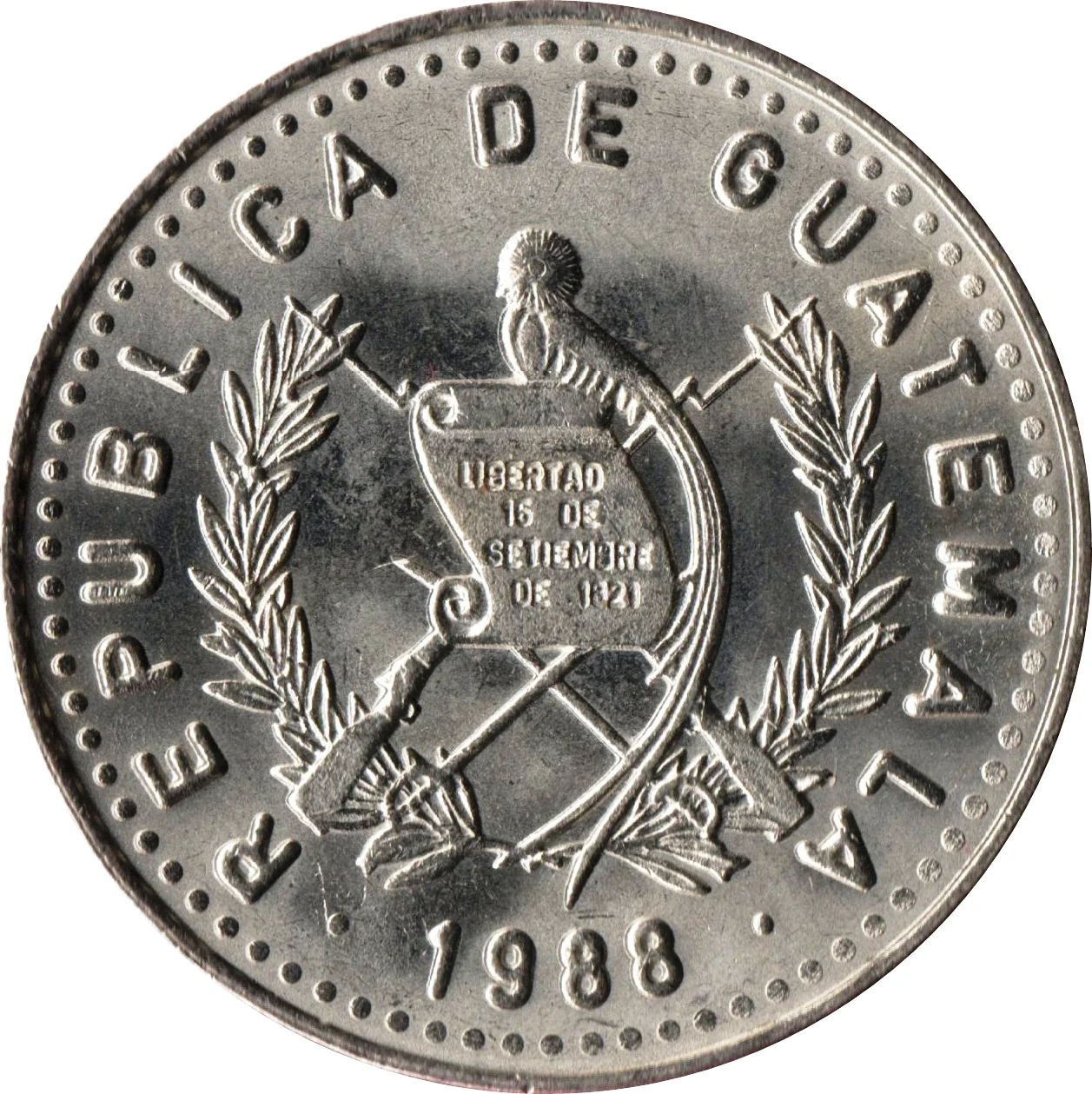
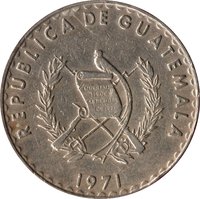
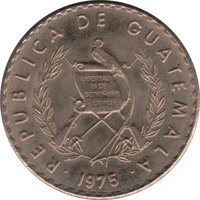
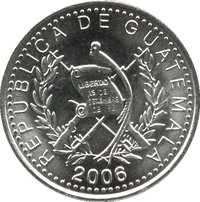
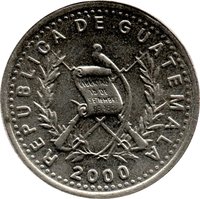
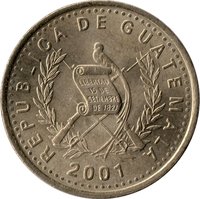
Obverse
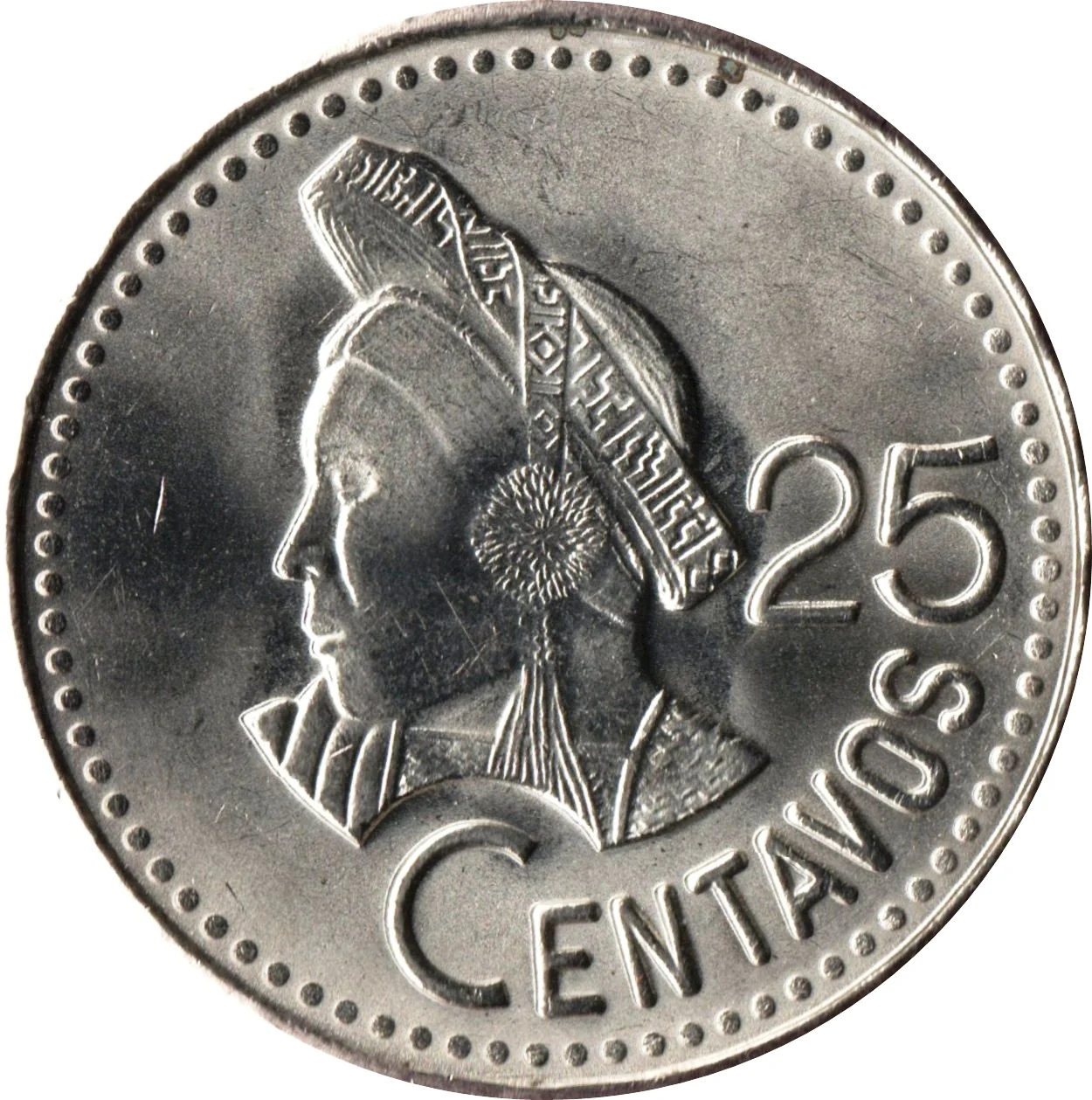
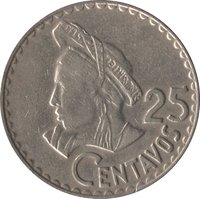
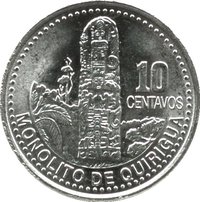
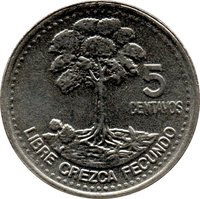
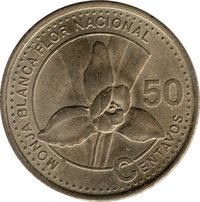
Reverse
Edge
Smooth with incused lettering
Legend:
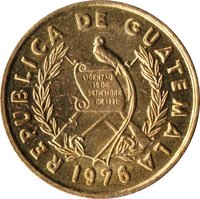
REPUBLICA DE GUATEMALA C.A.
Translation:
REPUBLIC OF GUATEMALA C.A.
Language: Spanish
Mints
| Name | Mark |
|---|---|
| Casa de Moneda de Guatemala | — |
Mintings
| Year | Mint Mark | Mintage | Quality | Collection |
|---|---|---|---|---|
| 1977 | — | 2,000,000 | ||
| 1978 | — | 4,400,000 | ||
| 1979 | — | 5,400,000 | ||
| 1981 | — | 1,600,000 | ||
| 1982 | — | 2,000,000 | ||
| 1984 | — | 2,000,000 | ||
| 1985 | — | 3,050,000 | ||
| 1986 | — | 4,500,000 | ||
| 1987 | — | 13,316,000 | ||
| 1988 | — | 6,600,000 | ||
| 1989 | — | 8,066,000 | ||
| 1990 | — | 10,000,000 | ||
| 1991 | — | — | ||
| 1992 | — | — | ||
| 1993 | — | — | ||
| 1994 | — | — | ||
| 1995 | — | — | ||
| 1996 | — | — | ||
| 1997 | — | — | ||
| 1998 | — | — | ||
| 2000 | — | — |
Historical background
In 1977, Guatemala's currency, the quetzal, operated under a fixed exchange rate regime, pegged to the United States dollar at a rate of 1:1. This system, established in 1925, was a point of national pride and symbolized monetary stability. The peg was strictly managed by the Bank of Guatemala, which maintained substantial foreign exchange reserves to defend the parity. This stability was attractive for the agricultural export elite and foreign investors, but it also made the economy vulnerable to external shocks and limited the central bank's ability to use monetary policy for domestic economic management.
The national economy underlying this stable currency was marked by deep structural problems. Guatemala was heavily dependent on a few primary commodity exports, chiefly coffee, cotton, and sugar. While these brought in valuable foreign exchange, the global price volatility for these commodities created periodic strains. Furthermore, the economy was characterized by extreme inequality, with a small minority controlling most of the land and wealth, while a large indigenous and rural population lived in poverty. This social disparity fueled a growing civil conflict between leftist guerrilla groups and the state's military forces, creating an environment of political instability that loomed over all economic activity.
Despite the fixed exchange rate, inflationary pressures were becoming a concern in 1977, partly imported due to global oil price increases and domestic fiscal pressures. The government of General Kjell Laugerud García maintained a pro-business stance, prioritizing the defense of the quetzal's value. However, this commitment required maintaining high interest rates and strict fiscal discipline, policies that did little to address widespread poverty or diversify the economy. Consequently, while the currency itself appeared strong on paper, the socioeconomic foundations supporting it were increasingly fragile, setting the stage for future economic challenges.
The national economy underlying this stable currency was marked by deep structural problems. Guatemala was heavily dependent on a few primary commodity exports, chiefly coffee, cotton, and sugar. While these brought in valuable foreign exchange, the global price volatility for these commodities created periodic strains. Furthermore, the economy was characterized by extreme inequality, with a small minority controlling most of the land and wealth, while a large indigenous and rural population lived in poverty. This social disparity fueled a growing civil conflict between leftist guerrilla groups and the state's military forces, creating an environment of political instability that loomed over all economic activity.
Despite the fixed exchange rate, inflationary pressures were becoming a concern in 1977, partly imported due to global oil price increases and domestic fiscal pressures. The government of General Kjell Laugerud García maintained a pro-business stance, prioritizing the defense of the quetzal's value. However, this commitment required maintaining high interest rates and strict fiscal discipline, policies that did little to address widespread poverty or diversify the economy. Consequently, while the currency itself appeared strong on paper, the socioeconomic foundations supporting it were increasingly fragile, setting the stage for future economic challenges.
Series: System: 1965-1997
🌱 Very Common