

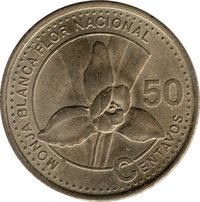
50 Centavos – Guatemala
Guatemala
Context
Material
References
KM: #Click to copy to clipboard283
Numista: #2436
Value
Exchange value: 0.50 GTQ
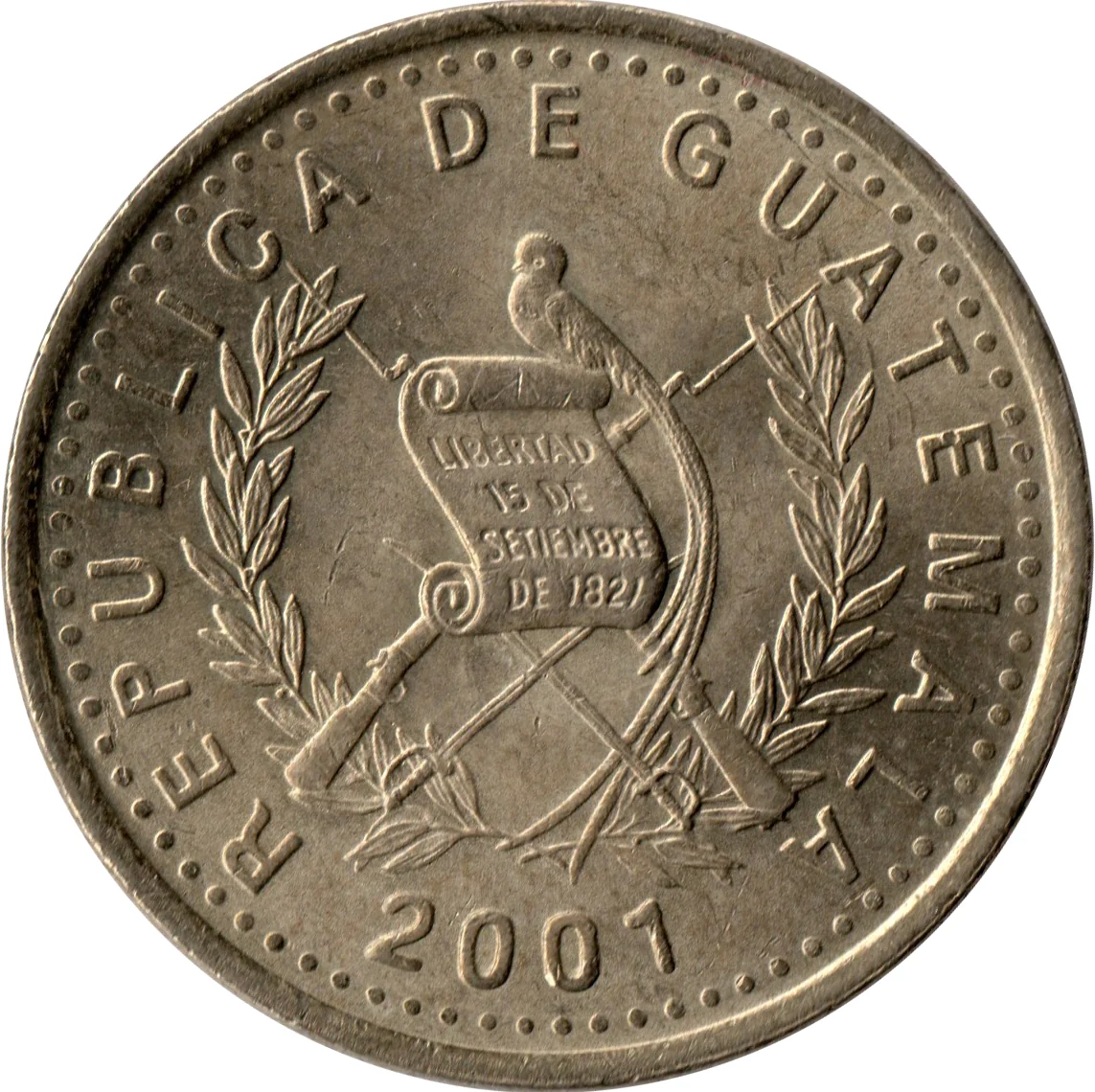
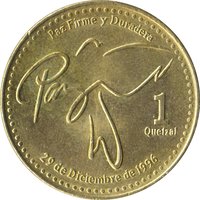
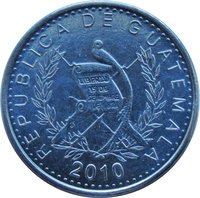
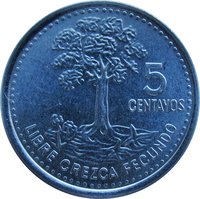
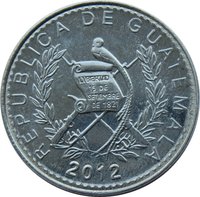
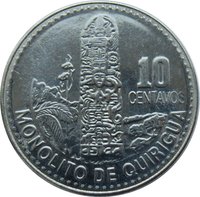
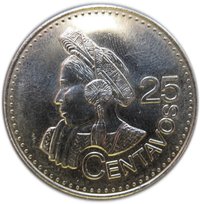
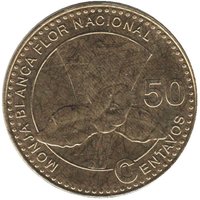
Obverse
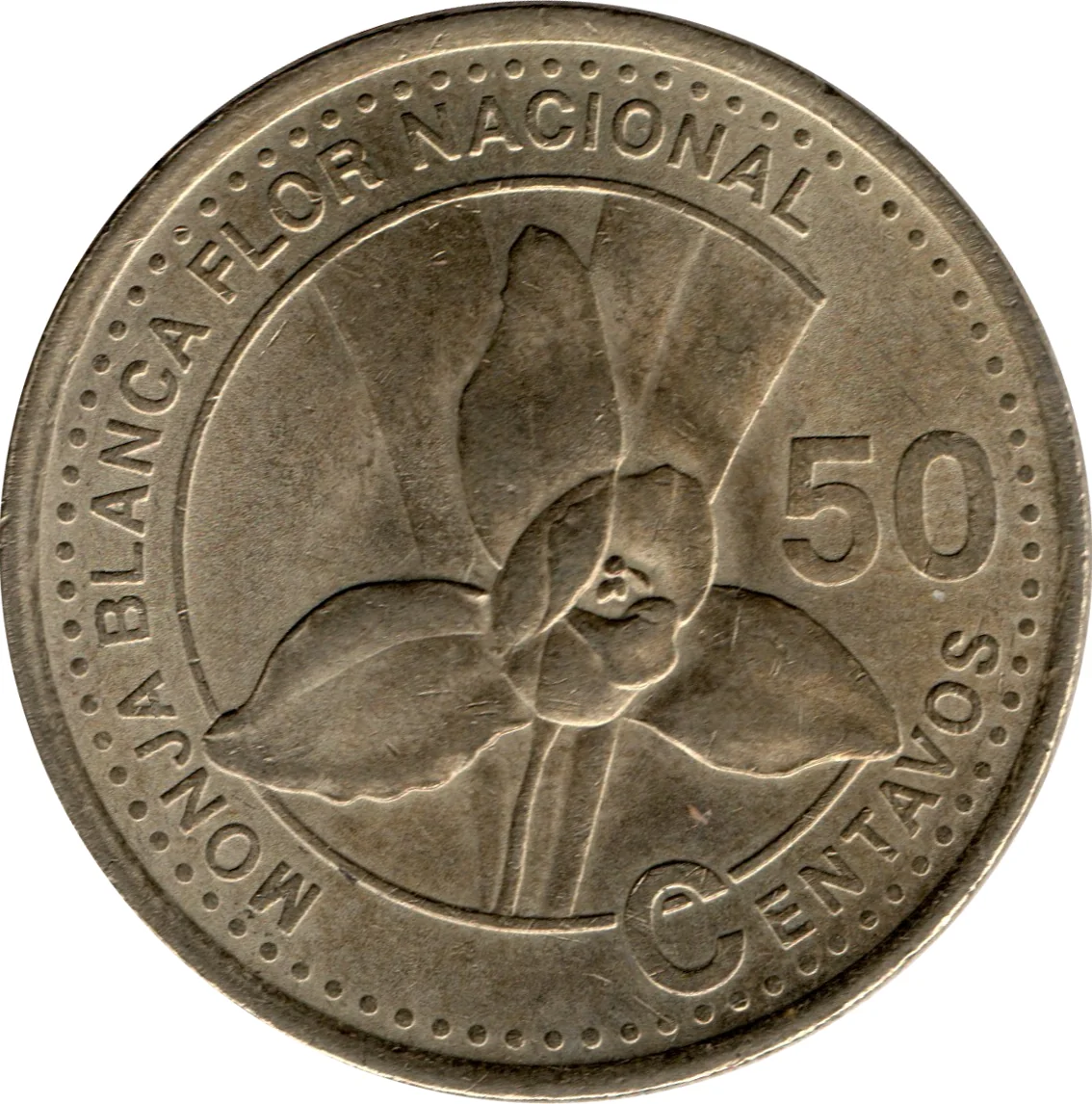
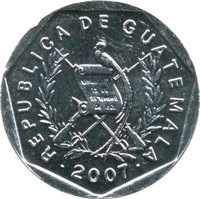
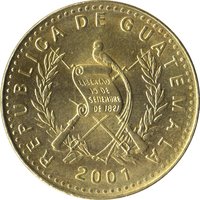
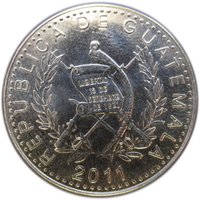
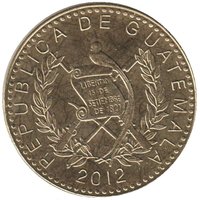
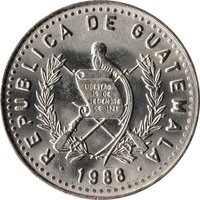
Reverse
Edge
Reeded
Categories
| Symbols> Coat of Arms |
| Plants> Flower |
Mintings
| Year | Mint Mark | Mintage | Quality | Collection |
|---|---|---|---|---|
| 1998 | — | — | ||
| 2001 | — | — | ||
| 2007 | — | 20,000,000 |
Historical background
In 1998, Guatemala's currency situation was defined by the final stages of a significant monetary transition. The country was in the process of fully implementing the Law of Free Negotiation of Foreign Currency, which had been passed in May 2001 but whose preparatory measures began in the late 1990s. This law would ultimately make the U.S. dollar legal tender alongside the national currency, the quetzal (GTQ), moving Guatemala from a de facto to a de jure dollarized economy. The quetzal itself had been introduced in 1925, replacing the Guatemalan peso, and was historically pegged to the U.S. dollar until 1985, after which a managed float was adopted.
The macroeconomic context in 1998 was challenging, shaped by the aftermath of the 1996 peace accords that ended a 36-year civil war and the devastating impact of Hurricane Mitch in late October. While the hurricane caused catastrophic human and economic damage, particularly in agriculture and infrastructure, Guatemala's currency and financial system demonstrated relative resilience compared to some regional neighbors. Inflation for the year was contained at approximately 7.5%, and the quetzal experienced only moderate depreciation, trading around 6.4 quetzales to the U.S. dollar by year's end. This stability was underpinned by cautious fiscal policy and a central bank focused on maintaining international reserves.
Therefore, the currency situation in 1998 was one of comparative stability amidst broader national trauma, serving as a transitional prelude to formal dollarization. The existing, widespread use of U.S. dollars for large transactions, savings, and as a hedge against historical instability created a foundation for the upcoming legal change. The period was characterized less by a currency crisis and more by a deliberate, policy-driven evolution toward a dual-currency system, aimed at promoting investment and stability as the country rebuilt from both conflict and natural disaster.
The macroeconomic context in 1998 was challenging, shaped by the aftermath of the 1996 peace accords that ended a 36-year civil war and the devastating impact of Hurricane Mitch in late October. While the hurricane caused catastrophic human and economic damage, particularly in agriculture and infrastructure, Guatemala's currency and financial system demonstrated relative resilience compared to some regional neighbors. Inflation for the year was contained at approximately 7.5%, and the quetzal experienced only moderate depreciation, trading around 6.4 quetzales to the U.S. dollar by year's end. This stability was underpinned by cautious fiscal policy and a central bank focused on maintaining international reserves.
Therefore, the currency situation in 1998 was one of comparative stability amidst broader national trauma, serving as a transitional prelude to formal dollarization. The existing, widespread use of U.S. dollars for large transactions, savings, and as a hedge against historical instability created a foundation for the upcoming legal change. The period was characterized less by a currency crisis and more by a deliberate, policy-driven evolution toward a dual-currency system, aimed at promoting investment and stability as the country rebuilt from both conflict and natural disaster.
Series: System: 1997-date
🌱 Very Common