

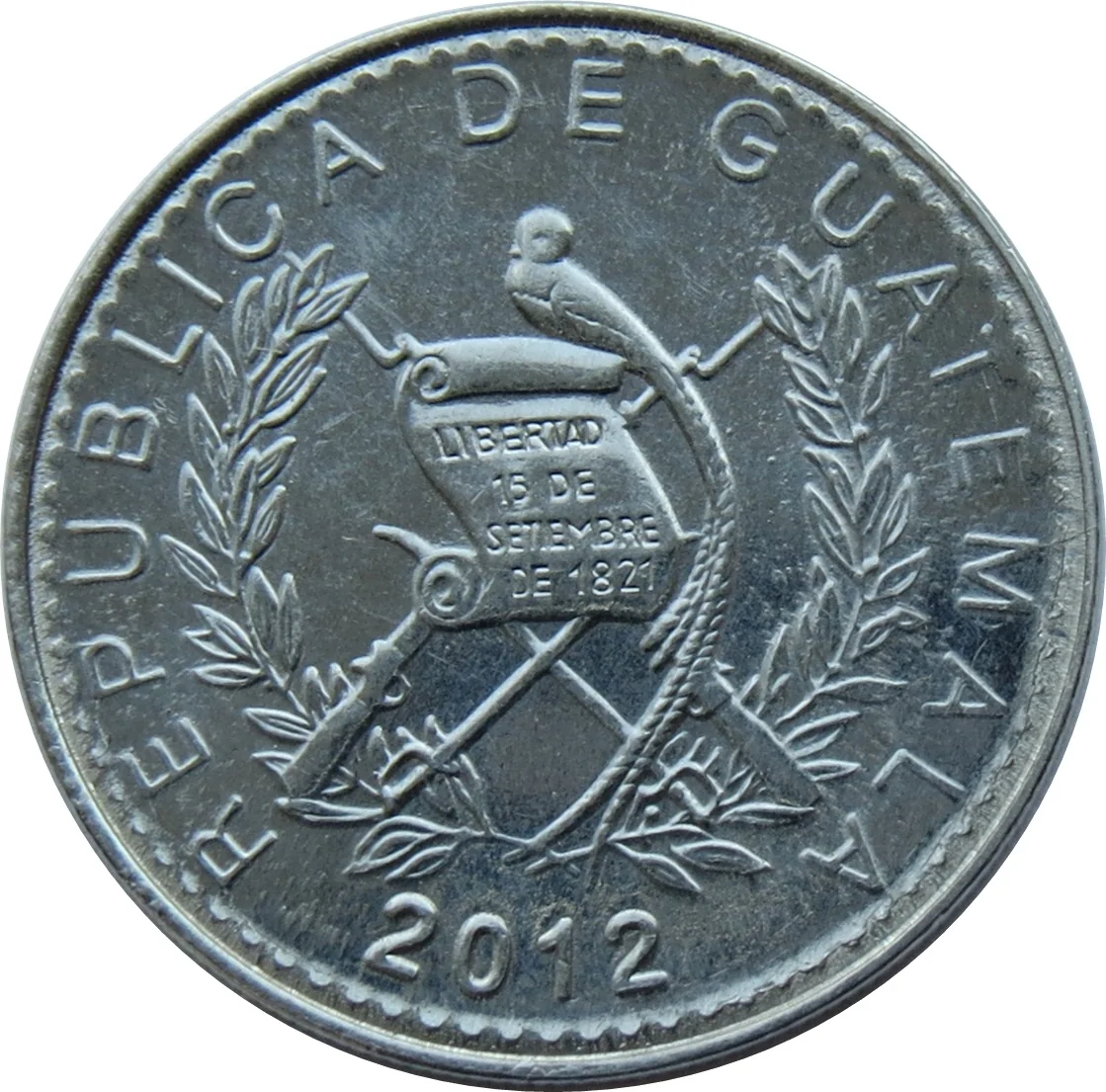
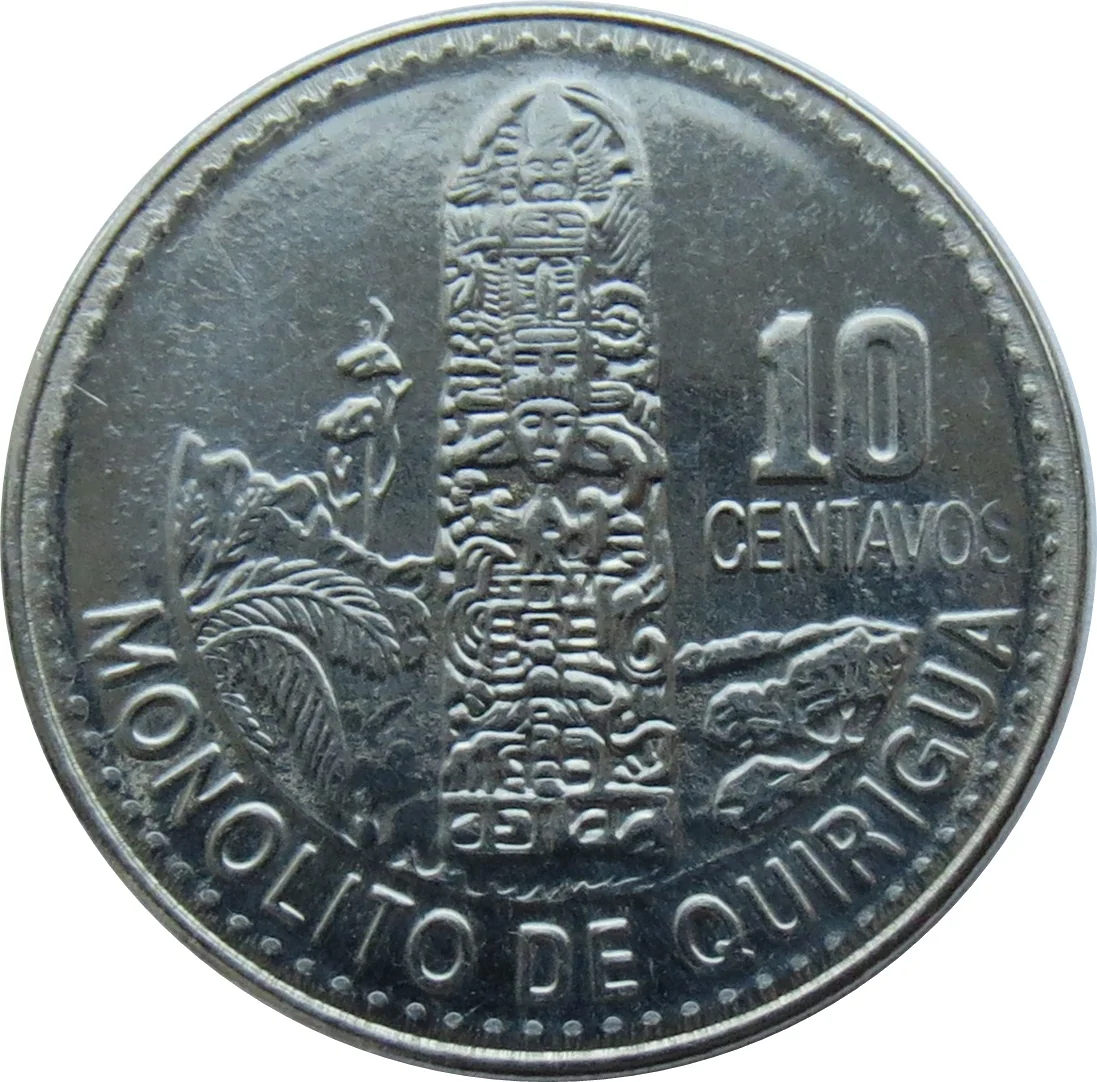
10 centavos – Guatemala
Add to wishlist
Guatemala
Context
Material
Diameter: 21 mm
Weight: 2.42 g
Thickness: 1.18 mm
Shape: Round
Composition: Stainless steel
Magnetic: Yes
Technique: Milled
Alignment: Coin alignment
flip
References
KM: #
Numista: #42670
Value
Exchange value: 0.10 GTQ
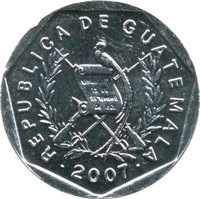
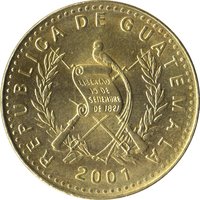
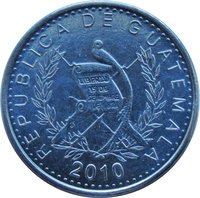
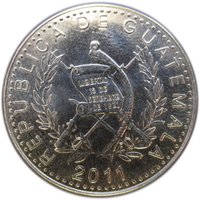
Obverse
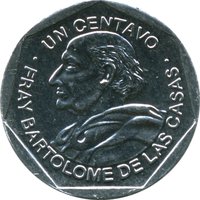
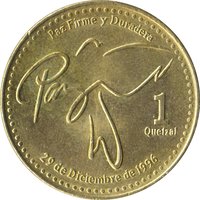
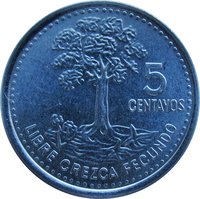
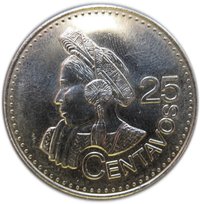
Reverse
Edge
Reeded
Categories
| Art> Sculpture |
| Symbols> Coat of Arms |
Mints
| Name | Mark |
|---|---|
| Mint of Finland | — |
| Mint of Poland | — |
Mintings
| Year | Mint Mark | Mintage | Quality | Collection |
|---|---|---|---|---|
| 2009 | — | — | ||
| 2010 | — | — | ||
| 2011 | — | 50,000,000 | ||
| 2012 | — | — | ||
| 2014 | — | — | ||
| 2015 | — | — | ||
| 2016 | — | — | ||
| 2018 | — | — | ||
| 2021 | — | — | ||
| 2022 | — | — |
Historical background
In 2009, Guatemala's currency situation was defined by the stability of its monetary unit, the quetzal (GTQ), which operated under a managed float exchange rate regime. The Banco de Guatemala (Banguat) maintained a policy of intervening in the foreign exchange market to smooth excessive volatility, but did not target a fixed exchange rate. This approach, in place since 2001, generally succeeded in keeping inflation relatively low and stable, with annual inflation ending the year at approximately 1.9%, down significantly from 9.4% in 2008. The quetzal exhibited moderate depreciation pressure against the US dollar during the year, largely influenced by the global financial crisis.
The primary challenge in 2009 was economic contraction, as the country felt the aftershocks of the international crisis through reduced export demand, lower remittances from Guatemalans living abroad (particularly in the United States), and decreased foreign direct investment. Remittances, a critical source of foreign currency and a pillar of the economy, fell by nearly 10% compared to 2008. This reduction in dollar inflows contributed to the quetzal's weakness, though Banguat's reserves remained at adequate levels. The central bank utilized monetary policy tools, including lowering its key interest rate, to stimulate the slowing economy while continuing to manage liquidity to uphold currency stability.
Overall, the 2009 currency backdrop was one of resilience amid external shocks. The managed float system provided necessary flexibility, allowing the quetzal to adjust to market conditions while controlled interventions prevented disruptive swings. The central bank's focus on maintaining macroeconomic stability helped Guatemala avoid the severe currency crises seen in some other nations during the global downturn, setting a foundation for gradual economic recovery in the following years.
The primary challenge in 2009 was economic contraction, as the country felt the aftershocks of the international crisis through reduced export demand, lower remittances from Guatemalans living abroad (particularly in the United States), and decreased foreign direct investment. Remittances, a critical source of foreign currency and a pillar of the economy, fell by nearly 10% compared to 2008. This reduction in dollar inflows contributed to the quetzal's weakness, though Banguat's reserves remained at adequate levels. The central bank utilized monetary policy tools, including lowering its key interest rate, to stimulate the slowing economy while continuing to manage liquidity to uphold currency stability.
Overall, the 2009 currency backdrop was one of resilience amid external shocks. The managed float system provided necessary flexibility, allowing the quetzal to adjust to market conditions while controlled interventions prevented disruptive swings. The central bank's focus on maintaining macroeconomic stability helped Guatemala avoid the severe currency crises seen in some other nations during the global downturn, setting a foundation for gradual economic recovery in the following years.
Series: System: 1997-date
🌱 Very Common