

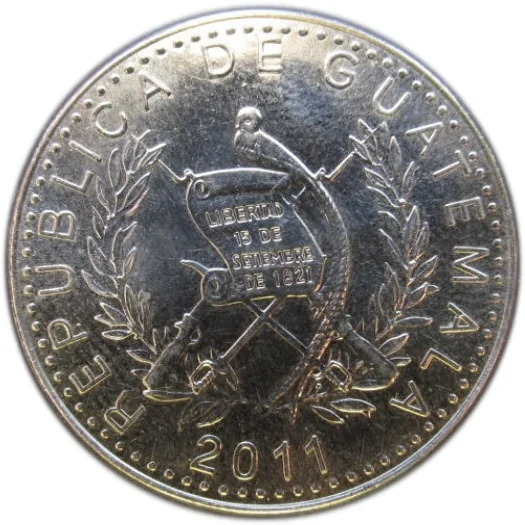
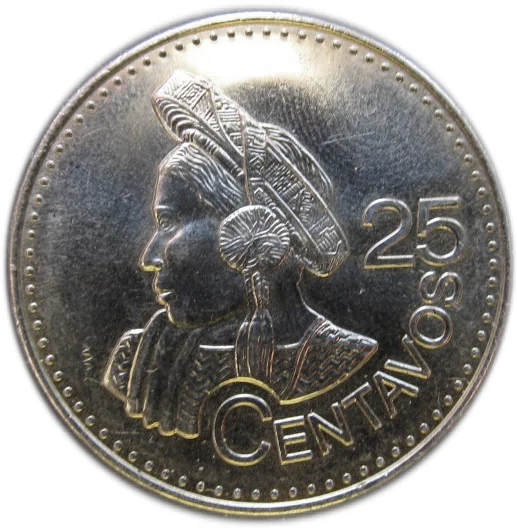
25 centavos – Guatemala
Add to wishlist
Guatemala
Material
Diameter: 27 mm
Weight: 8 g
Shape: Round
Composition: Nickel brass
Magnetic: No
Technique: Milled
Alignment: Coin alignment
flip
References
KM: #
Numista: #42557
Value
Exchange value: 0.25 GTQ
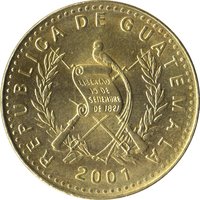
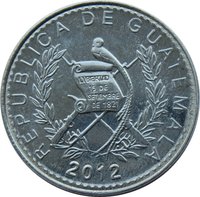
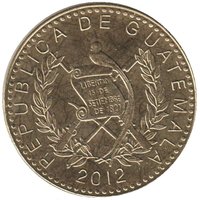
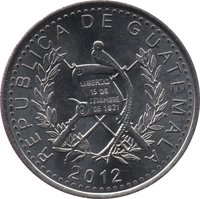
Obverse
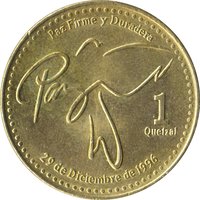
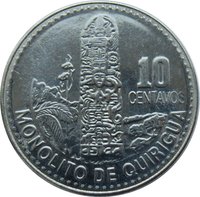
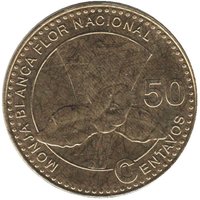
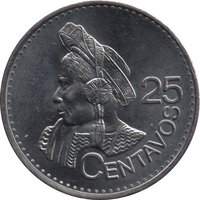
Reverse
Edge
Reeded
Categories
| Symbols> Coat of Arms |
| Object> Hat |
Mintings
| Year | Mint Mark | Mintage | Quality | Collection |
|---|---|---|---|---|
| 2011 | — | — |
Historical background
In 2011, Guatemala's currency situation was defined by the long-standing stability of its monetary unit, the Quetzal (GTQ), which operated under a free-floating exchange rate regime. This system, fully adopted in 2001 after a period of managed floats and pegs, meant the quetzal's value was determined by market forces of supply and demand relative to the US dollar, the dominant reference currency for trade and remittances. The Banco de Guatemala (Banguat) maintained a policy of inflation targeting rather than direct exchange rate management, intervening only to mitigate excessive volatility. This framework had generally succeeded in maintaining low and stable inflation, with annual inflation ending 2011 at approximately 6.2%, though this was above the central bank's target range due to external price pressures.
The year was marked by a notable trend of quetzal appreciation against the US dollar, a continuation from the post-2008 financial crisis period. This strength was primarily driven by robust inflows of foreign exchange, particularly from record-high remittances (exceeding $4.3 billion for the year) from Guatemalans living abroad, largely in the United States. Additionally, strong prices for key agricultural exports like coffee, sugar, and bananas, along with growing foreign direct investment, increased the supply of dollars in the local market, pushing the quetzal's value higher. This appreciation was a double-edged sword, making imports cheaper and helping control inflation but simultaneously posing challenges for exporters by making Guatemalan goods more expensive on the international market.
Despite these market dynamics, the overall currency environment in 2011 was one of relative stability and confidence. The floating regime acted as a shock absorber for the economy, and Banguat's foreign reserves continued to grow, providing a buffer against external shocks. The primary policy debates centered on managing the consequences of the strong quetzal, particularly for the competitiveness of the export and textile (maquila) sectors, and on balancing the benefits of lower imported inflation with the need to support domestic producers. This period solidified the quetzal's reputation as one of the more stable currencies in Central America, albeit within a context of ongoing structural economic challenges like inequality and informality.
The year was marked by a notable trend of quetzal appreciation against the US dollar, a continuation from the post-2008 financial crisis period. This strength was primarily driven by robust inflows of foreign exchange, particularly from record-high remittances (exceeding $4.3 billion for the year) from Guatemalans living abroad, largely in the United States. Additionally, strong prices for key agricultural exports like coffee, sugar, and bananas, along with growing foreign direct investment, increased the supply of dollars in the local market, pushing the quetzal's value higher. This appreciation was a double-edged sword, making imports cheaper and helping control inflation but simultaneously posing challenges for exporters by making Guatemalan goods more expensive on the international market.
Despite these market dynamics, the overall currency environment in 2011 was one of relative stability and confidence. The floating regime acted as a shock absorber for the economy, and Banguat's foreign reserves continued to grow, providing a buffer against external shocks. The primary policy debates centered on managing the consequences of the strong quetzal, particularly for the competitiveness of the export and textile (maquila) sectors, and on balancing the benefits of lower imported inflation with the need to support domestic producers. This period solidified the quetzal's reputation as one of the more stable currencies in Central America, albeit within a context of ongoing structural economic challenges like inequality and informality.
Series: System: 1997-date
🌱 Common