

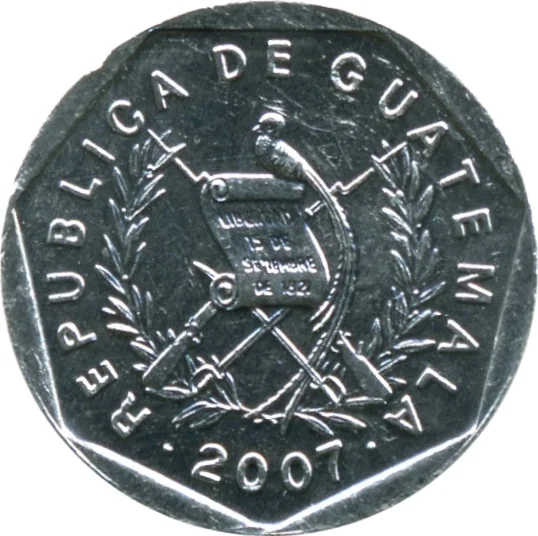
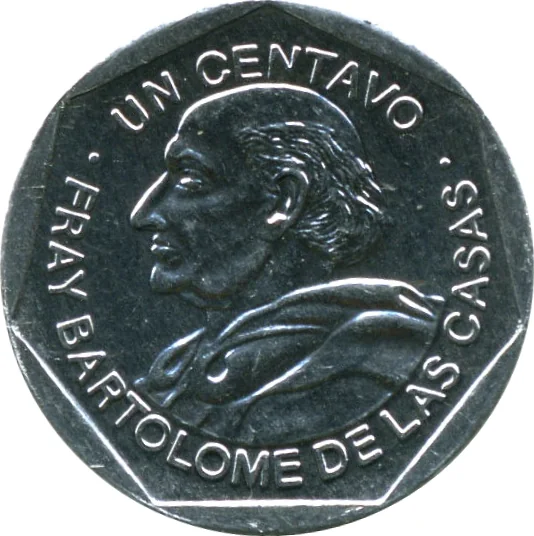
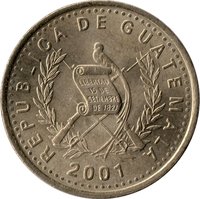
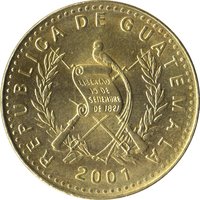
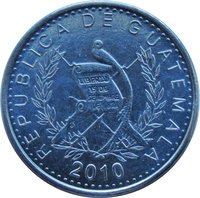
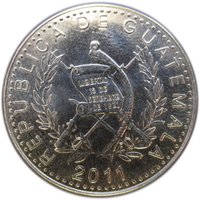
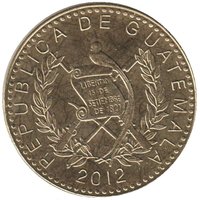
Obverse
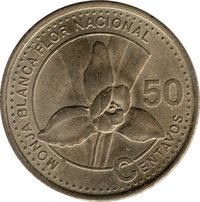
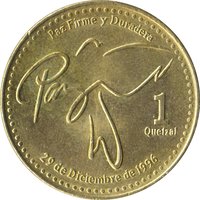
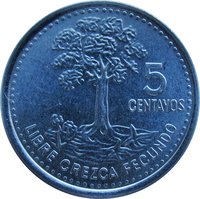
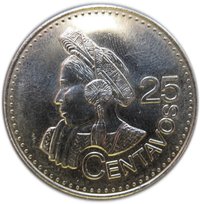
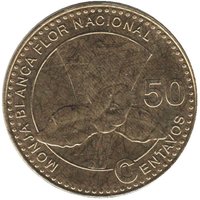
Reverse
Edge
Plain
Categories
| Symbols> Coat of Arms |
| Person> Religious figure |
Mintings
| Year | Mint Mark | Mintage | Quality | Collection |
|---|---|---|---|---|
| 1999 | — | — | ||
| 2006 | — | 140,000 | ||
| 2007 | — | 100,000 | ||
| 2008 | — | 50,000 |
Historical background
In 1999, Guatemala's currency situation was defined by a period of relative stability under a unique and long-standing monetary framework. The country operated with a dual-currency system, where the Guatemalan Quetzal (GTQ) and the US Dollar circulated freely alongside each other for most transactions. However, the core monetary policy was anchored by a managed float exchange rate regime, established in the 1990s. The Banco de Guatemala (the central bank) did not maintain a fixed peg but actively intervened in the foreign exchange market to smooth out excessive volatility and maintain broad stability for the quetzal, which generally traded within a predictable band against the dollar.
This stability was hard-won, following a history of high inflation and devaluation. The central bank's disciplined management throughout the 1990s, supported by increasing remittances and a growing services sector, had successfully tamed the hyperinflation of the 1980s. By 1999, annual inflation had been reduced to single digits, fostering public confidence in the quetzal. Consequently, while the dollar was widely accepted—especially for large purchases like real estate and vehicles—the quetzal remained the dominant currency for everyday domestic transactions and was not facing a crisis of confidence.
The backdrop to this monetary stability, however, included significant economic and social challenges. Guatemala was still recovering from the long civil war that ended in 1996, and structural issues like poverty, inequality, and a narrow tax base persisted. Furthermore, the final months of 1999 saw external shocks, most notably the aftermath of Hurricane Mitch in late 1998, which caused severe infrastructure damage and agricultural losses. While the direct pressure on the currency was contained, these factors underscored the underlying vulnerabilities in the economy that the managed float system aimed to insulate from causing monetary instability.
This stability was hard-won, following a history of high inflation and devaluation. The central bank's disciplined management throughout the 1990s, supported by increasing remittances and a growing services sector, had successfully tamed the hyperinflation of the 1980s. By 1999, annual inflation had been reduced to single digits, fostering public confidence in the quetzal. Consequently, while the dollar was widely accepted—especially for large purchases like real estate and vehicles—the quetzal remained the dominant currency for everyday domestic transactions and was not facing a crisis of confidence.
The backdrop to this monetary stability, however, included significant economic and social challenges. Guatemala was still recovering from the long civil war that ended in 1996, and structural issues like poverty, inequality, and a narrow tax base persisted. Furthermore, the final months of 1999 saw external shocks, most notably the aftermath of Hurricane Mitch in late 1998, which caused severe infrastructure damage and agricultural losses. While the direct pressure on the currency was contained, these factors underscored the underlying vulnerabilities in the economy that the managed float system aimed to insulate from causing monetary instability.
Series: System: 1997-date
🌱 Very Common