

20 Francs – Switzerland
Switzerland
Context
Years: 1883–1896
Issuer: Switzerland 
Period:
(since 1848)
Currency:
(since 1850)
Demonetization: 29 July 1944
Total mintage: 1,750,400
Material
References
KM: #Click to copy to clipboard31
Numista: #20901
Value
Exchange value: 20 CHF = $25.85
Bullion value: $967.65
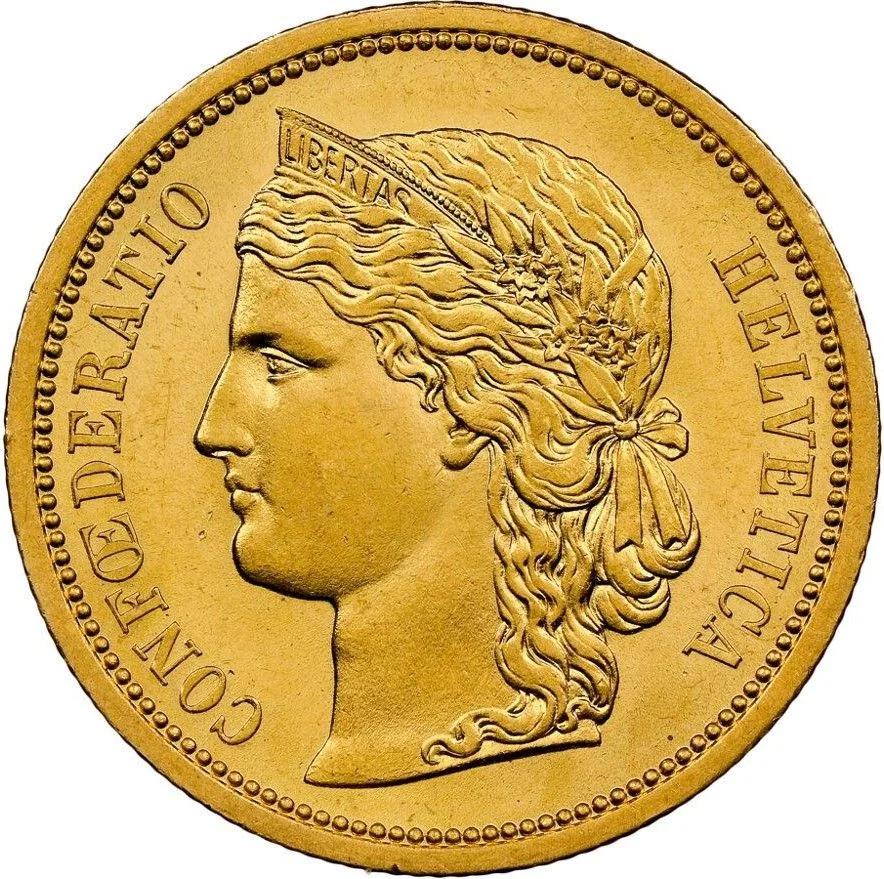
Obverse
Description:
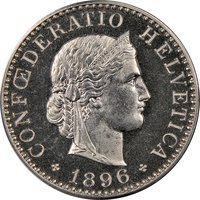
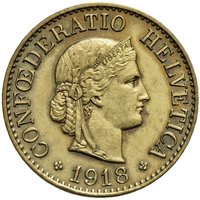
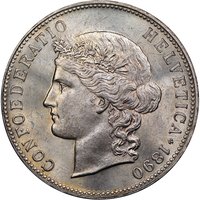
Libertas facing left, hair ribboned, wearing tiara and laurel wreath.
Inscription:
CONFŒDERATIO HELVETICA
LIBERTAS
LIBERTAS
Translation:
Swiss Confederation
Liberty
Liberty
Script: Latin
Language: Latin
Engraver: Karl Schwenzer
Designer: Albert Walch
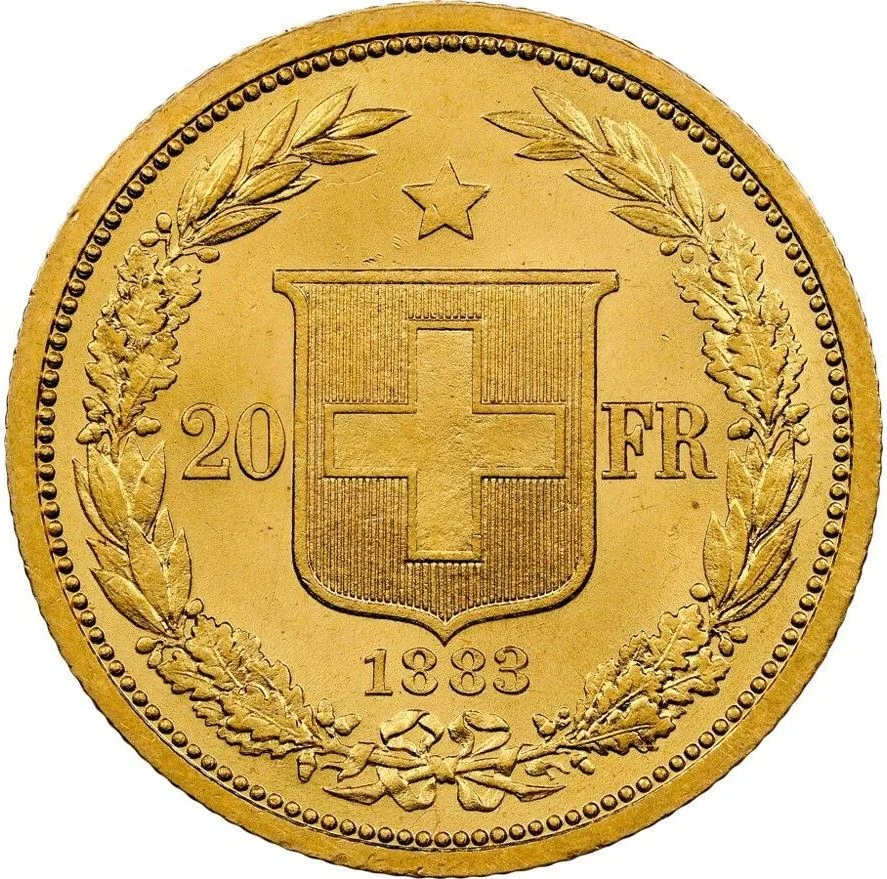
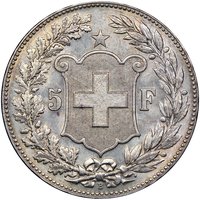
Reverse
Description:
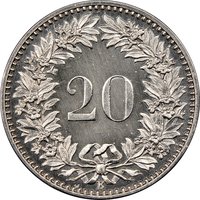
Swiss coat of arms: a five-pointed star encircled by oak and laurel wreaths.
Inscription:
*
20 FR
1883
B
20 FR
1883
B
Script: Latin
Engraver: Karl Schwenzer
Designer: Christian Bühler
Edge
Categories
| Symbols> Coat of Arms |
| Symbol> Wreath |
Mintings
Historical background
In 1883, Switzerland found itself in a complex and fragmented monetary landscape, a direct legacy of its federalist structure. While the Swiss franc, established by the Federal Coinage Act of 1850, was the official unit of account, it coexisted with a multitude of foreign currencies still circulating widely. French francs, Italian lire, and other regional coins remained common in daily transactions, particularly in border areas, creating practical inconveniences for trade and commerce. This situation was further complicated by the fact that while the federal government controlled the issuance of gold coins, the right to mint silver subsidiary coins was still held by individual cantons until 1883, leading to variations and occasional shortages of small change.
The year 1883 itself marked a pivotal legislative step toward full monetary unification. The Swiss Federal Assembly passed a crucial revision to the coinage law, which came into effect in 1884. This law centralized all coinage rights with the Confederation, finally stripping the cantons of their power to mint silver coins. It also defined a new, unified coinage series for the lower-denomination silver francs and fractional coins (such as the half-franc and 20-centime pieces), which would bear consistent federal designs. This move was essential to phasing out the foreign coins and cantonal issues, aiming to establish the Swiss franc as the sole, practical currency across the entire country.
This push for consolidation was driven by the needs of a growing national economy and industrialization, which demanded monetary simplicity and reliability. The 1883 law was a decisive administrative victory for the federal state, setting the stage for the final achievement of a uniform currency. However, the process was gradual; it would take another two decades, with the National Bank Act of 1905 and the establishment of the Swiss National Bank in 1907, to complete the unification by centralizing the issuance of banknotes, which until then had been produced by a multitude of private and cantonal banks.
The year 1883 itself marked a pivotal legislative step toward full monetary unification. The Swiss Federal Assembly passed a crucial revision to the coinage law, which came into effect in 1884. This law centralized all coinage rights with the Confederation, finally stripping the cantons of their power to mint silver coins. It also defined a new, unified coinage series for the lower-denomination silver francs and fractional coins (such as the half-franc and 20-centime pieces), which would bear consistent federal designs. This move was essential to phasing out the foreign coins and cantonal issues, aiming to establish the Swiss franc as the sole, practical currency across the entire country.
This push for consolidation was driven by the needs of a growing national economy and industrialization, which demanded monetary simplicity and reliability. The 1883 law was a decisive administrative victory for the federal state, setting the stage for the final achievement of a uniform currency. However, the process was gradual; it would take another two decades, with the National Bank Act of 1905 and the establishment of the Swiss National Bank in 1907, to complete the unification by centralizing the issuance of banknotes, which until then had been produced by a multitude of private and cantonal banks.
Series: Libertas series

🌱 Fairly Common