

5 rappen – Switzerland
Add to wishlist
Switzerland
Context
Years: 1879–1980
Issuer: Switzerland
Period:
(since 1848)
Currency:
(since 1850)
Demonetization: 1 January 1984
Total mintage: 592,026,576
Material
References
KM: #
Numista: #168
Value
Exchange value: 0.05 CHF
Obverse
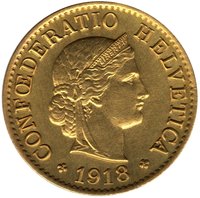
Description:
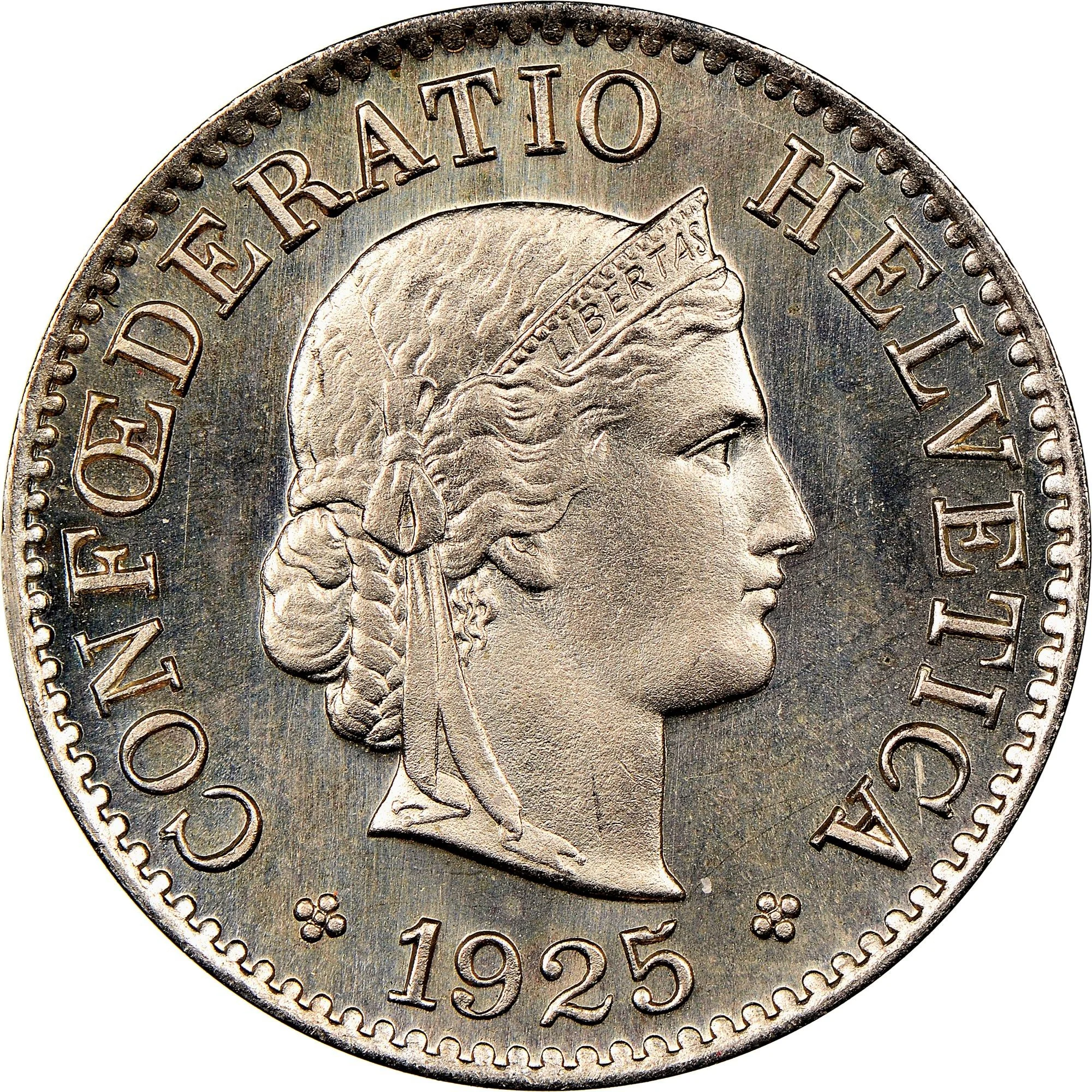
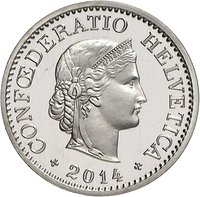
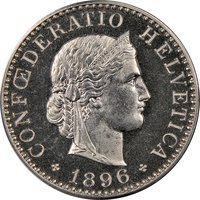
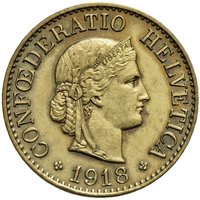
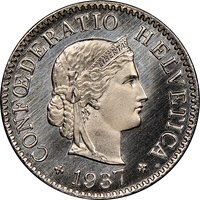
Libertas facing right, with braided hair, ribbon, and tiara.
Inscription:
CONFŒDERATIO HELVETICA
᛭ 1925 ᛭
LIBERTAS
᛭ 1925 ᛭
LIBERTAS
Translation:
Confederation of Switzerland
Liberty
Liberty
Script: Latin
Language: Latin
Designer: Karl Schwenzer
Reverse
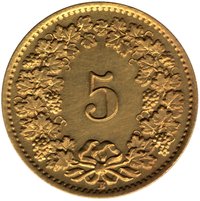
Description:
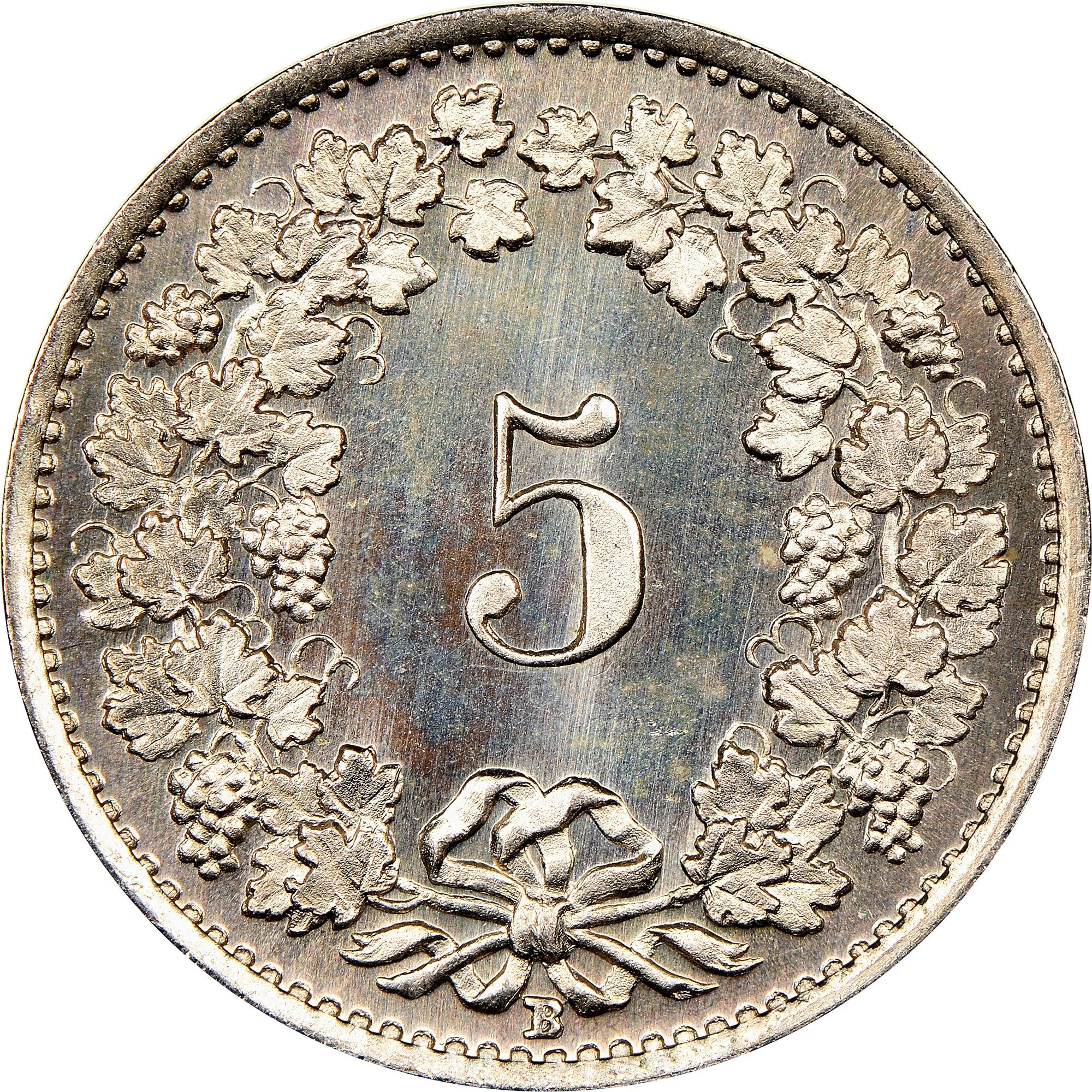
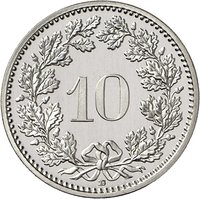
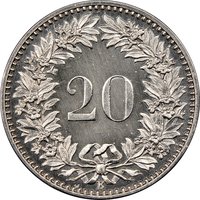
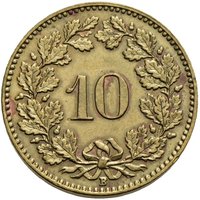
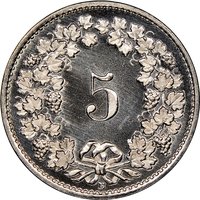
Grapevine wreath with three grape bunches on each side, tied below with a ribbon.
Inscription:
5
B
B
Script: Latin
Designer: Carl Friedrich Voigt
Edge
Plain
Mints
| Name | Mark |
|---|---|
| Bern | B |
Mintings
| Year | Mint Mark | Mintage | Quality | Collection |
|---|---|---|---|---|
| 1879 | B | 1,000,000 | ||
| 1880 | B | 2,000,000 | ||
| 1881 | B | 2,000,000 | ||
| 1882 | B | 3,000,000 | ||
| 1883 | B | 3,000,000 | ||
| 1884 | B | 2,000,000 | ||
| 1885 | B | 3,000,000 | ||
| 1887 | B | 500,000 | ||
| 1888 | B | 1,500,000 | ||
| 1889 | B | 500,000 | ||
| 1890 | B | 1,000,000 | ||
| 1891 | B | 1,000,000 | ||
| 1892 | B | 1,000,000 | ||
| 1893 | B | 2,000,000 | ||
| 1894 | B | 2,000,000 | ||
| 1895 | B | 2,000,000 | ||
| 1896 | B | 16 | ||
| 1897 | B | 500,000 | ||
| 1898 | B | 2,500,000 | ||
| 1899 | B | 1,500,000 | ||
| 1900 | B | 2,000,000 | ||
| 1901 | B | 3,000,000 | ||
| 1902 | B | 1,000,000 | ||
| 1903 | B | 2,000,000 | ||
| 1904 | B | 1,000,000 | ||
| 1905 | B | 1,000,000 | ||
| 1906 | B | 3,000,000 | ||
| 1907 | B | 5,000,000 | ||
| 1908 | B | 3,000,000 | ||
| 1909 | B | 2,000,000 | ||
| 1910 | B | 1,000,000 | ||
| 1911 | B | 2,000,000 | ||
| 1912 | B | 3,000,000 | ||
| 1913 | B | 3,000,000 | ||
| 1914 | B | 3,000,000 | ||
| 1915 | B | 3,000,000 | ||
| 1917 | B | 1,000,000 | ||
| 1919 | B | 6,000,000 | ||
| 1920 | B | 5,000,000 | ||
| 1921 | B | 3,000,000 | ||
| 1922 | B | 4,000,000 | ||
| 1925 | B | 3,000,000 | ||
| 1926 | B | 3,000,000 | ||
| 1927 | B | 2,000,000 | ||
| 1928 | B | 2,000,000 | ||
| 1929 | B | 2,000,000 | ||
| 1930 | B | 3,000,000 | ||
| 1931 | B | 5,037,000 | ||
| 1940 | B | 1,416,000 | ||
| 1942 | B | 5,078,000 | ||
| 1943 | B | 6,591,000 | ||
| 1944 | B | 9,981,000 | ||
| 1945 | B | 985,000 | ||
| 1946 | B | 6,179,000 | ||
| 1947 | B | 5,125,000 | ||
| 1948 | B | 4,710,000 | ||
| 1949 | B | 4,589,000 | ||
| 1950 | B | 920,000 | ||
| 1951 | B | 2,141,000 | ||
| 1952 | B | 4,690,000 | ||
| 1953 | B | 9,131,000 | ||
| 1954 | B | 8,038,000 | ||
| 1955 | B | 19,943,000 | ||
| 1957 | B | 10,147,000 | ||
| 1958 | B | 10,217,000 | ||
| 1959 | B | 11,085,000 | ||
| 1962 | B | 23,840,000 | ||
| 1963 | B | 29,730,000 | ||
| 1964 | B | 17,080,000 | ||
| 1965 | B | 1,430,000 | ||
| 1966 | B | 10,100,000 | ||
| 1967 | B | 13,010,000 | ||
| 1968 | B | 10,020,000 | ||
| 1969 | B | 32,990,000 | ||
| 1970 | — | 34,800,000 | ||
| 1971 | — | 40,020,000 | ||
| 1974 | — | 30,002,000 | ||
| 1974 | — | 2,400 | Proof | |
| 1975 | — | 10,000 | Proof | |
| 1975 | — | 34,005,000 | ||
| 1976 | — | 12,005,000 | ||
| 1976 | — | 5,130 | Proof | |
| 1977 | — | 14,012,000 | ||
| 1977 | — | 7,030 | Proof | |
| 1978 | — | 10,000 | Proof | |
| 1978 | — | 16,415,000 | ||
| 1979 | — | 27,010,000 | ||
| 1979 | — | 10,000 | Proof | |
| 1980 | — | 10,000 | Proof | |
| 1980 | — | 15,500,000 |
Historical background
In 1879, Switzerland found itself in a complex and fragmented currency situation, a legacy of its federal structure. While the Swiss Federal Constitution of 1848 had granted the Confederation the exclusive right to coin money, the actual circulation was dominated by a bewildering array of foreign currencies, primarily French francs, Italian lire, and other European coins. This created significant practical difficulties for trade and daily life, as merchants and citizens had to constantly calculate exchange rates and deal with the fluctuating values of multiple coinages.
The push for a unified national currency had been a long-standing goal, and a pivotal step was taken with the Federal Coinage Act of 1850, which introduced the Swiss franc, pegged to the French franc and based on a bimetallic (silver and gold) standard. However, the Latin Monetary Union (LMU), formed in 1865 with France, Italy, and Belgium, profoundly shaped the situation. Switzerland joined in 1865, agreeing to standardize the weight, fineness, and size of its coins with member states, which ensured the free circulation of their currencies within its borders. Thus, by 1879, the Swiss franc was legally established but existed in practice alongside its LMU partners' coins as legal tender.
The year 1879 itself fell during a period of strain for the LMU, as the declining price of silver caused an influx of silver coins from member states, threatening Switzerland's gold reserves. This pressure highlighted the vulnerabilities of the bimetallic system and Switzerland's dependence on an international agreement for its monetary stability. Consequently, Swiss authorities were increasingly focused on managing these inflows and contemplating a move toward a gold standard, setting the stage for the eventual nationalization of the currency system and Switzerland's withdrawal from the LMU in the late 1920s.
The push for a unified national currency had been a long-standing goal, and a pivotal step was taken with the Federal Coinage Act of 1850, which introduced the Swiss franc, pegged to the French franc and based on a bimetallic (silver and gold) standard. However, the Latin Monetary Union (LMU), formed in 1865 with France, Italy, and Belgium, profoundly shaped the situation. Switzerland joined in 1865, agreeing to standardize the weight, fineness, and size of its coins with member states, which ensured the free circulation of their currencies within its borders. Thus, by 1879, the Swiss franc was legally established but existed in practice alongside its LMU partners' coins as legal tender.
The year 1879 itself fell during a period of strain for the LMU, as the declining price of silver caused an influx of silver coins from member states, threatening Switzerland's gold reserves. This pressure highlighted the vulnerabilities of the bimetallic system and Switzerland's dependence on an international agreement for its monetary stability. Consequently, Swiss authorities were increasingly focused on managing these inflows and contemplating a move toward a gold standard, setting the stage for the eventual nationalization of the currency system and Switzerland's withdrawal from the LMU in the late 1920s.
Series: Libertas series
🌱 Very Common