

5 rappen – Switzerland
Add to wishlist
Switzerland
Context
Year: 1918
Issuer: Switzerland
Period:
(since 1848)
Currency:
(since 1850)
Demonetization: 1 January 1924
Total mintage: 6,000,000
Material
References
KM: #
Numista: #169
Value
Exchange value: 0.05 CHF
Obverse
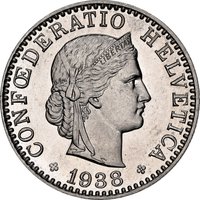
Description:
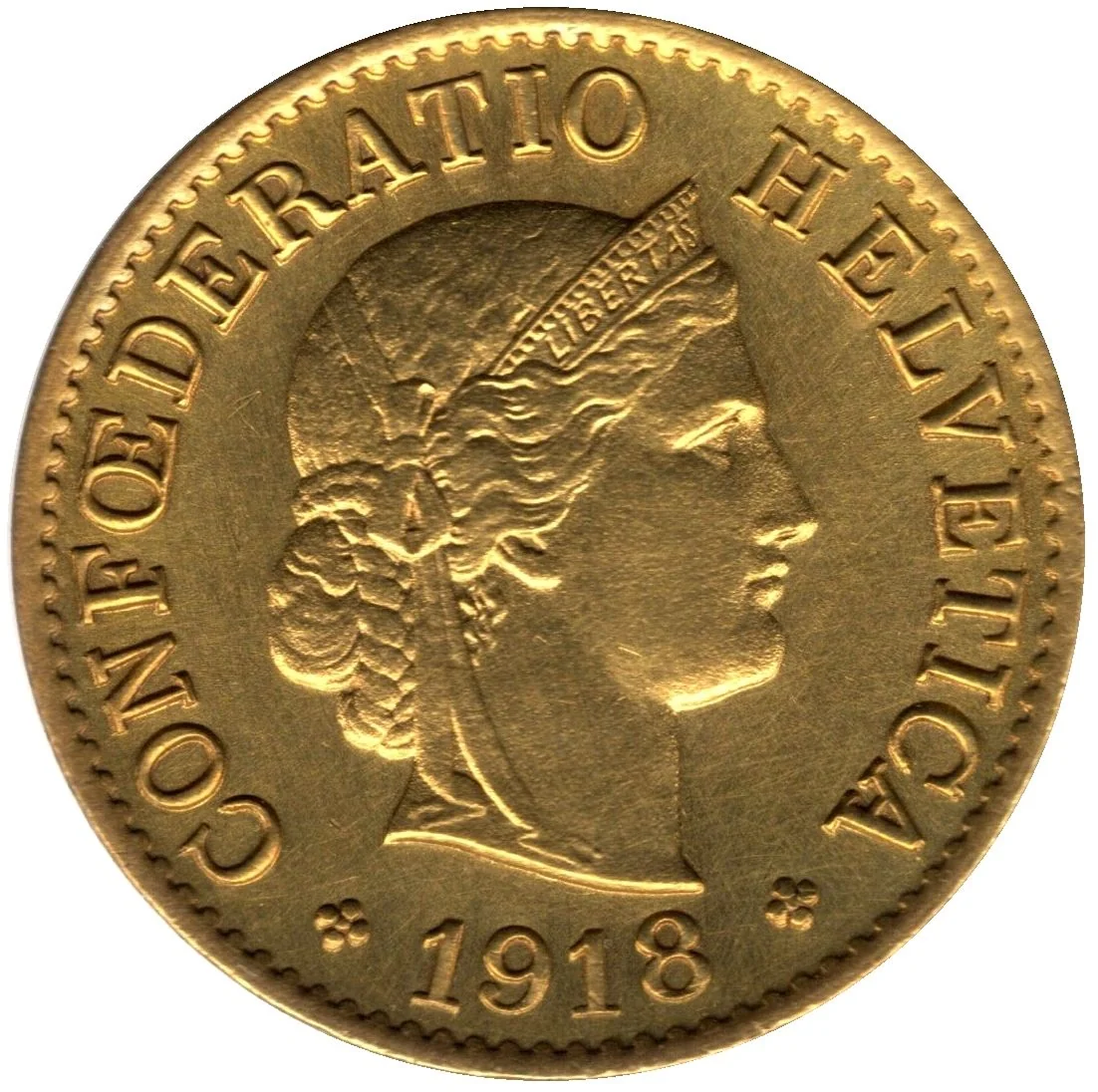
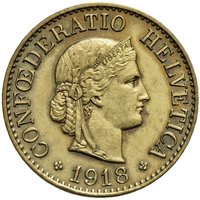
Libertas facing right, with braided hair, ribbon, and tiara.
Inscription:
CONFŒDERATIO HELVETICA
᛭ 1918 ᛭
LIBERTAS
᛭ 1918 ᛭
LIBERTAS
Translation:
Swiss Confederation
* 1918 *
Liberty
* 1918 *
Liberty
Script: Latin
Designer: Karl Schwenzer
Reverse
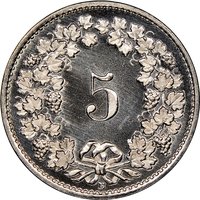
Description:
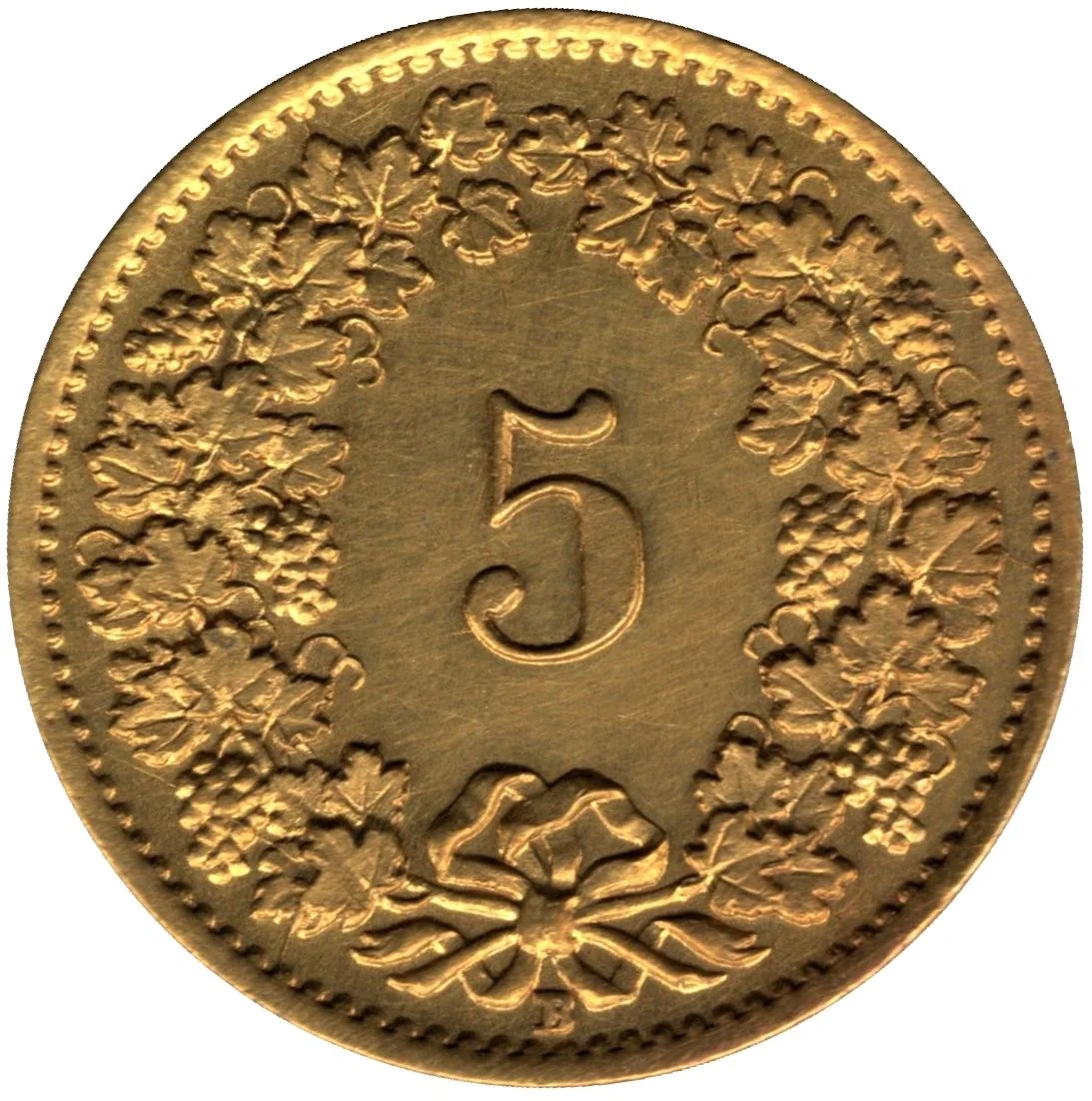
Grapevine wreath with three grape bunches on each side, tied below with a ribbon.
Inscription:
5
B
B
Script: Latin
Designer: Carl Friedrich Voigt
Edge
Plain
Mints
| Name | Mark |
|---|---|
| Bern | B |
Mintings
| Year | Mint Mark | Mintage | Quality | Collection |
|---|---|---|---|---|
| 1918 | B | 6,000,000 |
Historical background
By 1918, Switzerland's currency situation was defined by the profound economic strains of the First World War. Although officially neutral, the Swiss economy was deeply affected by the conflict, leading to significant inflation. The Swiss National Bank (SNB), founded in 1907, had suspended the convertibility of banknotes into gold at the outbreak of war in 1914 to conserve reserves and fund government spending. This break from the gold standard, combined with wartime trade disruptions, shortages, and high government debt, caused the value of the Swiss franc to depreciate and consumer prices to rise sharply, eroding public purchasing power.
The inflationary pressure created severe social tension, which was a direct catalyst for the nationwide General Strike of November 1918. Workers, whose real wages had fallen, demanded not only political reforms but also concrete economic measures, including the SNB's reorganization to ensure state control over currency and credit. The strike reflected a widespread belief that monetary policy was serving the interests of banks and exporters rather than the broader population. The situation was further complicated by a influx of foreign capital seeking a safe haven, which paradoxically increased the money supply and contributed to inflationary pressures despite the country's physical isolation.
In the immediate post-war period, Switzerland faced the critical challenge of monetary stabilization. The primary goal became a return to the gold standard to restore confidence and price stability, a process that would be meticulously planned throughout the early 1920s. The experiences of 1918 cemented a lasting national consensus on the importance of price stability and a strong currency, profoundly shaping the SNB's conservative and independent mandate in the decades to follow.
The inflationary pressure created severe social tension, which was a direct catalyst for the nationwide General Strike of November 1918. Workers, whose real wages had fallen, demanded not only political reforms but also concrete economic measures, including the SNB's reorganization to ensure state control over currency and credit. The strike reflected a widespread belief that monetary policy was serving the interests of banks and exporters rather than the broader population. The situation was further complicated by a influx of foreign capital seeking a safe haven, which paradoxically increased the money supply and contributed to inflationary pressures despite the country's physical isolation.
In the immediate post-war period, Switzerland faced the critical challenge of monetary stabilization. The primary goal became a return to the gold standard to restore confidence and price stability, a process that would be meticulously planned throughout the early 1920s. The experiences of 1918 cemented a lasting national consensus on the importance of price stability and a strong currency, profoundly shaping the SNB's conservative and independent mandate in the decades to follow.
Series: Libertas series

🌱 Fairly Common