

20 centavos – Portugal
Add to wishlist
Portugal
Obverse
Description:
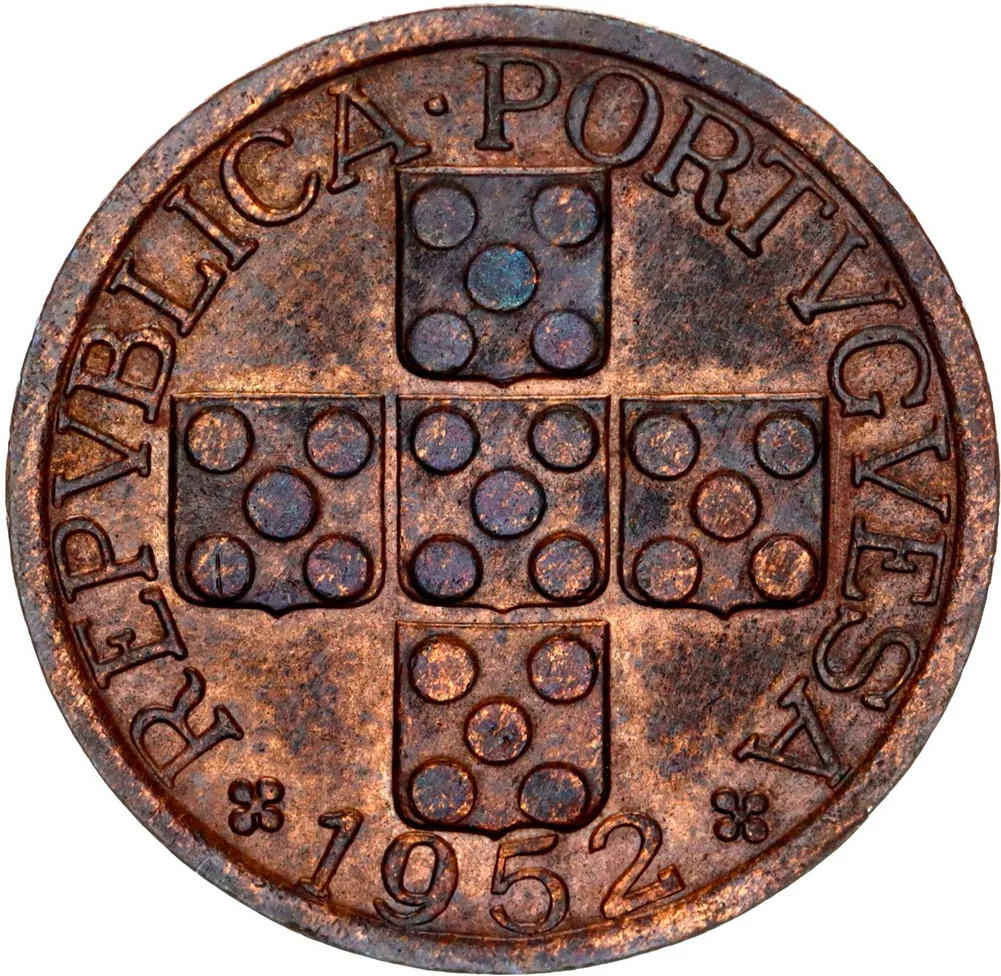
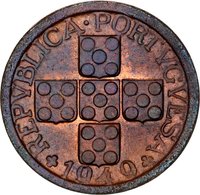
The Portuguese shield (five escutcheons in a cross, each with a dot) and the date below.
Inscription:
REPVBLICA · PORTVGVESA
1968
1968
Translation:
REPUBLIC OF PORTUGAL
1968
1968
Script: Latin
Language: Latin
Engraver: Marcelino Norte de Almeida
Reverse
Description:
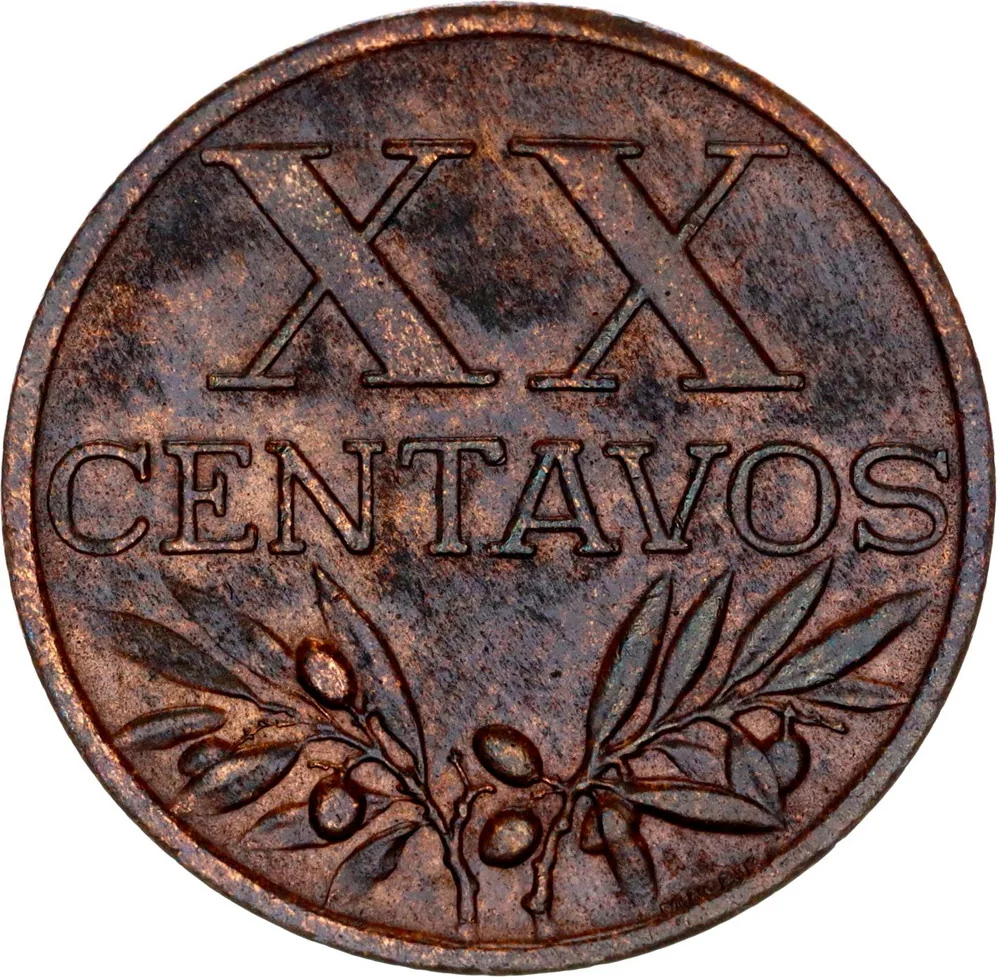
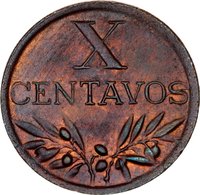
Olive branches (Olea europaea) below the Roman numeral denomination.
Inscription:
XX
CENTAVOS
M NORTE.
CENTAVOS
M NORTE.
Script: Latin
Engraver: Marcelino Norte de Almeida
Edge
Plain
Mints
| Name | Mark |
|---|---|
| Imprensa Nacional - Casa da Moeda | — |
Mintings
| Year | Mint Mark | Mintage | Quality | Collection |
|---|---|---|---|---|
| 1942 | — | 10,170,000 | ||
| 1943 | — | 5,670,000 | ||
| 1944 | — | 7,290,000 | ||
| 1945 | — | 7,552,000 | ||
| 1948 | — | 2,750,000 | ||
| 1949 | — | 12,250,000 | ||
| 1951 | — | 3,185,000 | ||
| 1952 | — | 1,815,000 | ||
| 1953 | — | 9,426,000 | ||
| 1955 | — | 5,574,000 | ||
| 1956 | — | 6,450,000 | ||
| 1958 | — | 7,470,000 | ||
| 1959 | — | 4,780,000 | ||
| 1960 | — | 4,790,000 | ||
| 1961 | — | 5,180,000 | ||
| 1962 | — | 2,500,000 | ||
| 1963 | — | 7,990,000 | ||
| 1964 | — | 7,010,000 | ||
| 1965 | — | 7,365,000 | ||
| 1966 | — | 8,074,999 | ||
| 1967 | — | 9,220,000 | ||
| 1968 | — | 10,372,000 | ||
| 1969 | — | 8,657,000 |
Historical background
In 1942, Portugal’s currency situation was defined by the pressures of World War II, despite the country's official neutrality. The Portuguese escudo was managed under a tightly controlled regime by the authoritarian Estado Novo government, led by António de Oliveira Salazar, who also served as Minister of Finance. The primary concern was insulating the economy from external shocks and maintaining monetary stability, a cornerstone of Salazar's policy. Portugal's strategic position allowed it to trade with both Allied and Axis powers, leading to significant inflows of gold and foreign exchange, particularly from British payments for essential tungsten (wolfram) and from services rendered through the neutral port of Lisbon. This bolstered the country's reserves but created inflationary pressures within a constrained domestic economy.
The escudo's value was maintained through a complex system of exchange controls and multiple exchange rates, rather than a free-floating currency. The Bank of Portugal, under government direction, set official rates for different types of transactions, creating a premium for foreign currency on a active black market. This system aimed to conserve foreign reserves, prioritize essential imports like fuel and wheat, and prevent capital flight. However, it also led to distortions, scarcity of consumer goods, and a growing disparity between the official economy and the realities of the market, where prices for scarce goods soared.
Ultimately, the currency situation in 1942 reflected a managed but strained stability. The influx of gold from wartime trade significantly strengthened Portugal's financial position for the post-war period, allowing it to avoid the debt that crippled many European nations. However, for the average Portuguese citizen, the immediate reality was one of rationing, shortages, and economic austerity. The controlled escudo successfully shielded the state's finances from the war's volatility, but it did so at the cost of a constrained and difficult domestic standard of living.
The escudo's value was maintained through a complex system of exchange controls and multiple exchange rates, rather than a free-floating currency. The Bank of Portugal, under government direction, set official rates for different types of transactions, creating a premium for foreign currency on a active black market. This system aimed to conserve foreign reserves, prioritize essential imports like fuel and wheat, and prevent capital flight. However, it also led to distortions, scarcity of consumer goods, and a growing disparity between the official economy and the realities of the market, where prices for scarce goods soared.
Ultimately, the currency situation in 1942 reflected a managed but strained stability. The influx of gold from wartime trade significantly strengthened Portugal's financial position for the post-war period, allowing it to avoid the debt that crippled many European nations. However, for the average Portuguese citizen, the immediate reality was one of rationing, shortages, and economic austerity. The controlled escudo successfully shielded the state's finances from the war's volatility, but it did so at the cost of a constrained and difficult domestic standard of living.
Series: System 1927-1968
🌱 Very Common