

10 Escudos – Portugal
Portugal
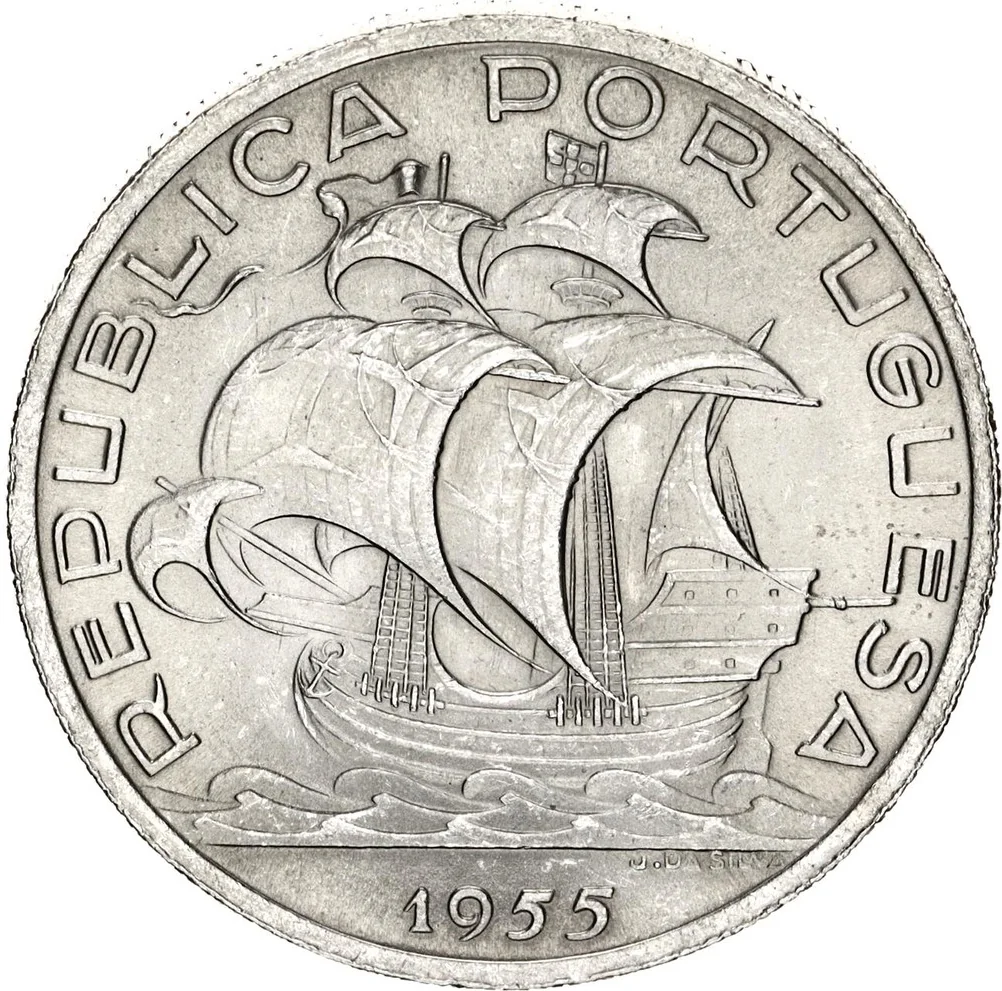
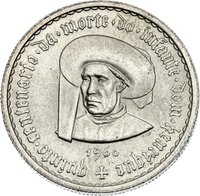
Obverse
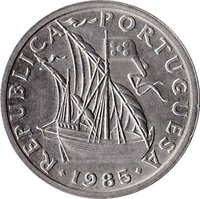
Description:
Sailing ship left, legend above, date below.
Inscription:
REPUBLICA PORTUGUESA
1954
1954
Translation:
Portuguese Republic
1954
1954
Script: Latin
Language: Portuguese
Engraver: João da Silva
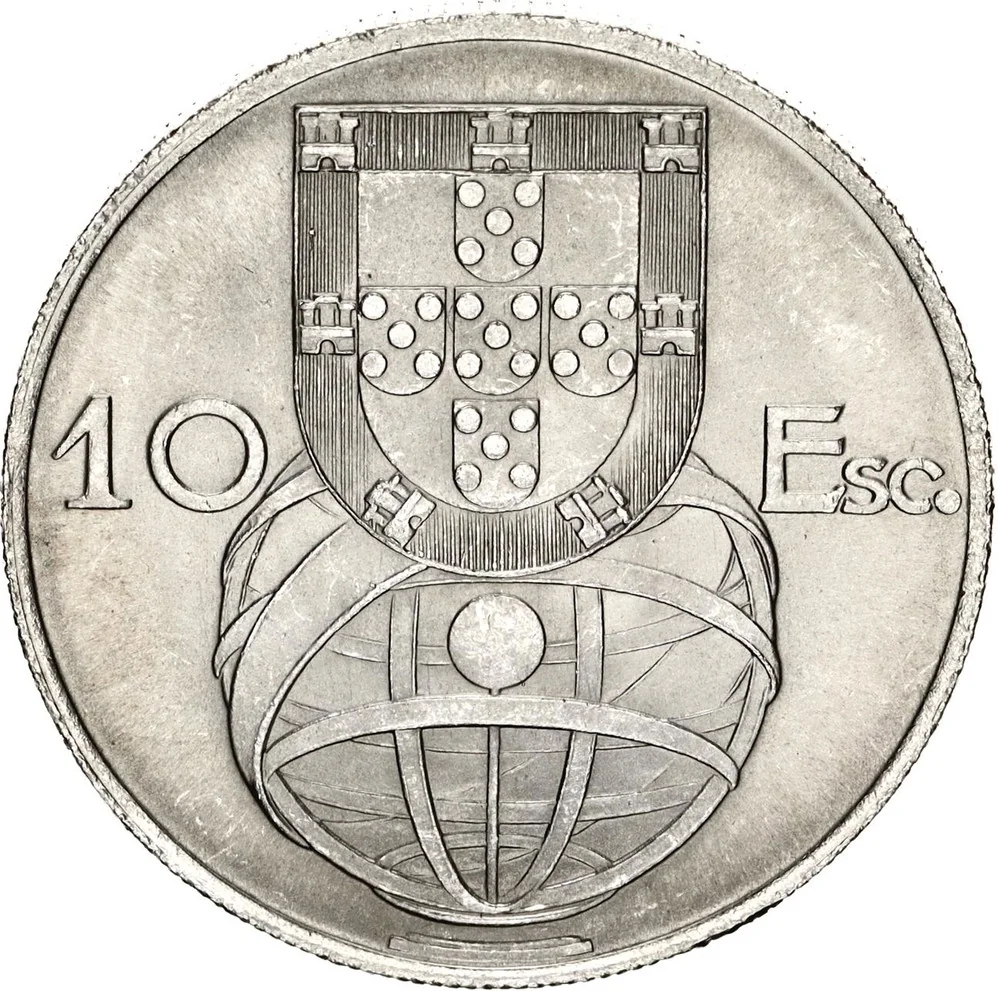
Reverse
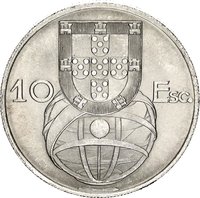
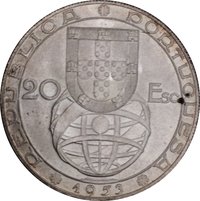
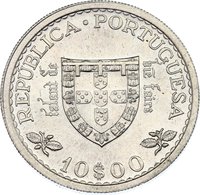
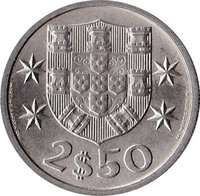
Description:
Portuguese shield over armillary sphere
Inscription:
10 Esc.
Script: Latin
Engraver: João da Silva
Edge
Reeded
Categories
| Transportation> Watercraft |
Mintings
| Year | Mint Mark | Mintage | Quality | Collection |
|---|---|---|---|---|
| 1954 | — | 5,764,350 | ||
| 1955 | — | 4,055,650 |
Historical background
In 1954, Portugal's currency situation was defined by the Escudo, which had been the national currency since 1911, replacing the Real. The monetary system operated under a tightly controlled regime, characteristic of the authoritarian Estado Novo government led by António de Oliveira Salazar. The escudo was not a freely convertible currency on international markets; instead, its value and exchange were strictly managed by the Bank of Portugal through a complex system of multiple exchange rates and capital controls. This protectionist framework aimed to shield Portugal's relatively underdeveloped and insulated economy from external shocks, conserve foreign reserves, and direct trade according to state priorities.
Economically, the early 1950s were a period of cautious stabilization and the beginning of incremental growth following the austerity and isolation of the 1930s and 1940s. Portugal benefited from its neutrality in World War II and was receiving initial inflows from Marshall Plan aid, which provided some support for the currency. However, the escudo's fixed parity and artificial valuation often masked underlying economic weaknesses, including a significant trade deficit and inflationary pressures. The currency controls led to a disparity between the official exchange rate and black-market rates, reflecting the currency's overvaluation and the restrictions on economic activity.
Internationally, Portugal's currency policy was instrumental in maintaining its colonial empire (the "Escudo Area"), facilitating trade and financial flows between the metropolis and territories like Angola and Mozambique. This system helped bind the empire into a single economic zone, but it also strained Portugal's financial resources. By 1954, the rigid currency controls were becoming a point of contention as pressures for modernization and greater integration with Western Europe began to slowly emerge, setting the stage for the economic reforms and challenges that would follow in the late 1950s and 1960s.
Economically, the early 1950s were a period of cautious stabilization and the beginning of incremental growth following the austerity and isolation of the 1930s and 1940s. Portugal benefited from its neutrality in World War II and was receiving initial inflows from Marshall Plan aid, which provided some support for the currency. However, the escudo's fixed parity and artificial valuation often masked underlying economic weaknesses, including a significant trade deficit and inflationary pressures. The currency controls led to a disparity between the official exchange rate and black-market rates, reflecting the currency's overvaluation and the restrictions on economic activity.
Internationally, Portugal's currency policy was instrumental in maintaining its colonial empire (the "Escudo Area"), facilitating trade and financial flows between the metropolis and territories like Angola and Mozambique. This system helped bind the empire into a single economic zone, but it also strained Portugal's financial resources. By 1954, the rigid currency controls were becoming a point of contention as pressures for modernization and greater integration with Western Europe began to slowly emerge, setting the stage for the economic reforms and challenges that would follow in the late 1950s and 1960s.
Series: System 1927-1968
🌱 Very Common