

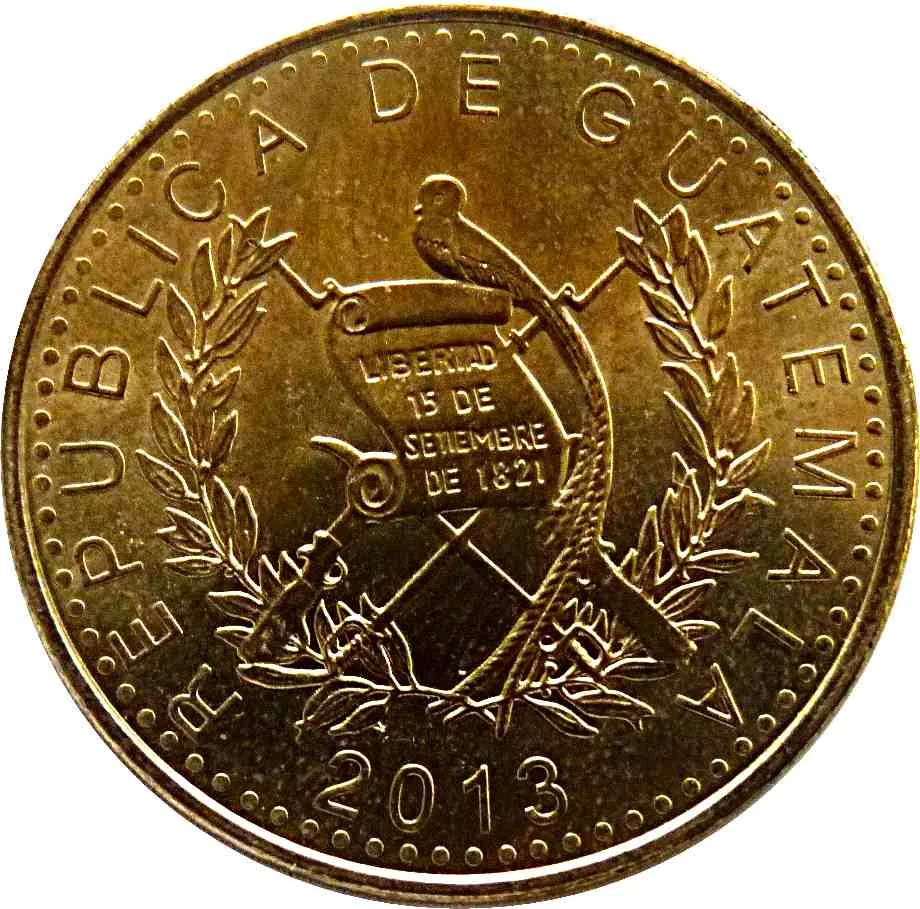
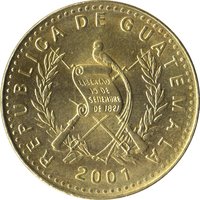
Obverse
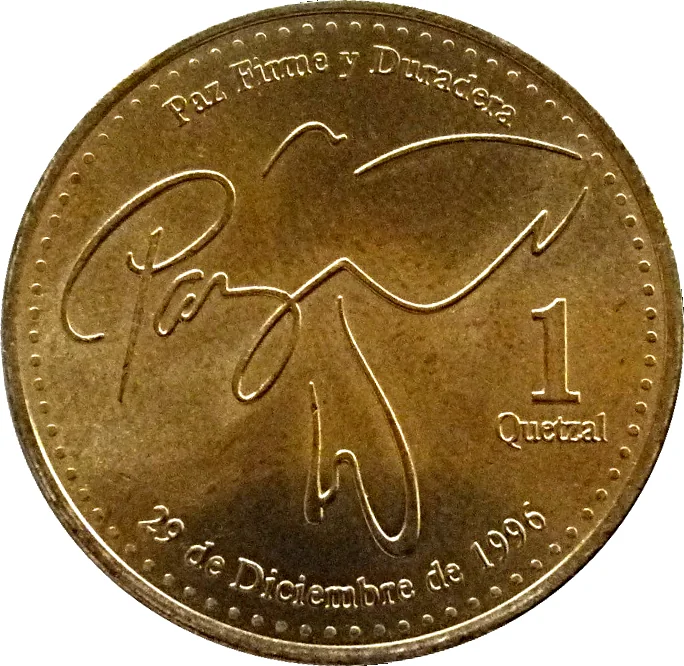
Reverse
Description:
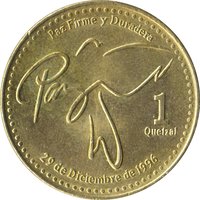
Stylized dove with "Paz," marking the end of the civil war on December 29, 1996.
Inscription:
Paz Firme y Duradera
Paz
1 Quetzal
29 de Diciembre de 1996
Paz
1 Quetzal
29 de Diciembre de 1996
Translation:
Firm and Lasting Peace
Peace
1 Quetzal
December 29, 1996
Peace
1 Quetzal
December 29, 1996
Scripts: Latin, Latin (cursive)
Language: Spanish
Edge
Reeded
Mints
| Name | Mark |
|---|---|
| Mint of Finland | — |
| Mint of Poland | — |
Mintings
| Year | Mint Mark | Mintage | Quality | Collection |
|---|---|---|---|---|
| 2013 | — | 100,000,000 | ||
| 2015 | — | 70,000,000 | ||
| 2016 | — | — | ||
| 2017 | — | — | ||
| 2018 | — | — | ||
| 2019 | — | — | ||
| 2021 | — | — | ||
| 2022 | — | — | ||
| 2023 | — | — |
Historical background
In 2013, Guatemala's currency situation was characterized by the stability and strength of the Quetzal (GTQ) against the US dollar, a trend that had been building for several years. The quetzal appreciated approximately 4% against the dollar in 2013, continuing a pattern of gradual strengthening that began in the late 2000s. This appreciation was primarily driven by two sustained inflows: record-high remittances from Guatemalans living abroad (which reached over $5 billion for the year) and strong foreign direct investment, particularly in sectors like telecommunications and services. These consistent dollar inflows increased the supply of foreign currency in the local market, pushing the quetzal's value higher.
This appreciation presented a mixed economic picture. On one hand, it helped control inflation, which remained low at around 4.4% for the year, making imports and foreign debt servicing cheaper. On the other hand, it posed significant challenges for the crucial export sector, especially non-traditional agricultural products and textiles (maquila), as their goods became more expensive for foreign buyers. The central bank, Bank of Guatemala (Banguat), actively intervened in the foreign exchange market to moderate the quetzal's rise and protect export competitiveness, purchasing dollars to build international reserves, which grew to historically high levels.
Despite these interventions, the quetzal's strength persisted, reflecting broader macroeconomic conditions. The currency's performance was also supported by relative political and economic stability compared to some regional neighbors and a cautious monetary policy. Consequently, 2013 ended with the quetzal trading near its strongest level in over a decade, solidifying its position as one of the most stable currencies in Latin America at the time, while simultaneously fueling ongoing debate about its impact on the trade balance and domestic industry.
This appreciation presented a mixed economic picture. On one hand, it helped control inflation, which remained low at around 4.4% for the year, making imports and foreign debt servicing cheaper. On the other hand, it posed significant challenges for the crucial export sector, especially non-traditional agricultural products and textiles (maquila), as their goods became more expensive for foreign buyers. The central bank, Bank of Guatemala (Banguat), actively intervened in the foreign exchange market to moderate the quetzal's rise and protect export competitiveness, purchasing dollars to build international reserves, which grew to historically high levels.
Despite these interventions, the quetzal's strength persisted, reflecting broader macroeconomic conditions. The currency's performance was also supported by relative political and economic stability compared to some regional neighbors and a cautious monetary policy. Consequently, 2013 ended with the quetzal trading near its strongest level in over a decade, solidifying its position as one of the most stable currencies in Latin America at the time, while simultaneously fueling ongoing debate about its impact on the trade balance and domestic industry.
Series: System: 1997-date
🌱 Very Common