

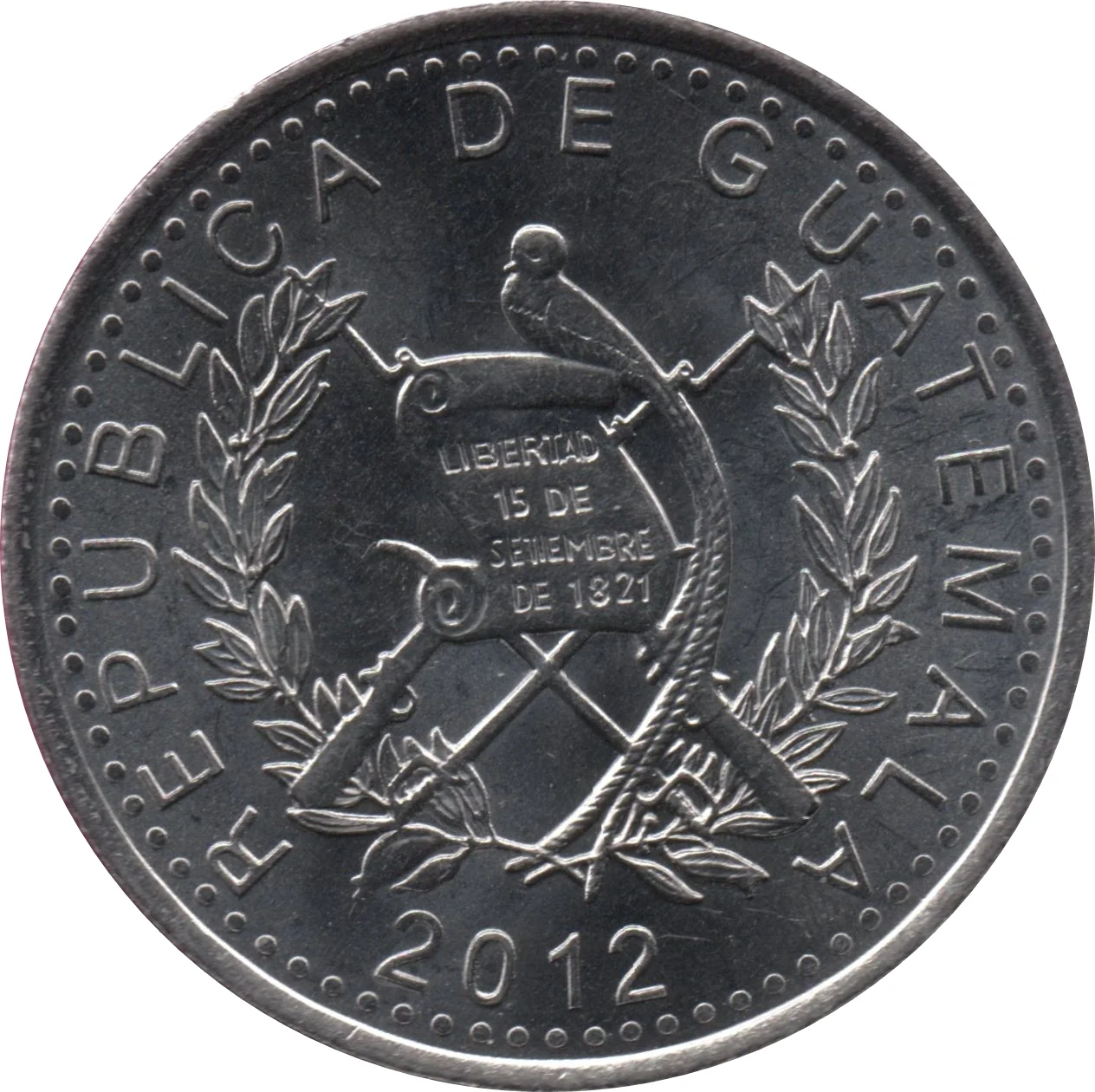
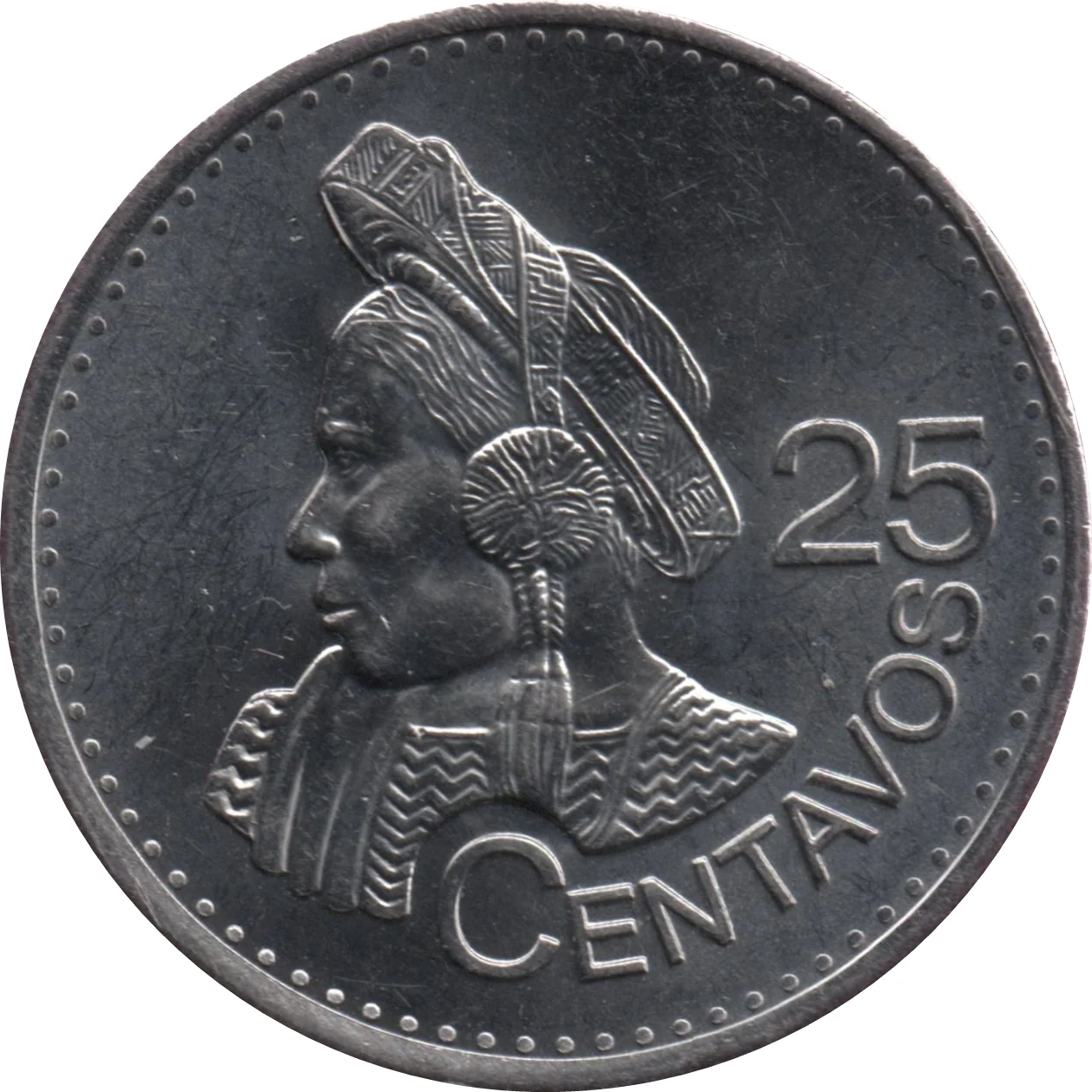
25 centavos – Guatemala
Add to wishlist
Guatemala
Context
Material
Diameter: 27 mm
Weight: 4.2 g
Thickness: 1.06 mm
Shape: Round
Composition: Stainless steel
Magnetic: Yes
Technique: Milled
Alignment: Coin alignment
flip
References
KM: #
Numista: #84104
Value
Exchange value: 0.25 GTQ
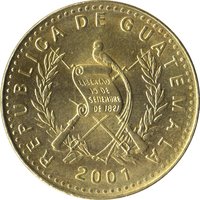
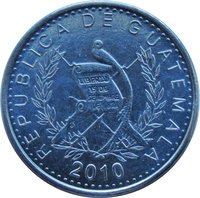
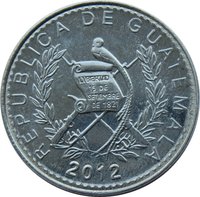
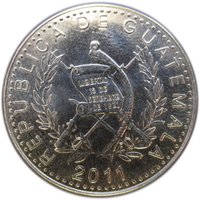
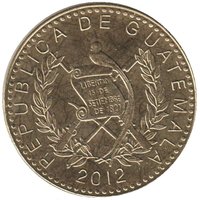
Obverse
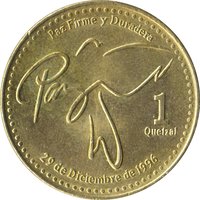
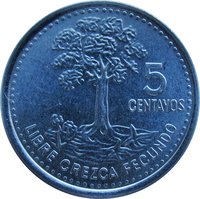
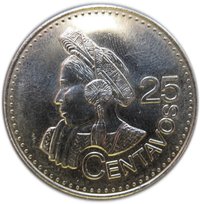
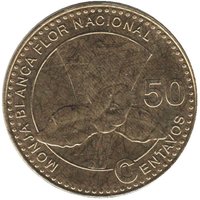
Reverse
Edge
Reeded
Categories
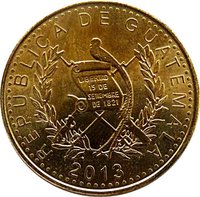
| Symbols> Coat of Arms |
| Object> Hat |
Mints
| Name | Mark |
|---|---|
| Mint of Poland | — |
Mintings
| Year | Mint Mark | Mintage | Quality | Collection |
|---|---|---|---|---|
| 2012 | — | — | ||
| 2016 | — | — | ||
| 2017 | — | — | ||
| 2021 | — | — | ||
| 2022 | — | — | ||
| 2023 | — | — |
Historical background
In 2012, Guatemala's currency situation was characterized by the stability and strength of the Quetzal (GTQ) against the US dollar, a notable trend that had been building for several years. Since floating in 2001, the Quetzal had generally appreciated, and by 2012 it was trading near its strongest level in over a decade, at approximately Q7.7 to Q7.9 per US dollar. This appreciation was driven by a combination of robust inflows from family remittances (which reached a record $4.8 billion that year), strong exports of commodities like coffee and sugar, and growing foreign direct investment, all of which increased the supply of dollars in the local economy.
This sustained appreciation presented a significant policy dilemma for the Bank of Guatemala (Banguat). On one hand, a stronger Quetzal helped control inflation by making imports cheaper, keeping the annual inflation rate relatively low at around 3-4%. On the other hand, it hurt the competitiveness of Guatemala's vital export sector and raised concerns from industries like textiles and agriculture, which argued that their goods were becoming more expensive for foreign buyers. In response, Banguat actively intervened in the foreign exchange market throughout the year, purchasing surplus dollars to build international reserves and temper the pace of appreciation.
Ultimately, the currency dynamics of 2012 reflected Guatemala's broader economic profile as a remittance-dependent economy with a large trade sector. While the strong Quetzal was a sign of macroeconomic stability and healthy external inflows, it underscored the economy's vulnerability to external flows and the ongoing challenge for monetary authorities to balance exchange rate stability with the needs of the productive sector, a core theme of Guatemalan economic policy during that period.
This sustained appreciation presented a significant policy dilemma for the Bank of Guatemala (Banguat). On one hand, a stronger Quetzal helped control inflation by making imports cheaper, keeping the annual inflation rate relatively low at around 3-4%. On the other hand, it hurt the competitiveness of Guatemala's vital export sector and raised concerns from industries like textiles and agriculture, which argued that their goods were becoming more expensive for foreign buyers. In response, Banguat actively intervened in the foreign exchange market throughout the year, purchasing surplus dollars to build international reserves and temper the pace of appreciation.
Ultimately, the currency dynamics of 2012 reflected Guatemala's broader economic profile as a remittance-dependent economy with a large trade sector. While the strong Quetzal was a sign of macroeconomic stability and healthy external inflows, it underscored the economy's vulnerability to external flows and the ongoing challenge for monetary authorities to balance exchange rate stability with the needs of the productive sector, a core theme of Guatemalan economic policy during that period.
Series: System: 1997-date
🌱 Common