

20 centavos – Portugal
Add to wishlist
Portugal
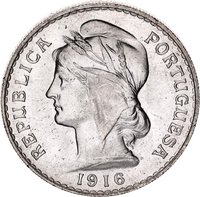
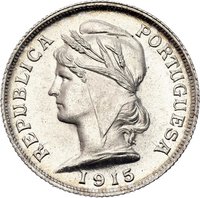
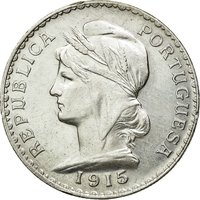
Obverse
Description:
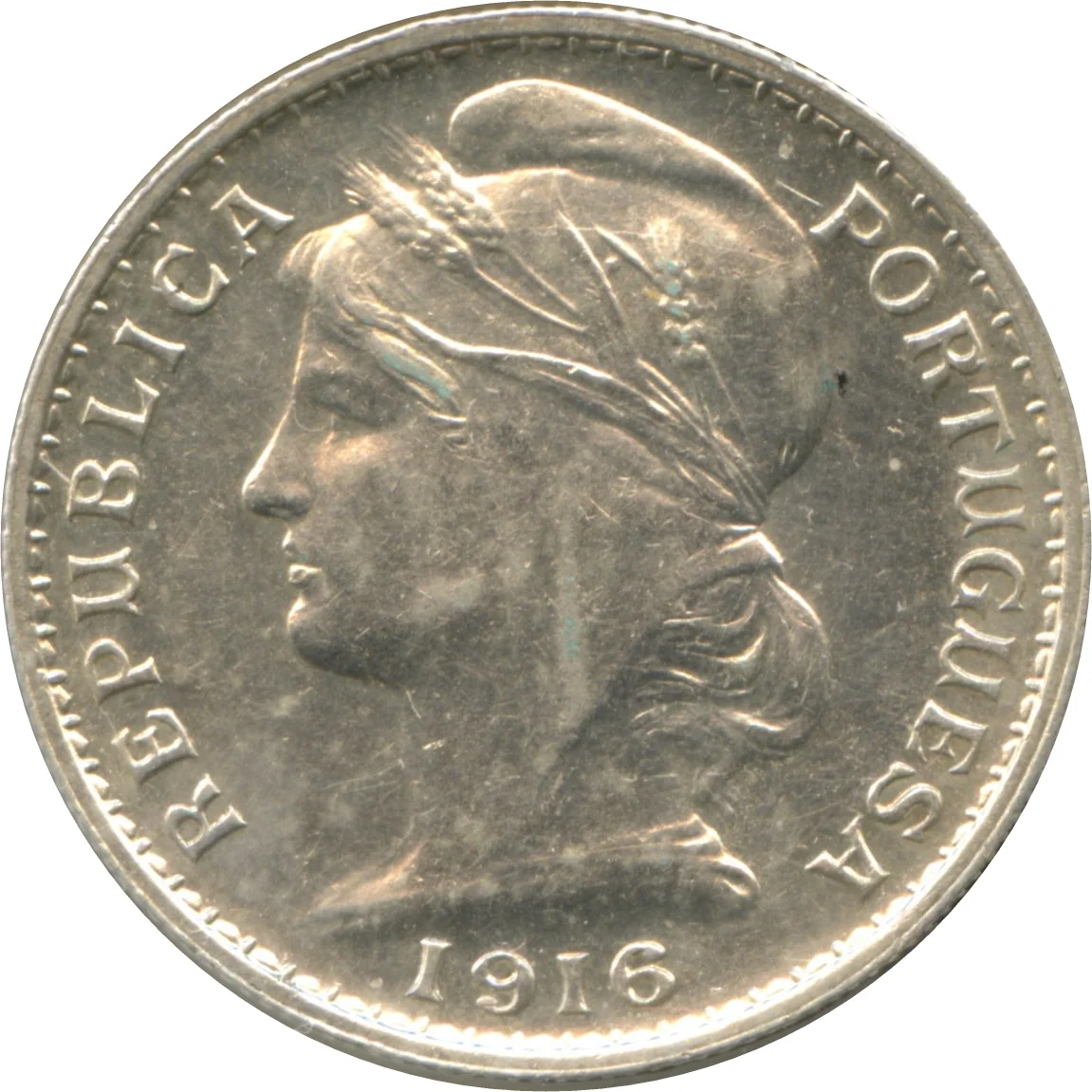
Goddess of Liberty facing left.
Inscription:
REPUBLICA PORTUGUESA
1913
1913
Translation:
Portuguese Republic
1913
1913
Script: Latin
Language: Portuguese
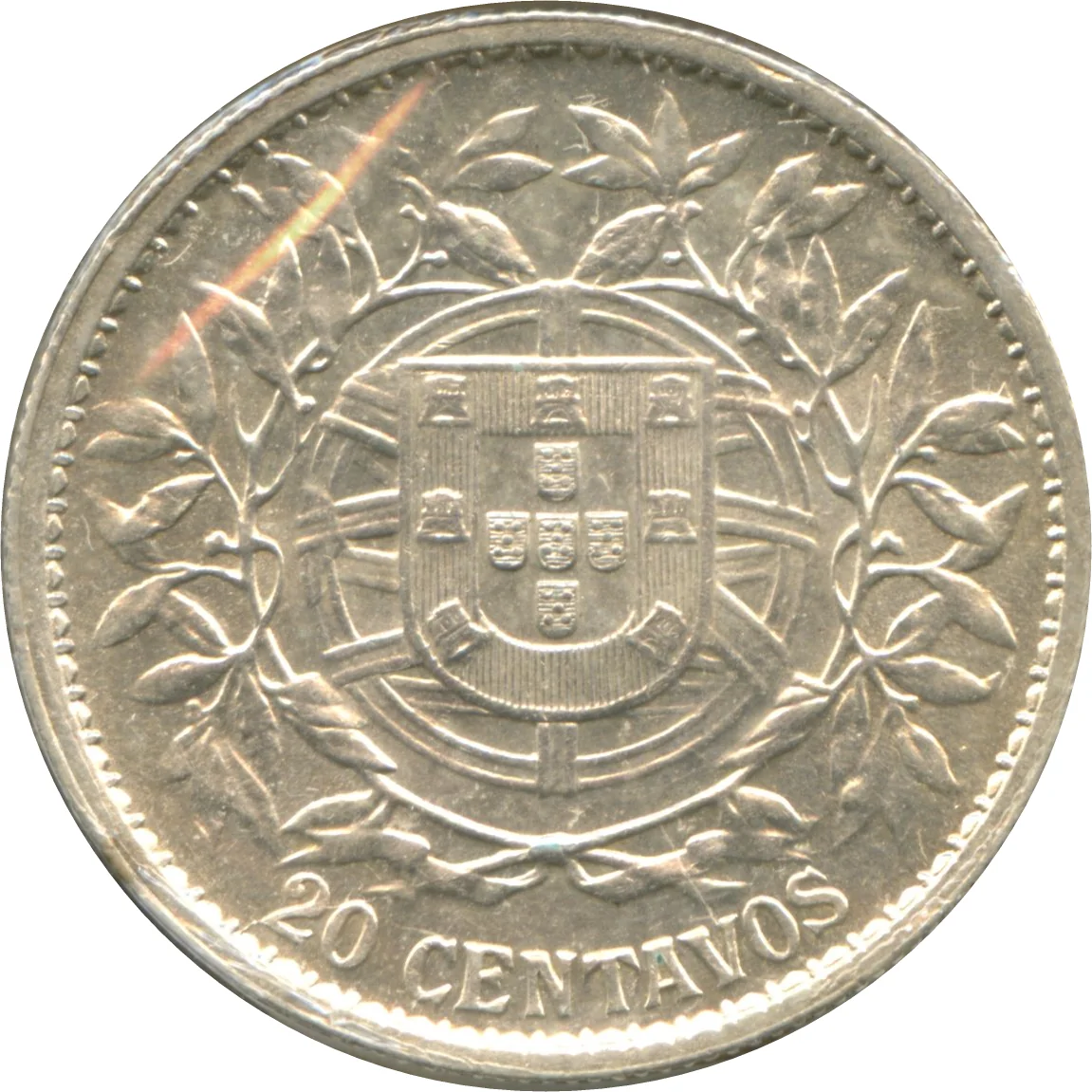
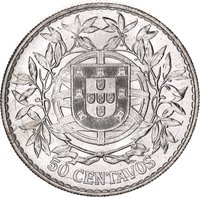
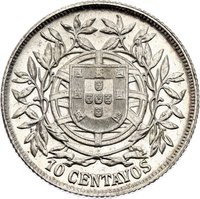
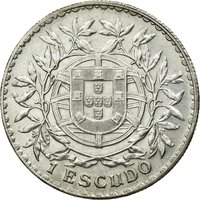
Reverse
Edge
Reeded
Mints
| Name | Mark |
|---|---|
| Imprensa Nacional - Casa da Moeda | — |
Mintings
| Year | Mint Mark | Mintage | Quality | Collection |
|---|---|---|---|---|
| 1913 | — | 540,000 | ||
| 1916 | — | 706,000 |
Historical background
In 1913, Portugal's currency situation was defined by its adherence to the gold standard, a system it had officially joined in 1854. The national currency was the real (plural réis), with its highest unit being the milréis, worth 1,000 réis. While gold coins (like the 10,000 and 5,000 réis pieces) were minted and defined the standard's value, the everyday monetary reality was dominated by silver and, especially, paper money. The Bank of Portugal, having gained the exclusive right of note issue in 1891, was the central issuer, and its notes were convertible into gold upon demand, theoretically anchoring confidence in the currency.
However, this stability was more formal than absolute. The late 19th century had been financially turbulent, marked by the 1891-1892 debt crisis and a sovereign default, which had forced the temporary suspension of gold convertibility. By 1913, although convertibility had been restored, the Portuguese economy remained comparatively weak, burdened by significant public debt, chronic budget deficits, and a large external trade imbalance. The country's gold reserves were modest, leaving the currency vulnerable to external shocks and reliant on the broader international gold standard system for credibility.
Consequently, the Portuguese monetary system in 1913 existed in a fragile equilibrium. It projected the outward stability required for international trade and finance but was underpinned by a struggling domestic economy. This precarious position meant Portugal was highly exposed to the impending disruptions of World War I, which would soon force it—like many nations—to abandon the gold standard definitively in 1916, leading to a period of inflation and monetary instability that the pre-war system had been designed to prevent.
However, this stability was more formal than absolute. The late 19th century had been financially turbulent, marked by the 1891-1892 debt crisis and a sovereign default, which had forced the temporary suspension of gold convertibility. By 1913, although convertibility had been restored, the Portuguese economy remained comparatively weak, burdened by significant public debt, chronic budget deficits, and a large external trade imbalance. The country's gold reserves were modest, leaving the currency vulnerable to external shocks and reliant on the broader international gold standard system for credibility.
Consequently, the Portuguese monetary system in 1913 existed in a fragile equilibrium. It projected the outward stability required for international trade and finance but was underpinned by a struggling domestic economy. This precarious position meant Portugal was highly exposed to the impending disruptions of World War I, which would soon force it—like many nations—to abandon the gold standard definitively in 1916, leading to a period of inflation and monetary instability that the pre-war system had been designed to prevent.
Series: System 1912-1916
🌱 Fairly Common