

10 centavos – Portugal
Add to wishlist
Portugal
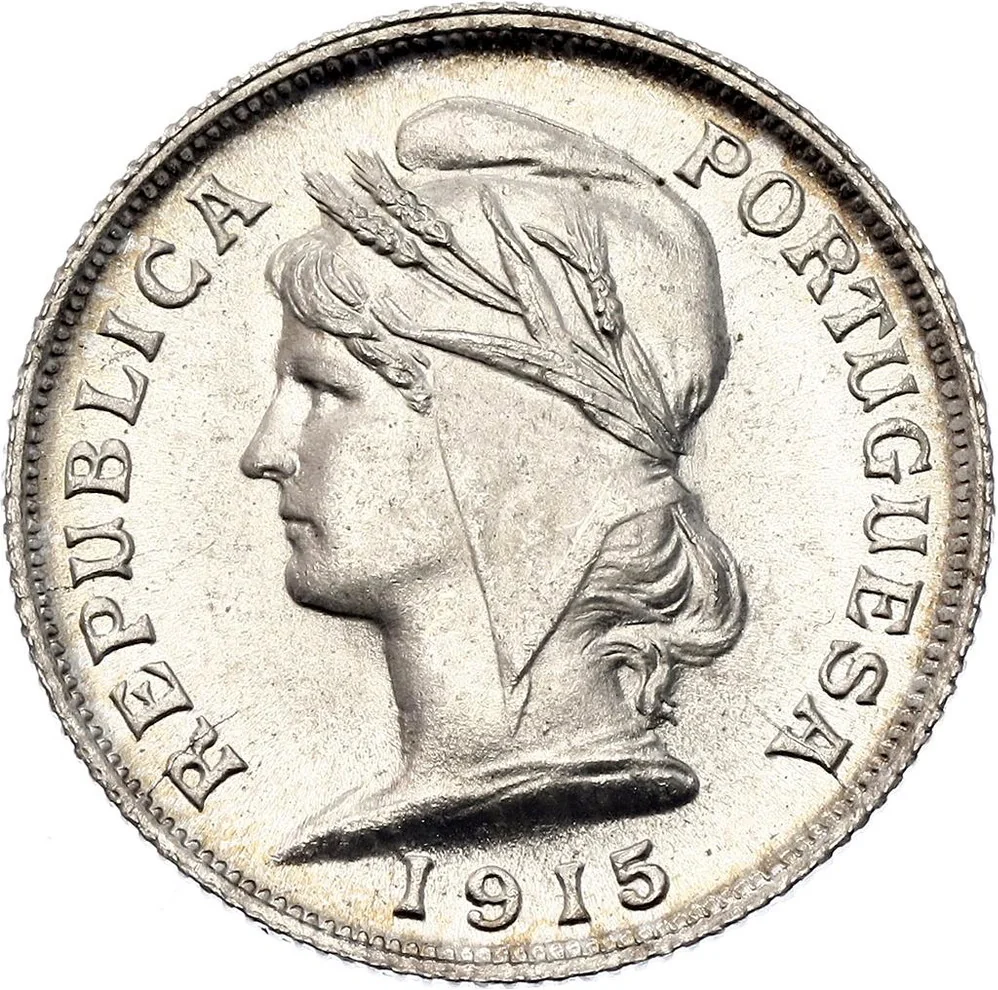
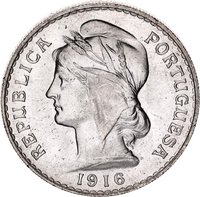
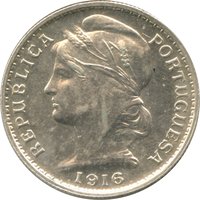
Obverse
Description:
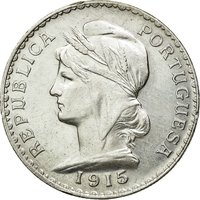
Left-facing portrait
Inscription:
REPUBLICA PORTUGUESA
1915
1915
Translation:
Portuguese Republic
1915
1915
Script: Latin
Language: Portuguese
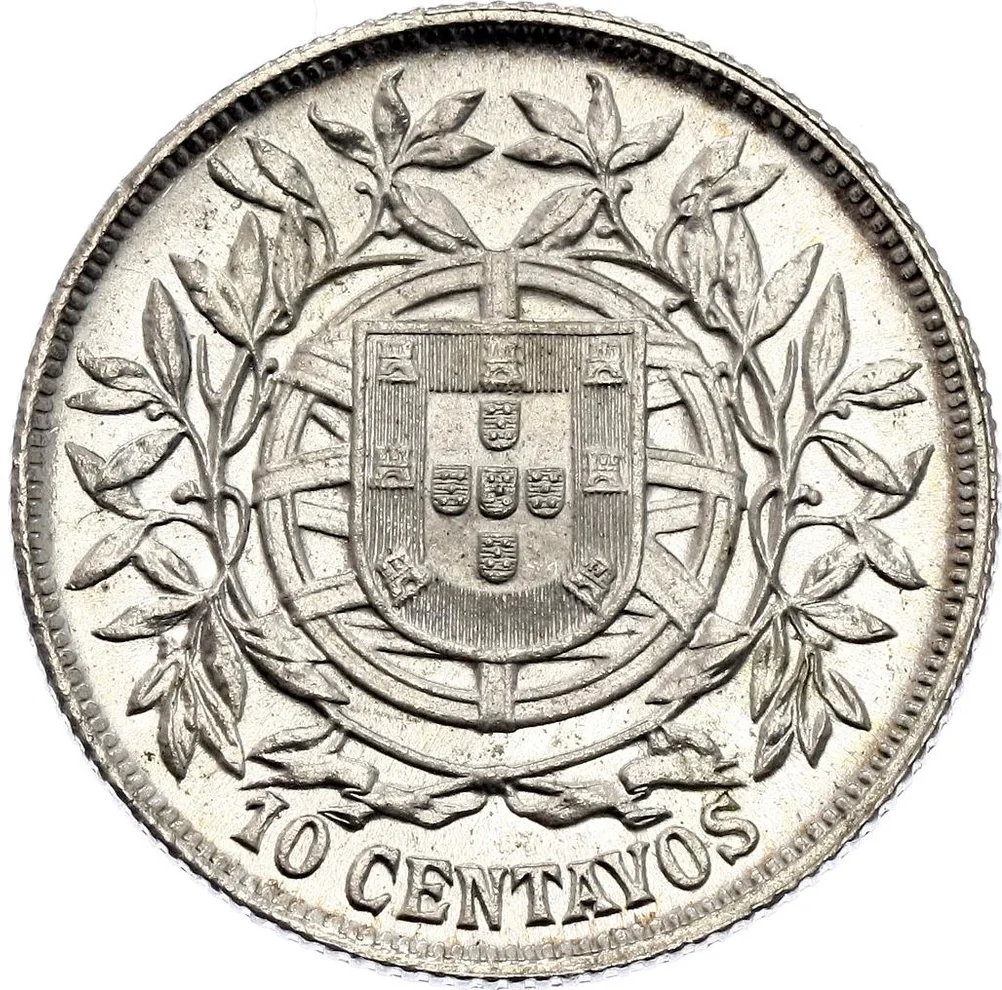
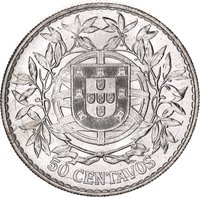
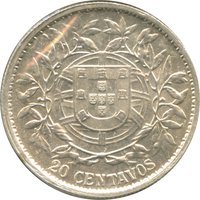
Reverse
Edge
Reeded
Categories
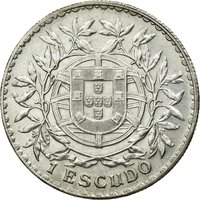
| Symbols> Coat of Arms |
Mints
| Name | Mark |
|---|---|
| Imprensa Nacional - Casa da Moeda | — |
Mintings
| Year | Mint Mark | Mintage | Quality | Collection |
|---|---|---|---|---|
| 1915 | — | 3,418,000 | ||
| 1915 | — | — | Proof |
Historical background
In 1915, Portugal's currency situation was defined by its adherence to the gold standard and the severe economic pressures of World War I. The Portuguese escudo, established in 1911 to replace the monarchy's real, was legally convertible into gold. However, the nation's gold reserves were modest, and its economy was relatively weak compared to other European powers. The outbreak of war in 1914 had immediately disrupted international trade and finance, leading to a widespread suspension of gold convertibility across Europe to protect national reserves. Portugal, despite its official neutrality until 1916, followed suit in practice, severing the direct link between its paper currency and gold to prevent a drain on its bullion.
The war created a classic inflationary environment. Government expenditure soared to fund military mobilization and secure colonial territories, leading to large budget deficits financed by borrowing from the Bank of Portugal. This increase in money supply, coupled with severe shortages of imported goods due to naval blockades and disrupted shipping, drove prices upward. The escudo's external value began to depreciate on foreign exchange markets, particularly against stronger currencies like the British pound sterling, which was crucial for financing essential imports. This decline in confidence and purchasing power marked the beginning of a long-term erosion of the escudo's stability.
Consequently, by the end of 1915, Portugal found itself in a precarious monetary position. The gold standard was effectively in abeyance, inflation was accelerating, and the currency was weakening. These fiscal and monetary strains were a primary factor driving the Portuguese government's strategic decision to formally enter the war on the side of the Allies in 1916, with the aim of securing vital financial support, protecting its colonial empire, and stabilizing its economic position through closer ties to Britain and France. The wartime economy would set the stage for the profound monetary and political challenges of the post-war period.
The war created a classic inflationary environment. Government expenditure soared to fund military mobilization and secure colonial territories, leading to large budget deficits financed by borrowing from the Bank of Portugal. This increase in money supply, coupled with severe shortages of imported goods due to naval blockades and disrupted shipping, drove prices upward. The escudo's external value began to depreciate on foreign exchange markets, particularly against stronger currencies like the British pound sterling, which was crucial for financing essential imports. This decline in confidence and purchasing power marked the beginning of a long-term erosion of the escudo's stability.
Consequently, by the end of 1915, Portugal found itself in a precarious monetary position. The gold standard was effectively in abeyance, inflation was accelerating, and the currency was weakening. These fiscal and monetary strains were a primary factor driving the Portuguese government's strategic decision to formally enter the war on the side of the Allies in 1916, with the aim of securing vital financial support, protecting its colonial empire, and stabilizing its economic position through closer ties to Britain and France. The wartime economy would set the stage for the profound monetary and political challenges of the post-war period.
Series: System 1912-1916
🌱 Common