

10 Piastres (U.A.R. Founding) – Egypt
Circulating commemorative coins
Commemoration: First Anniversary of U.A.R. Founding
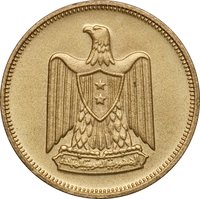
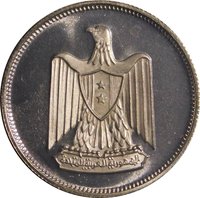
Series: UAR- Salaheldin Eagle
Egypt
Context
Year: 1959
Islamic (Hijri) Year: 1378
Issuer: Egypt 
Period:
(1958—1971)
Currency:
(since 1916)
Demonetized: Yes
Total mintage: 500,000
Material
References
KM: #Click to copy to clipboard392
Numista: #37356
Value
Exchange value: 0.10 EGP
Bullion value: $14.31
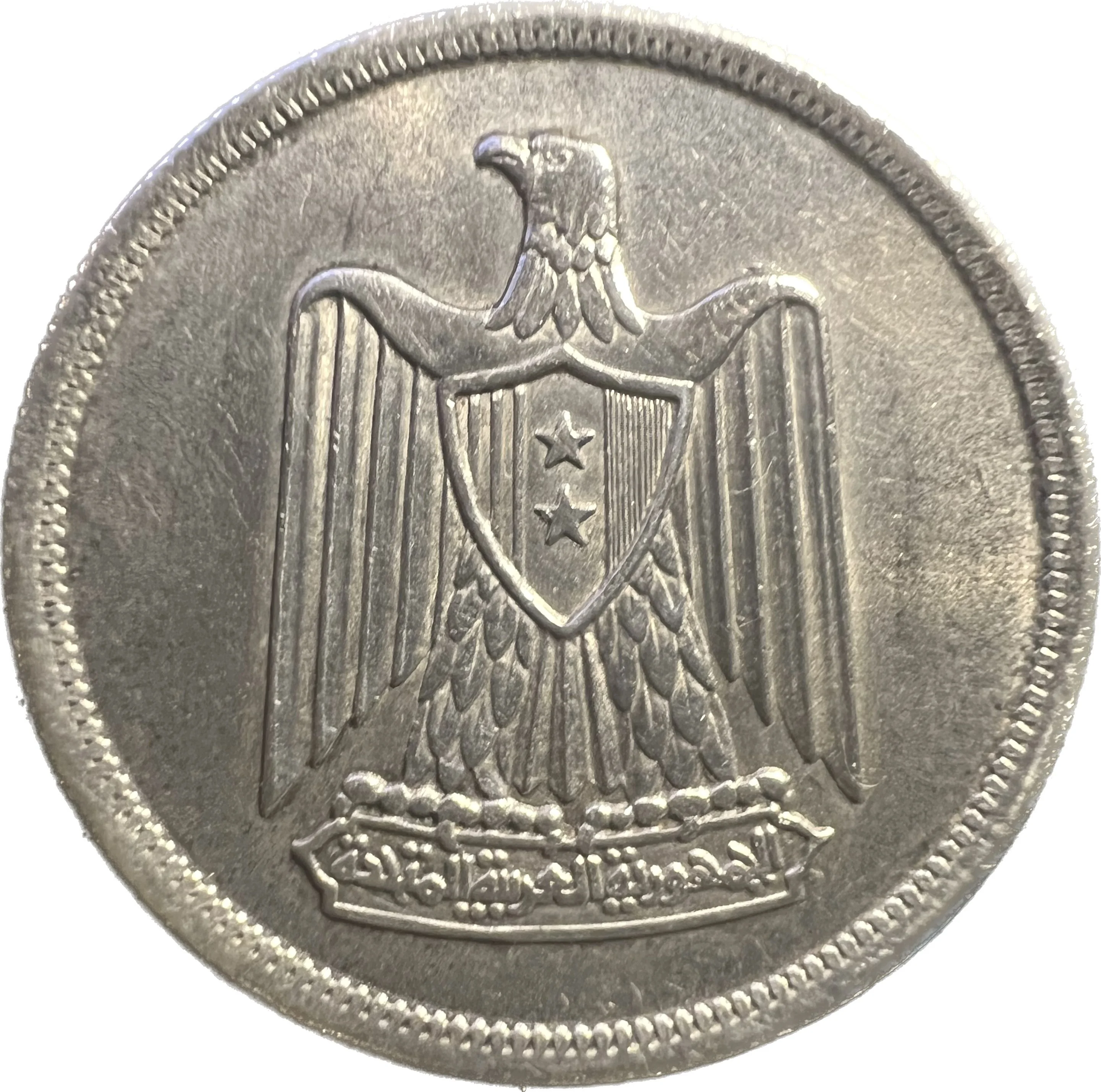
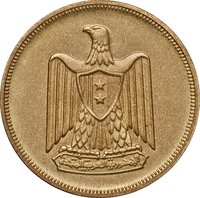
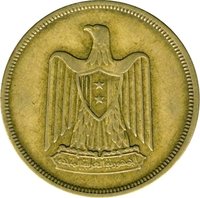
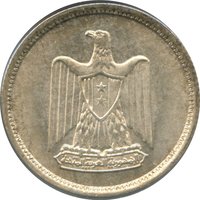
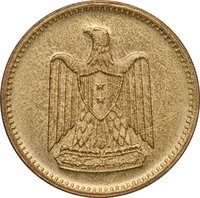
Obverse
Inscription:
الجمهورية العربية المتحدة
Translation:
The United Arab Republic
Script: Arabic
Language: Arabic
Designer: Ahmad Ibrahim Barhouma
Reverse
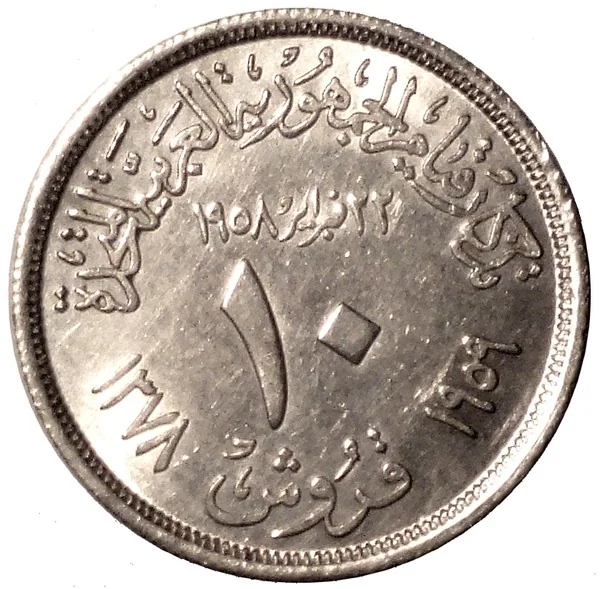
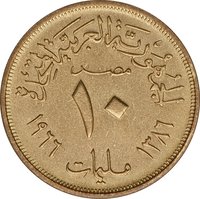
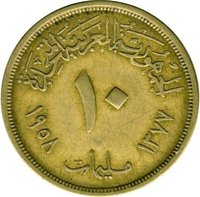
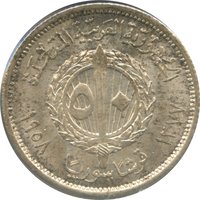
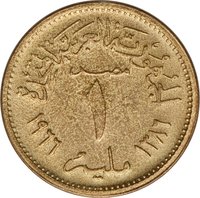
Description:
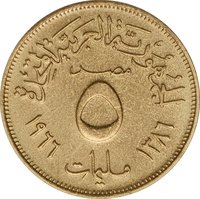
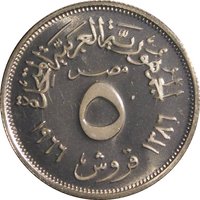
Rev: 22 February 1958 (1st UAR anniversary)
Inscription:
تذكار قيام الجمهورية العربية المتحدة
٢٢ فبراير ١٩٥٨
١٠
قروش
١٩٥٩ ١٣٧٨
٢٢ فبراير ١٩٥٨
١٠
قروش
١٩٥٩ ١٣٧٨
Translation:
Commemoration of the Establishment of the United Arab Republic
22 February 1958
10
Qirsh
1959 1378
22 February 1958
10
Qirsh
1959 1378
Script: Arabic
Language: Arabic
Designer: Ahmad Ibrahim Barhouma
Edge
Reeded
Categories
| Animal> Bird> Eagle |
| Symbols> Coat of Arms |
Mints
| Name | Mark |
|---|---|
| Egyptian Mint Authority | — |
Mintings
| Year | Mint Mark | Mintage | Quality | Collection |
|---|---|---|---|---|
| 1959 | — | 500,000 |
Historical background
In 1959, Egypt's currency situation was fundamentally shaped by the transformative economic policies of Gamal Abdel Nasser's revolutionary government. Following the 1952 revolution, Egypt had embarked on a path of Arab socialism, which included the nationalization of major industries and banks. This centralizing trend directly impacted the monetary system, leading to the nationalization of the National Bank of Egypt in 1957. By 1959, this institution was formally reconstituted as the Central Bank of Egypt, granting the state full control over monetary policy, currency issuance, and foreign exchange reserves for the first time.
The Egyptian pound (£E), pegged to the British pound sterling until 1947, was by 1959 operating under a managed system with its value increasingly supported by administrative controls rather than pure market forces. The government maintained an official exchange rate, but the expansive spending on ambitious industrial projects and social welfare programs, coupled with a growing population, applied steady pressure on the currency. While not yet in crisis, the foundations for future inflationary pressures and a black market for foreign exchange were being laid, as the state's development goals often outpaced its foreign currency earnings from key exports like cotton.
Internationally, Egypt's currency reflected its political alignment within the Cold War. While maintaining some Western financial ties, Nasser's acceptance of Soviet aid for projects like the Aswan High Dam (construction began in 1960) introduced alternative sources of foreign financing outside the Sterling or Dollar zones. This period, therefore, represents a pivotal transition: the Egyptian pound evolved from a colonial-linked currency to a fully nationalized instrument of state-led development, setting the stage for the economic challenges and complex exchange rate regimes that would characterize the decades to follow.
The Egyptian pound (£E), pegged to the British pound sterling until 1947, was by 1959 operating under a managed system with its value increasingly supported by administrative controls rather than pure market forces. The government maintained an official exchange rate, but the expansive spending on ambitious industrial projects and social welfare programs, coupled with a growing population, applied steady pressure on the currency. While not yet in crisis, the foundations for future inflationary pressures and a black market for foreign exchange were being laid, as the state's development goals often outpaced its foreign currency earnings from key exports like cotton.
Internationally, Egypt's currency reflected its political alignment within the Cold War. While maintaining some Western financial ties, Nasser's acceptance of Soviet aid for projects like the Aswan High Dam (construction began in 1960) introduced alternative sources of foreign financing outside the Sterling or Dollar zones. This period, therefore, represents a pivotal transition: the Egyptian pound evolved from a colonial-linked currency to a fully nationalized instrument of state-led development, setting the stage for the economic challenges and complex exchange rate regimes that would characterize the decades to follow.
Series: UAR- Salaheldin Eagle
🌟 Limited