

25 piastres – Egypt
Add to wishlist
Circulating commemorative coins
Commemoration: 3rd Year of National Assembly
Egypt
Context
Year: 1960
Islamic (Hijri) Year:: 1380
Issuer: Egypt
Period:
(1958—1971)
Currency:
(since 1916)
Demonetized: Yes
Total mintage: 250,000
Material
References
KM: #
Numista: #26484
Value
Exchange value: 0.25 EGP
Bullion value: $31.57
Obverse
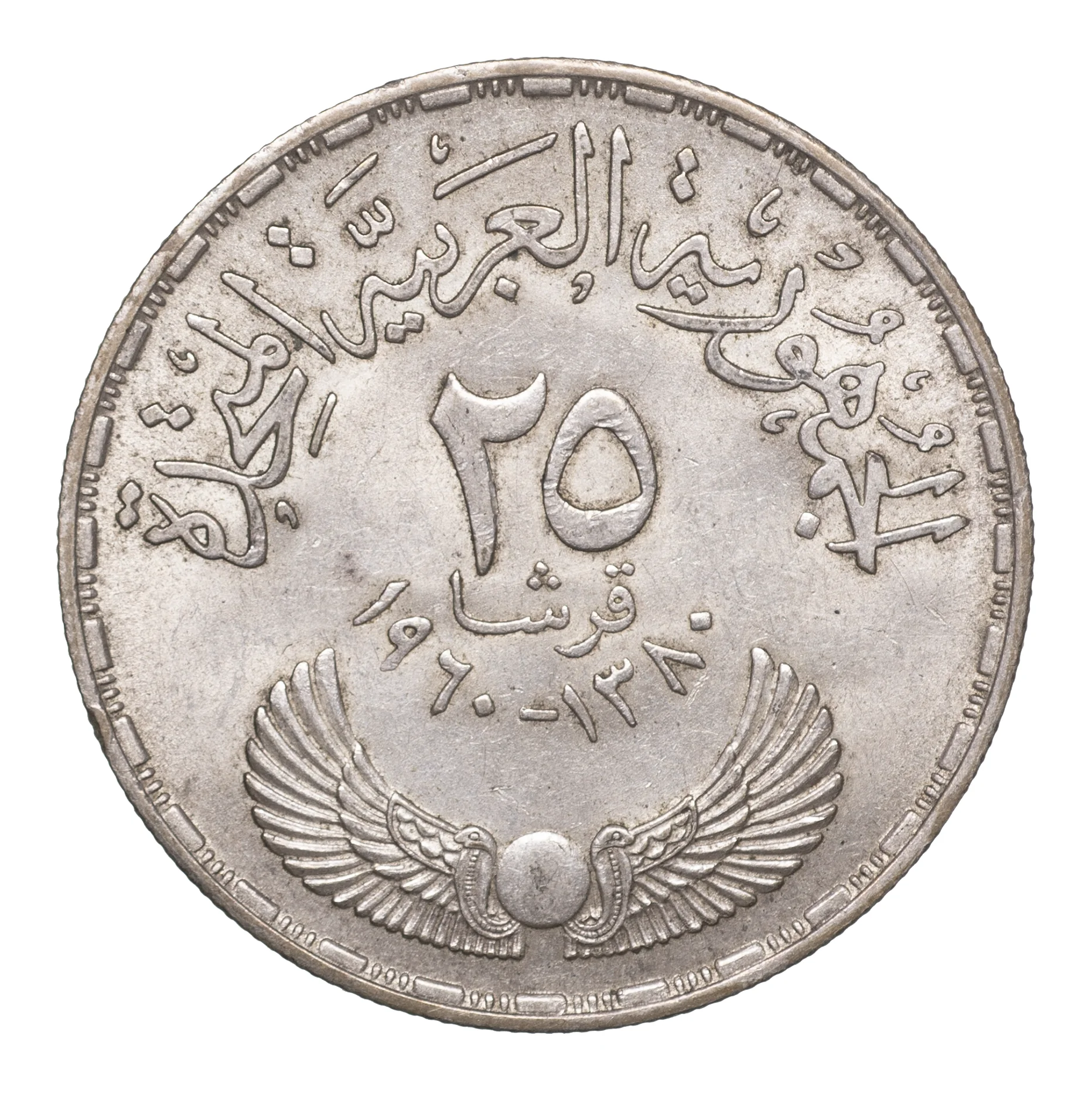
Description:
Issuer and years above wings.
Inscription:
الجمهورية العربية المتحدة
٢٥
قرشا
١٣٨٠ - ١٩٦٠
٢٥
قرشا
١٣٨٠ - ١٩٦٠
Translation:
United Arab Republic
25
Qirsh
1380 - 1960
25
Qirsh
1380 - 1960
Script: Arabic
Language: Arabic
Designer: Gamal El Seginy
Reverse
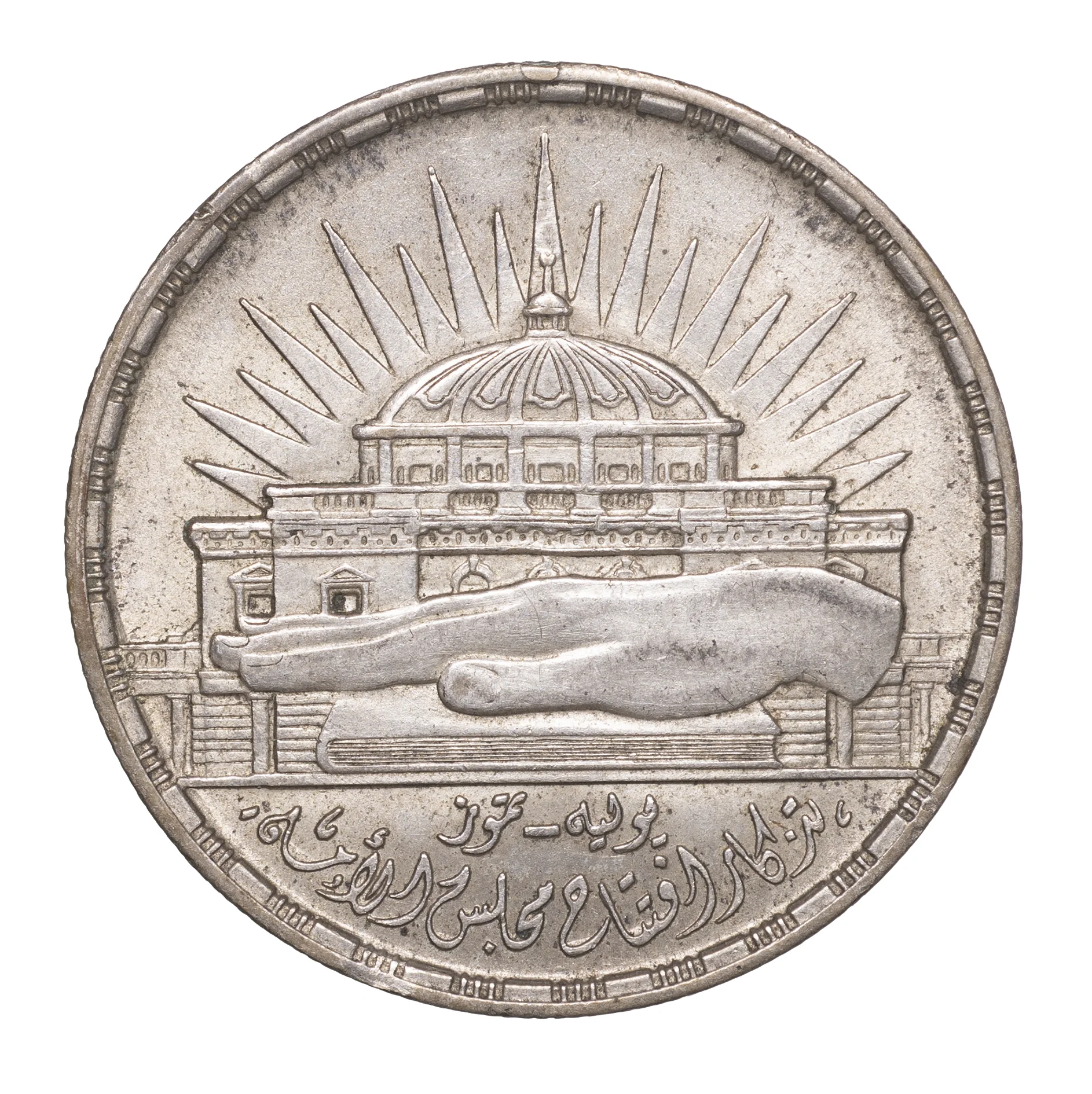
Description:
Sunlit book, hand resting.
Inscription:
يولية - تموز
تذكار افتتاح مجلس الأمة
تذكار افتتاح مجلس الأمة
Translation:
Commemoration of the Inauguration of the National Assembly
Script: Arabic
Language: Arabic
Designer: Gamal El Seginy
Edge
Reeded
Categories
| Building> Governmental building |
| Symbol> Hand |
Mints
| Name | Mark |
|---|---|
| Egyptian Mint Authority | — |
Mintings
| Year | Mint Mark | Mintage | Quality | Collection |
|---|---|---|---|---|
| 1960 | — | 250,000 |
Historical background
In 1960, Egypt’s currency situation was fundamentally shaped by the economic policies of Gamal Abdel Nasser’s revolutionary government, which pursued a state-led model of industrialization and import substitution. The Egyptian pound (EGP) was officially pegged to the British pound sterling, a legacy of the country's colonial-era financial ties. However, this official parity masked growing economic pressures, including a significant trade deficit and heavy state spending on ambitious industrial and infrastructure projects, most notably the Aswan High Dam. These factors led to increasing reliance on foreign borrowing and a gradual depletion of foreign exchange reserves.
Consequently, a complex system of exchange controls and multiple exchange rates emerged in practice, creating a divergence between the official and black-market values of the pound. The government strictly regulated access to foreign currency for imports, prioritizing capital goods for industrialization over consumer goods. This protectionist framework aimed to conserve foreign reserves and shield domestic industries but also fostered inefficiencies, shortages of certain goods, and a thriving parallel market where the pound traded at a significant discount.
This monetary environment was a direct reflection of Egypt’s broader shift toward a centrally planned economy and its geopolitical alignment with the Soviet Union, following the 1956 Suez Crisis. The currency controls and overvaluation were tools to manage the balance of payments and direct scarce resources toward state priorities. While providing short-term stability for planned investments, the system sowed the seeds for future economic challenges, including inflationary pressures and a growing burden of external debt, which would culminate in a major devaluation a few years later.
Consequently, a complex system of exchange controls and multiple exchange rates emerged in practice, creating a divergence between the official and black-market values of the pound. The government strictly regulated access to foreign currency for imports, prioritizing capital goods for industrialization over consumer goods. This protectionist framework aimed to conserve foreign reserves and shield domestic industries but also fostered inefficiencies, shortages of certain goods, and a thriving parallel market where the pound traded at a significant discount.
This monetary environment was a direct reflection of Egypt’s broader shift toward a centrally planned economy and its geopolitical alignment with the Soviet Union, following the 1956 Suez Crisis. The currency controls and overvaluation were tools to manage the balance of payments and direct scarce resources toward state priorities. While providing short-term stability for planned investments, the system sowed the seeds for future economic challenges, including inflationary pressures and a growing burden of external debt, which would culminate in a major devaluation a few years later.
🌱 Fairly Common