

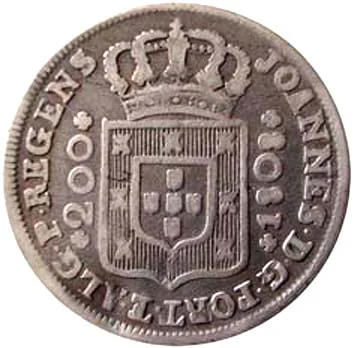
12 Vinténs – Portugal
Standard circulation coins
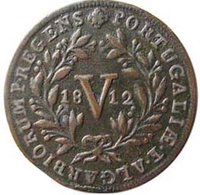
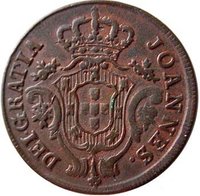
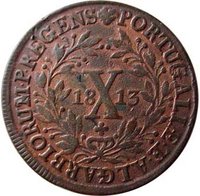
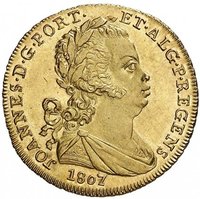
Series: REGENS
Portugal
Context

Material
References
KM: #Click to copy to clipboard340
Numista: #35556
Value
Bullion value: $18.94
Obverse
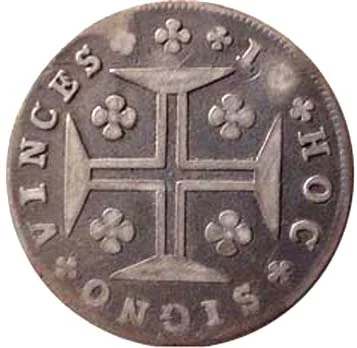
Reverse
Description:
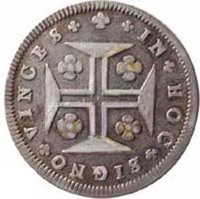
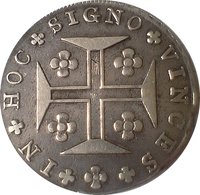
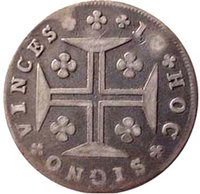
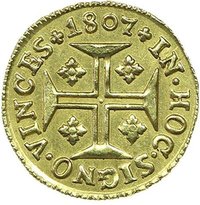
Cross of Christ with corner rosettes, encircled by motto.
Inscription:
*IN*HOC*SIGNO*VINCES*
Script: Latin
Edge
Rope shaped
Mints
| Name | Mark |
|---|---|
| Imprensa Nacional - Casa da Moeda | — |
Mintings
| Year | Mint Mark | Mintage | Quality | Collection |
|---|---|---|---|---|
| 1806 | — | — | ||
| 1807 | — | — | ||
| 1808 | — | — | ||
| 1809 | — | — | ||
| 1816 | — | 7,305 |
Historical background
In 1806, Portugal's currency situation was defined by deep instability and the looming shadow of geopolitical crisis. The nation operated on a bimetallic system of gold cruzados and silver réis (with 400 réis to one cruzado), but chronic shortages of precious metals, especially following the 1755 Lisbon earthquake and costly colonial expenditures, had led to severe debasement. The royal mint frequently issued coins with lower silver content, while a proliferation of worn, clipped, and counterfeit coins in circulation created widespread confusion and eroded public trust in the currency's intrinsic value.
This monetary fragility was exacerbated by Portugal's precarious position in the Napoleonic Wars. As a traditional British ally forced into Napoleon's Continental System, the country faced severe economic strain, including trade blockades that disrupted the inflow of Brazilian gold—a vital source of monetary stability for over a century. The threat of French invasion, which would materialize in late 1807, caused capital flight and hoarding of sound coinage (Gresham's Law in action), leaving the economy to function on the most debased and unreliable currency. This effectively created a two-tier system where good coins vanished from daily use.
Consequently, by 1806, Portugal's monetary landscape was one of contradiction: a nominally bimetallic standard that functioned poorly in practice, with a severe shortage of trustworthy specie. The economy relied heavily on fiduciary copper coins for small transactions and a complex web of credit instruments for larger commerce. The situation was untenable, presaging the greater chaos to come with the French invasions and the transfer of the royal court to Brazil, which would soon lead to the issuance of paper money and a profound restructuring of the Portuguese financial system.
This monetary fragility was exacerbated by Portugal's precarious position in the Napoleonic Wars. As a traditional British ally forced into Napoleon's Continental System, the country faced severe economic strain, including trade blockades that disrupted the inflow of Brazilian gold—a vital source of monetary stability for over a century. The threat of French invasion, which would materialize in late 1807, caused capital flight and hoarding of sound coinage (Gresham's Law in action), leaving the economy to function on the most debased and unreliable currency. This effectively created a two-tier system where good coins vanished from daily use.
Consequently, by 1806, Portugal's monetary landscape was one of contradiction: a nominally bimetallic standard that functioned poorly in practice, with a severe shortage of trustworthy specie. The economy relied heavily on fiduciary copper coins for small transactions and a complex web of credit instruments for larger commerce. The situation was untenable, presaging the greater chaos to come with the French invasions and the transfer of the royal court to Brazil, which would soon lead to the issuance of paper money and a profound restructuring of the Portuguese financial system.
Series: REGENS

✨ Legendary