

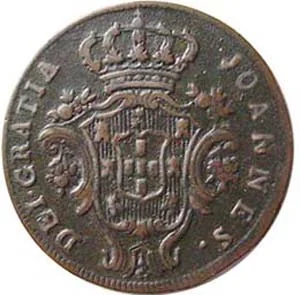
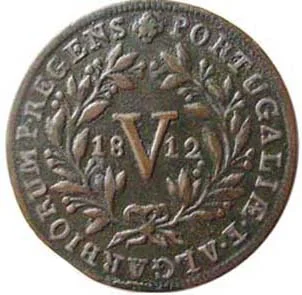
5 réis – Portugal
Add to wishlist
Standard circulation coins
Series: REGENS
Portugal
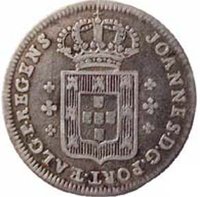
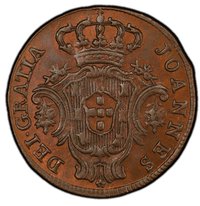
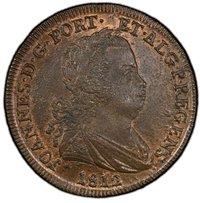
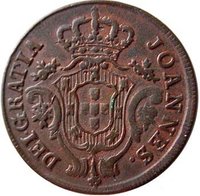
Obverse
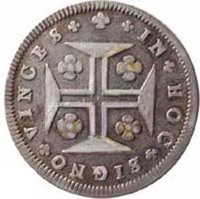
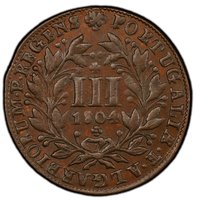
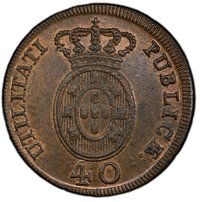
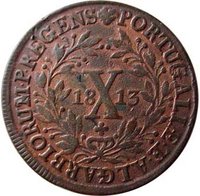
Reverse
Edge
Mints
| Name | Mark |
|---|---|
| Imprensa Nacional - Casa da Moeda | — |
Mintings
| Year | Mint Mark | Mintage | Quality | Collection |
|---|---|---|---|---|
| 1812 | — | 399,077 | ||
| 1813 | — | 538,979 | ||
| 1814 | — | 448,337 |
Historical background
In 1812, Portugal's currency situation was one of profound instability and crisis, directly caused by the ongoing Peninsular War (1807-1814). The French invasions had led to the exile of the Portuguese court to Brazil in 1807, severing direct metropolitan control and draining the treasury to fund both the royal government in exile and the war effort alongside British allies. To finance the conflict, the Regency Council in Portugal, governing in the absence of Prince Regent João, resorted to issuing vast quantities of paper money. This was not backed by sufficient precious metal reserves, leading to rapid depreciation and a severe loss of public confidence.
The monetary landscape became a chaotic duality. The official currency was the real (plural réis), but in practice, the economy relied heavily on a mix of depreciating government paper notes, older gold coins (like the cruzado) that were hoarded, and foreign specie, particularly British gold and silver coins brought in by the massive presence of the British Army. This created a disruptive system where transactions often required complex negotiations over the relative value of different forms of money, with hard currency commanding a significant premium over the nearly worthless paper.
Ultimately, the currency collapse of this period was a symptom of the wider economic devastation. Trade was disrupted, agriculture and industry were damaged by warfare, and the state was functionally bankrupt. The crisis would only begin to be addressed after the war's end in 1814, and more concretely after the return of the court from Brazil in 1821, which faced the monumental task of stabilizing the currency and restoring fiscal order amidst a changed political world.
The monetary landscape became a chaotic duality. The official currency was the real (plural réis), but in practice, the economy relied heavily on a mix of depreciating government paper notes, older gold coins (like the cruzado) that were hoarded, and foreign specie, particularly British gold and silver coins brought in by the massive presence of the British Army. This created a disruptive system where transactions often required complex negotiations over the relative value of different forms of money, with hard currency commanding a significant premium over the nearly worthless paper.
Ultimately, the currency collapse of this period was a symptom of the wider economic devastation. Trade was disrupted, agriculture and industry were damaged by warfare, and the state was functionally bankrupt. The crisis would only begin to be addressed after the war's end in 1814, and more concretely after the return of the court from Brazil in 1821, which faced the monumental task of stabilizing the currency and restoring fiscal order amidst a changed political world.
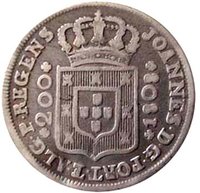
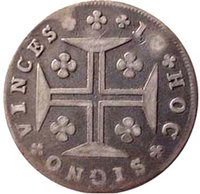
Series: REGENS
⭐ Somewhat Rare