

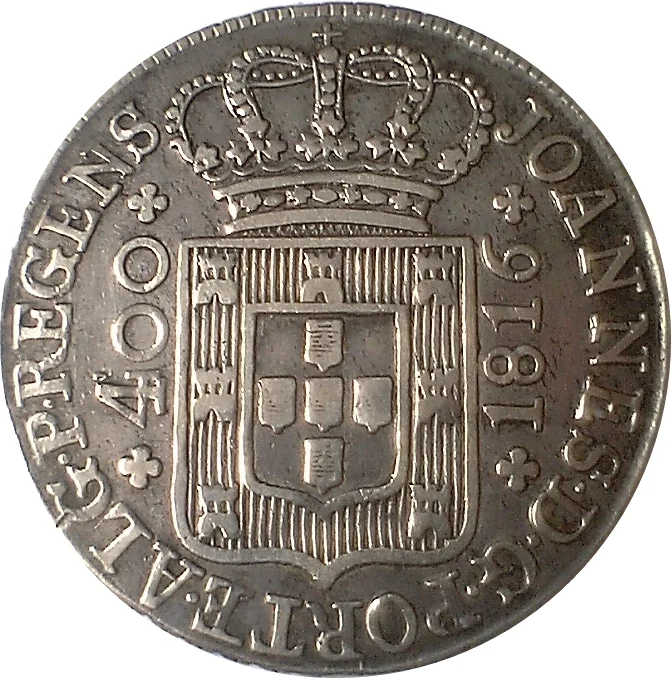
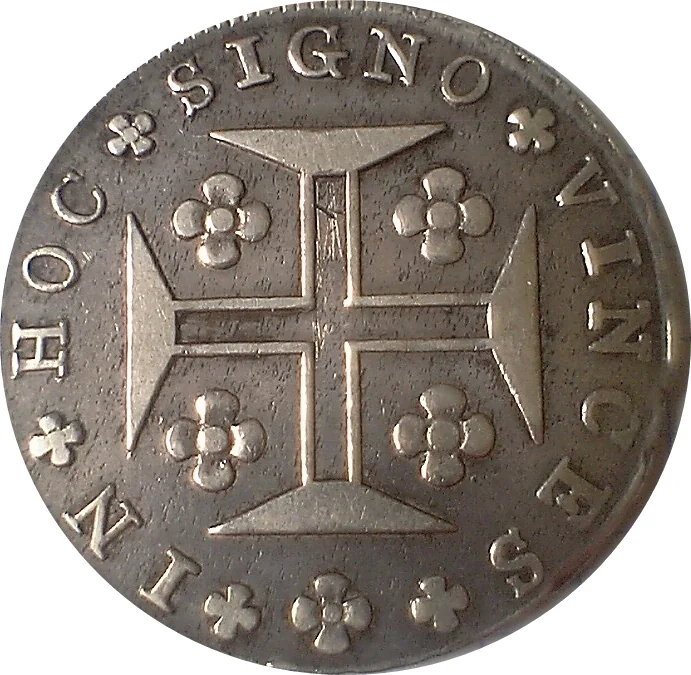
Cruzado Novo – Portugal
Standard circulation coins
Series: REGENS
Portugal
Context

Material
References
KM: #Click to copy to clipboard331
Numista: #26934
Value
Bullion value: $39.33
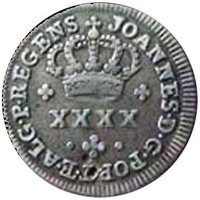
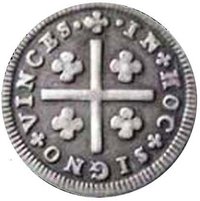
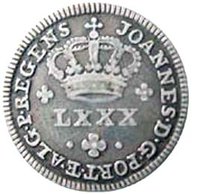
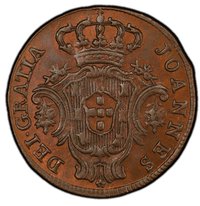
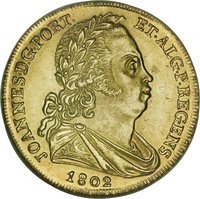
Obverse
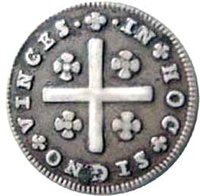
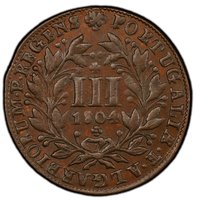
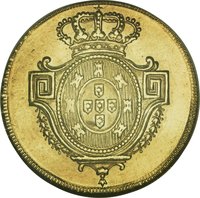
Reverse
Edge
Rope shaped
Mints
| Name | Mark |
|---|---|
| Imprensa Nacional - Casa da Moeda | — |
Mintings
| Year | Mint Mark | Mintage | Quality | Collection |
|---|---|---|---|---|
| 1802 | — | 265,369 | ||
| 1805 | — | 41,464 | ||
| 1807 | — | 363,903 | ||
| 1808 | — | 4,259,306 | ||
| 1809 | — | 1,659,105 | ||
| 1810 | — | 796,569 | ||
| 1811 | — | 959,652 | ||
| 1812 | — | 2,796,826 | ||
| 1813 | — | 3,853,667 | ||
| 1814 | — | 4,296,445 | ||
| 1815 | — | 5,097,250 | ||
| 1816 | — | — |
Historical background
In 1802, Portugal's currency situation was characterized by a complex and strained monetary system, largely a legacy of the 18th century and the profound economic impact of the Napoleonic Wars. The country operated on a bimetallic standard, with the real (plural réis) as the base unit of account. However, the system was plagued by a chronic shortage of precious metal coinage, particularly gold moedas and silver cruzados, leading to widespread use of lower-value copper and billon (debased silver) coins for everyday transactions. This scarcity was exacerbated by massive outflows of Brazilian gold to finance imports, pay for the Peninsular War, and fulfill treaty obligations to Britain, draining the kingdom's bullion reserves.
The monetary landscape was further complicated by a proliferation of token coins, foreign currency (especially Spanish and British), and paper notes issued by the royal treasury to cover state debts. These treasury bills, known as vales reais, had been introduced in 1796 but were already suffering from significant depreciation by 1802, circulating at a discount to their face value. This created a dual system where transactions were often negotiated based on whether payment was in scarce "good money" (metal) or in depreciating paper, eroding public confidence and causing price instability.
Overall, the currency situation in 1802 reflected a pre-modern financial system under severe stress. The state's fiscal difficulties, driven by war and colonial management, directly undermined the integrity of the coinage. This instability foreshadowed deeper crises, culminating in the transfer of the Portuguese court to Brazil in 1807 and subsequent currency reforms in the early 19th century aimed at consolidating the chaotic monetary environment.
The monetary landscape was further complicated by a proliferation of token coins, foreign currency (especially Spanish and British), and paper notes issued by the royal treasury to cover state debts. These treasury bills, known as vales reais, had been introduced in 1796 but were already suffering from significant depreciation by 1802, circulating at a discount to their face value. This created a dual system where transactions were often negotiated based on whether payment was in scarce "good money" (metal) or in depreciating paper, eroding public confidence and causing price instability.
Overall, the currency situation in 1802 reflected a pre-modern financial system under severe stress. The state's fiscal difficulties, driven by war and colonial management, directly undermined the integrity of the coinage. This instability foreshadowed deeper crises, culminating in the transfer of the Portuguese court to Brazil in 1807 and subsequent currency reforms in the early 19th century aimed at consolidating the chaotic monetary environment.
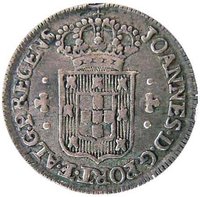
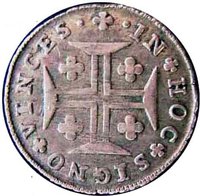
Series: REGENS
🌟 Uncommon