

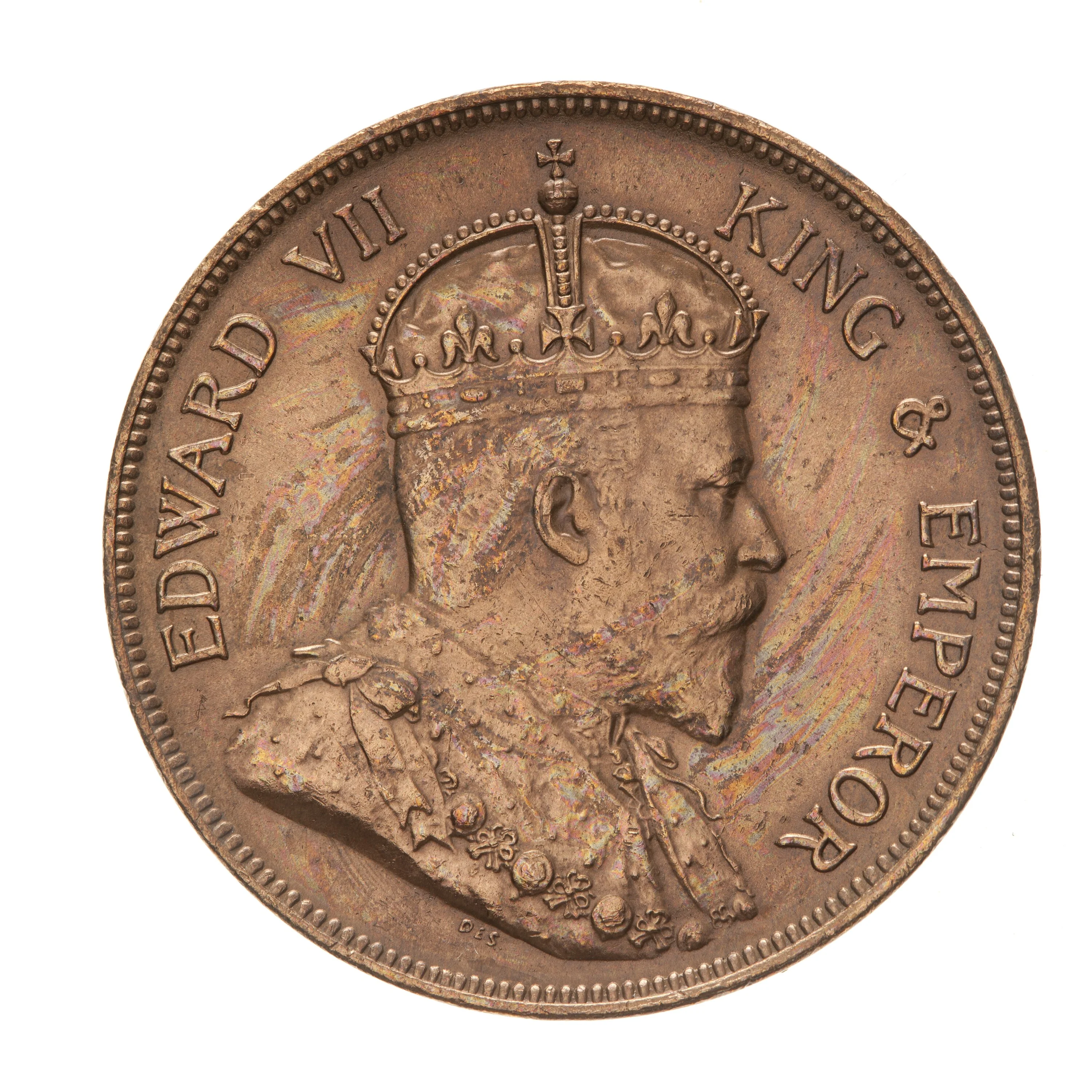
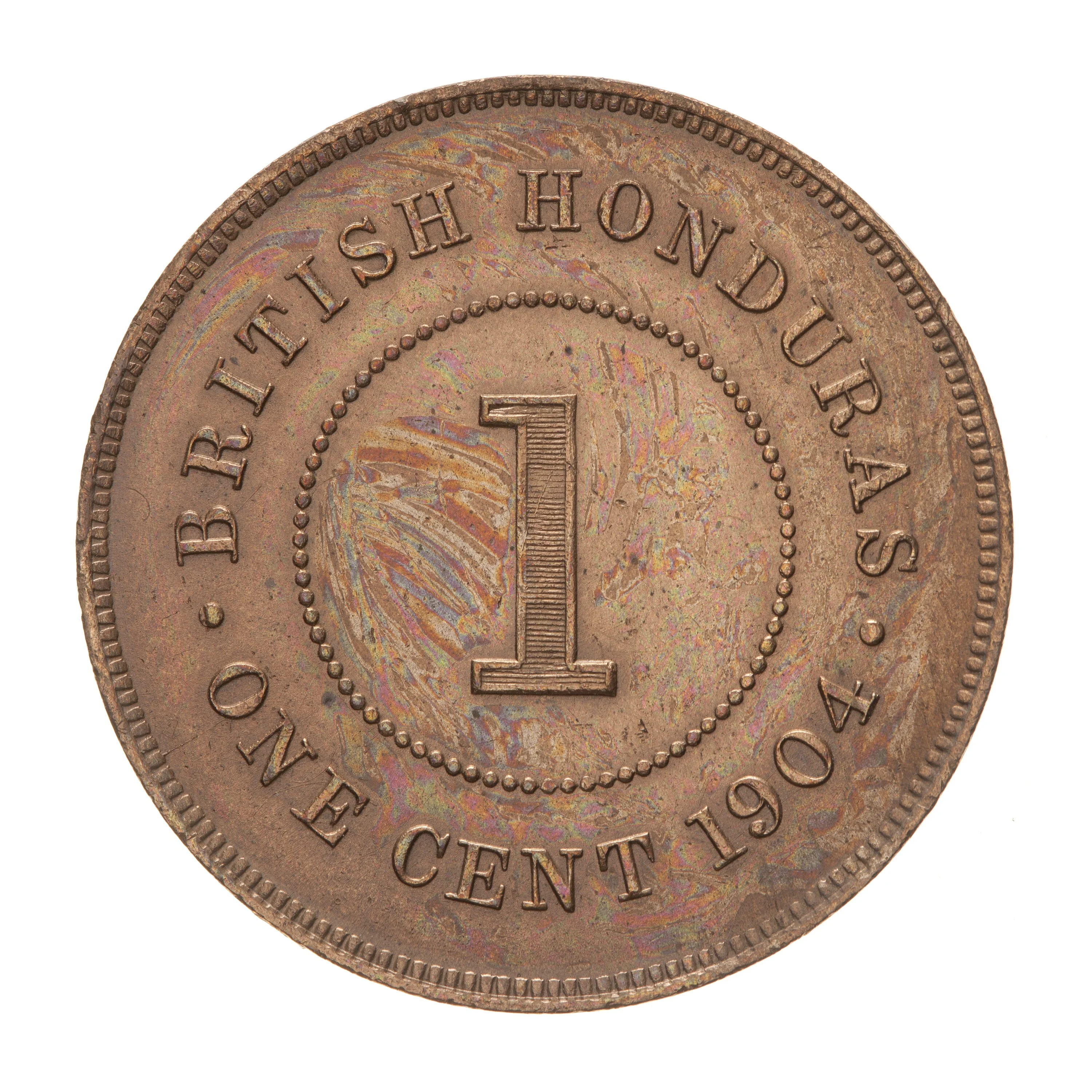
1 Cent – British Honduras
Belize
Context
Years: 1904–1909
Country: Belize 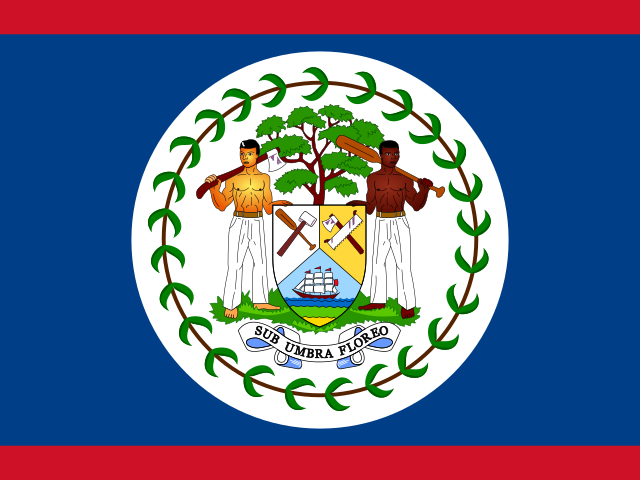
Issuer: British Honduras
Ruler: Edward VII
Currency:
(1885—1973)
Total mintage: 125,000
Material
References
KM: #Click to copy to clipboard11
Numista: #22481
Obverse
Description:
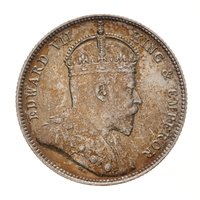
Edward VII crowned bust right.
Inscription:
EDWARD VII KING & EMPEROR
DES
DES
Translation:
Edward VII King and Emperor
God [is] with us
God [is] with us
Script: Latin
Engraver: George William de Saulles
Reverse
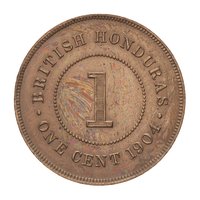
Description:
Beaded circle, toothed rim.
Inscription:
BRITISH HONDURAS
1
· ONE CENT 1904 ·
1
· ONE CENT 1904 ·
Script: Latin
Engraver: George de Saulles
Edge
Categories
| Mustache/Beard |
| Symbol> Crown |
| Person> Monarch |
Mints
| Name | Mark |
|---|---|
| Royal Mint (Tower Hill) | — |
Mintings
| Year | Mint Mark | Mintage | Quality | Collection |
|---|---|---|---|---|
| 1904 | — | — | Matte | |
| 1904 | — | 50,000 | ||
| 1904 | — | — | Proof | |
| 1906 | — | — | Matte | |
| 1906 | — | 50,000 | ||
| 1906 | — | — | Proof | |
| 1909 | — | 25,000 |
Historical background
In 1904, the currency situation in British Honduras (modern-day Belize) was characterized by a complex and somewhat chaotic system of multiple, concurrently circulating currencies, none of which were issued locally. The official currency was the British pound sterling, but in practice, the most commonly used medium of exchange was the silver Mexican dollar and its fractional parts (real and medio). This created significant administrative and commercial challenges, as trade and wages were predominantly calculated in dollars and cents, while government accounts were kept in pounds, shillings, and pence, requiring constant and cumbersome conversions.
The reliance on the Mexican dollar was problematic because its supply was irregular and subject to the monetary policies of a foreign nation. Furthermore, the coinage in circulation was often worn, clipped, or of dubious authenticity, leading to disputes over value. To address this instability, the British Honduras government had, in 1894, fixed the exchange rate at one Mexican dollar to four shillings and two pence sterling. However, this official "Currency Proclamation" rate often diverged from the actual market rate, causing confusion and potential for loss in transactions.
This unsatisfactory monetary environment set the stage for a significant reform. The year 1904 was a pivotal point, as it directly preceded the colony's move to establish a singular, stable currency. In response to the ongoing difficulties, the British Honduras (Currency) Order in Council was passed in 1905, authorizing the introduction of a new, distinct national currency. Consequently, the Belize dollar, fixed at a value of one shilling four pence sterling (or 4s 2d to the old Mexican dollar), was introduced in 1906, finally providing the colony with a unified and government-controlled monetary system.
The reliance on the Mexican dollar was problematic because its supply was irregular and subject to the monetary policies of a foreign nation. Furthermore, the coinage in circulation was often worn, clipped, or of dubious authenticity, leading to disputes over value. To address this instability, the British Honduras government had, in 1894, fixed the exchange rate at one Mexican dollar to four shillings and two pence sterling. However, this official "Currency Proclamation" rate often diverged from the actual market rate, causing confusion and potential for loss in transactions.
This unsatisfactory monetary environment set the stage for a significant reform. The year 1904 was a pivotal point, as it directly preceded the colony's move to establish a singular, stable currency. In response to the ongoing difficulties, the British Honduras (Currency) Order in Council was passed in 1905, authorizing the introduction of a new, distinct national currency. Consequently, the Belize dollar, fixed at a value of one shilling four pence sterling (or 4s 2d to the old Mexican dollar), was introduced in 1906, finally providing the colony with a unified and government-controlled monetary system.
Series: 1904 series
⭐ Rare