

25 Centesimos – Panama
Panama
Context
Material
References
KM: #Click to copy to clipboard4
Numista: #14205
Value
Exchange value: 0.25 PAB
Bullion value: $32.20
Obverse
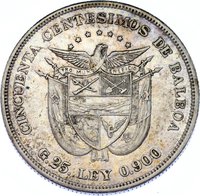
Reverse
Description:
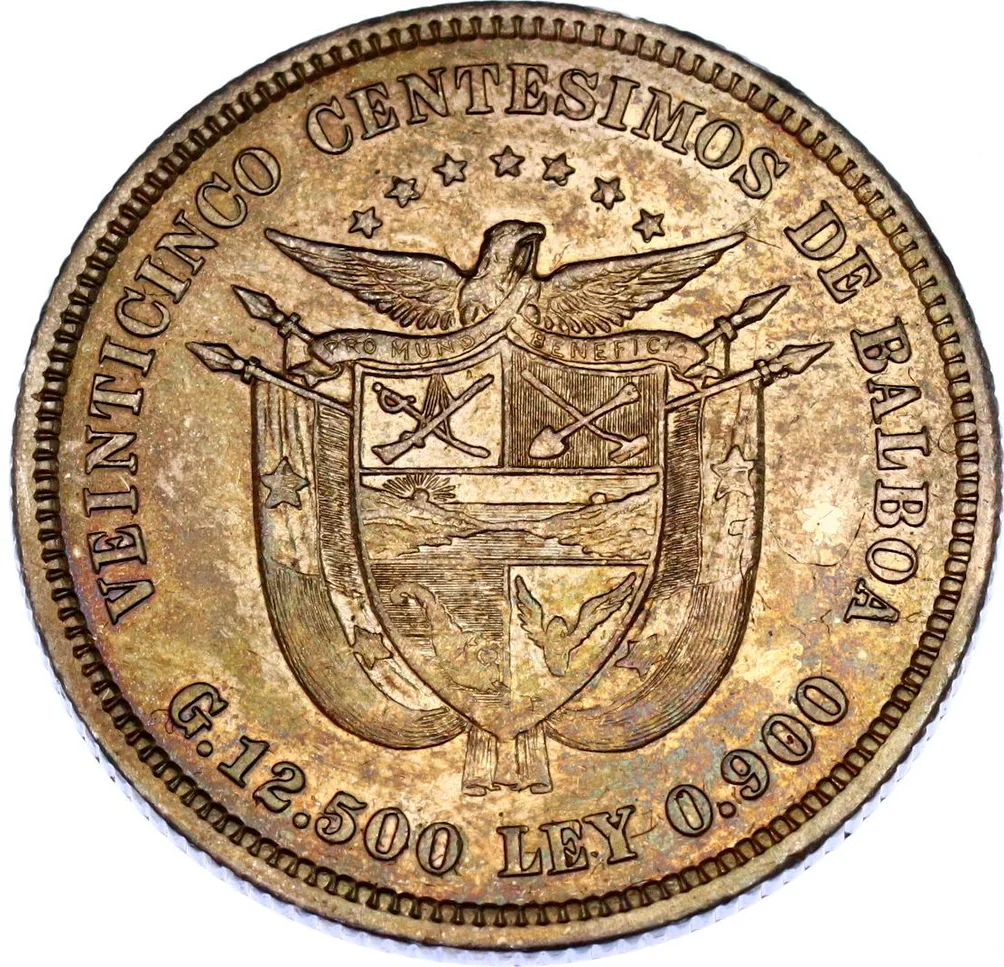
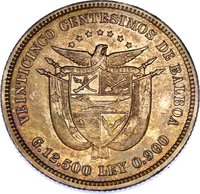
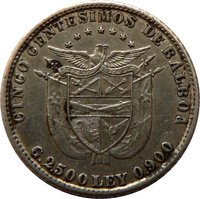
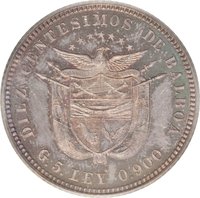
Coat of arms with seven stars above, value and silver content encircling.
Inscription:
VEINTICINCO CENTESIMOS DE BALBOA
*******
PRO MUNDI BENEFICIO
G.12.500 LEY 0.900
*******
PRO MUNDI BENEFICIO
G.12.500 LEY 0.900
Translation:
TWENTY-FIVE CENTESIMOS OF BALBOA
*******
FOR THE BENEFIT OF THE WORLD
G.12.500 LAW 0.900
*******
FOR THE BENEFIT OF THE WORLD
G.12.500 LAW 0.900
Script: Latin
Edge
Reeded
Categories
| Symbols> Coat of Arms |
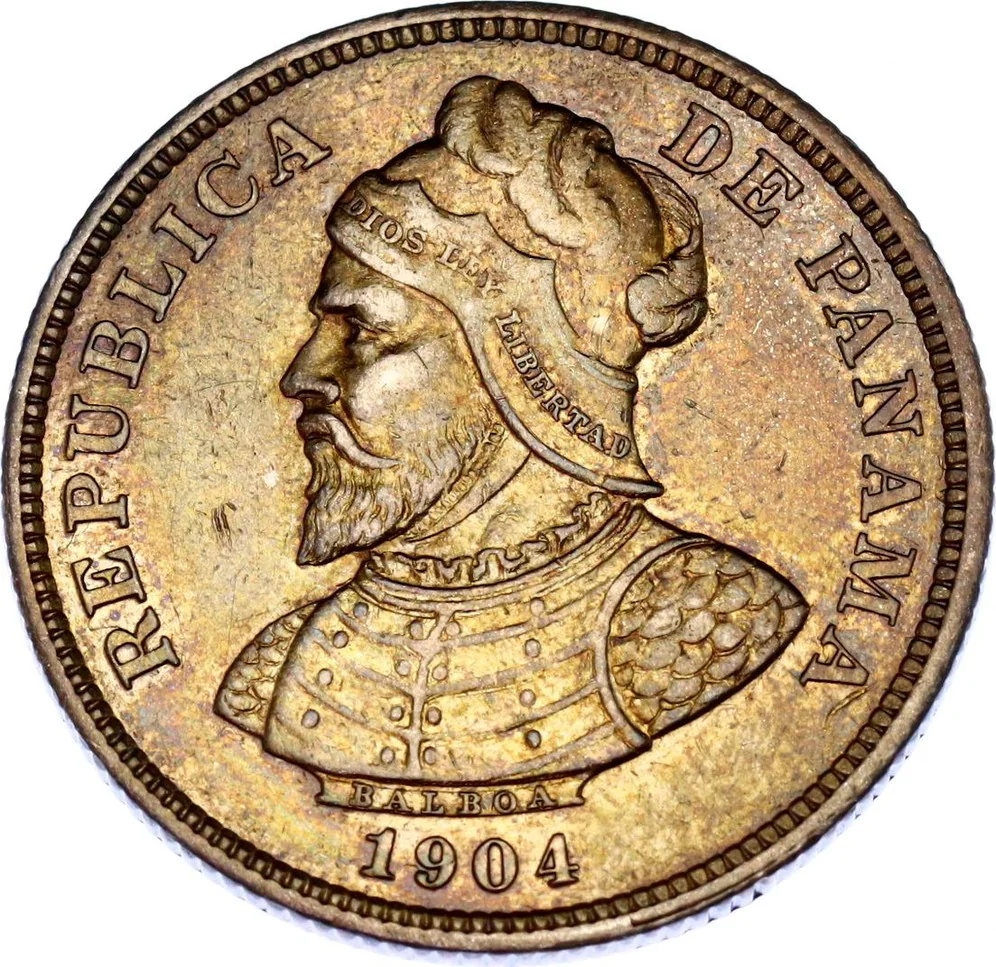
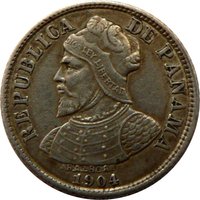
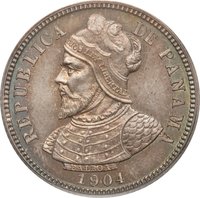
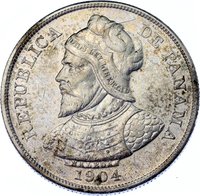
| Person> Explorer |
Mints
| Name | Mark |
|---|---|
| United States Mint of Philadelphia | — |
Mintings
| Year | Mint Mark | Mintage | Quality | Collection |
|---|---|---|---|---|
| 1904 | — | 1,610,000 | ||
| 1904 | — | 12 | Proof |
Historical background
Following its independence from Colombia in 1903, Panama faced immediate monetary instability. The new nation inherited a patchwork of circulating currencies, primarily Colombian pesos, but also U.S. gold coins, British sovereigns, and Peruvian silver. This chaotic system, with fluctuating exchange rates, hindered commerce and foreign investment essential for the monumental task of constructing the Panama Canal. Recognizing this economic vulnerability, the fledgling government, under strong American influence due to the Hay–Bunau-Varilla Treaty, sought a stable and modern monetary foundation.
The solution was decisively articulated in the Monetary Conversion Law of 1904. This landmark legislation formally adopted the U.S. dollar as Panama’s official legal tender. The law mandated that all government accounting be conducted in dollars and that U.S. gold and silver coins would circulate freely. Crucially, it also created a unique parallel currency: the Panamanian balboa. The balboa was pegged at absolute parity (1:1) with the U.S. dollar and was issued only in silver coinage; Panama would never print its own paper money.
Thus, by the end of 1904, Panama had established a distinctive and enduring dual-currency system. The U.S. dollar served as the paper currency and unit of account, while balboa coins represented fractional amounts. This arrangement provided instant stability by tethering Panama’s economy to that of the United States, ensuring confidence for the massive influx of American capital and workers for the Canal project. It remains one of the world's oldest and most successful dollarized economies, a direct legacy of its foundational monetary crisis and the strategic decisions made in 1904.
The solution was decisively articulated in the Monetary Conversion Law of 1904. This landmark legislation formally adopted the U.S. dollar as Panama’s official legal tender. The law mandated that all government accounting be conducted in dollars and that U.S. gold and silver coins would circulate freely. Crucially, it also created a unique parallel currency: the Panamanian balboa. The balboa was pegged at absolute parity (1:1) with the U.S. dollar and was issued only in silver coinage; Panama would never print its own paper money.
Thus, by the end of 1904, Panama had established a distinctive and enduring dual-currency system. The U.S. dollar served as the paper currency and unit of account, while balboa coins represented fractional amounts. This arrangement provided instant stability by tethering Panama’s economy to that of the United States, ensuring confidence for the massive influx of American capital and workers for the Canal project. It remains one of the world's oldest and most successful dollarized economies, a direct legacy of its foundational monetary crisis and the strategic decisions made in 1904.
Series: 1904 series
🌱 Fairly Common