

25 Cents – British Honduras
Belize
Context
Years: 1906–1907
Country: Belize 
Issuer: British Honduras
Ruler: Edward VII
Currency:
(1885—1973)
Total mintage: 90,000
Material
References
KM: #Click to copy to clipboard12
Numista: #20553
Value
Bullion value: $15.38
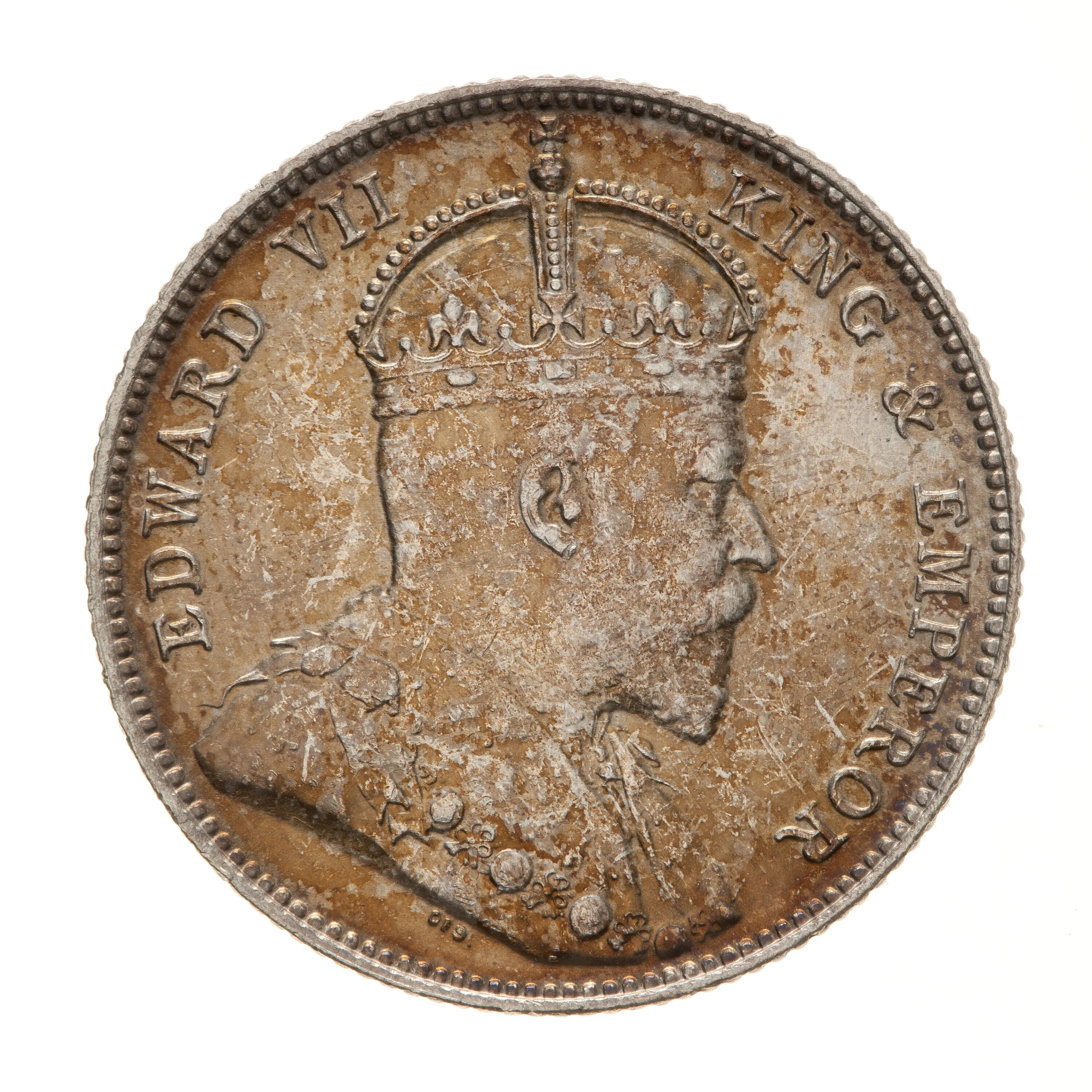
Obverse
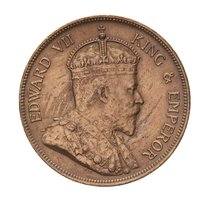
Description:
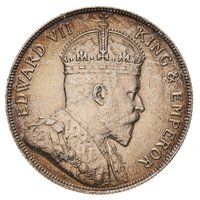
Edward VII crowned bust right.
Inscription:
EDWARD VII KING & EMPEROR
DES
DES
Translation:
Edward VII King and Emperor
God [is] with us
God [is] with us
Script: Latin
Engraver: George William de Saulles
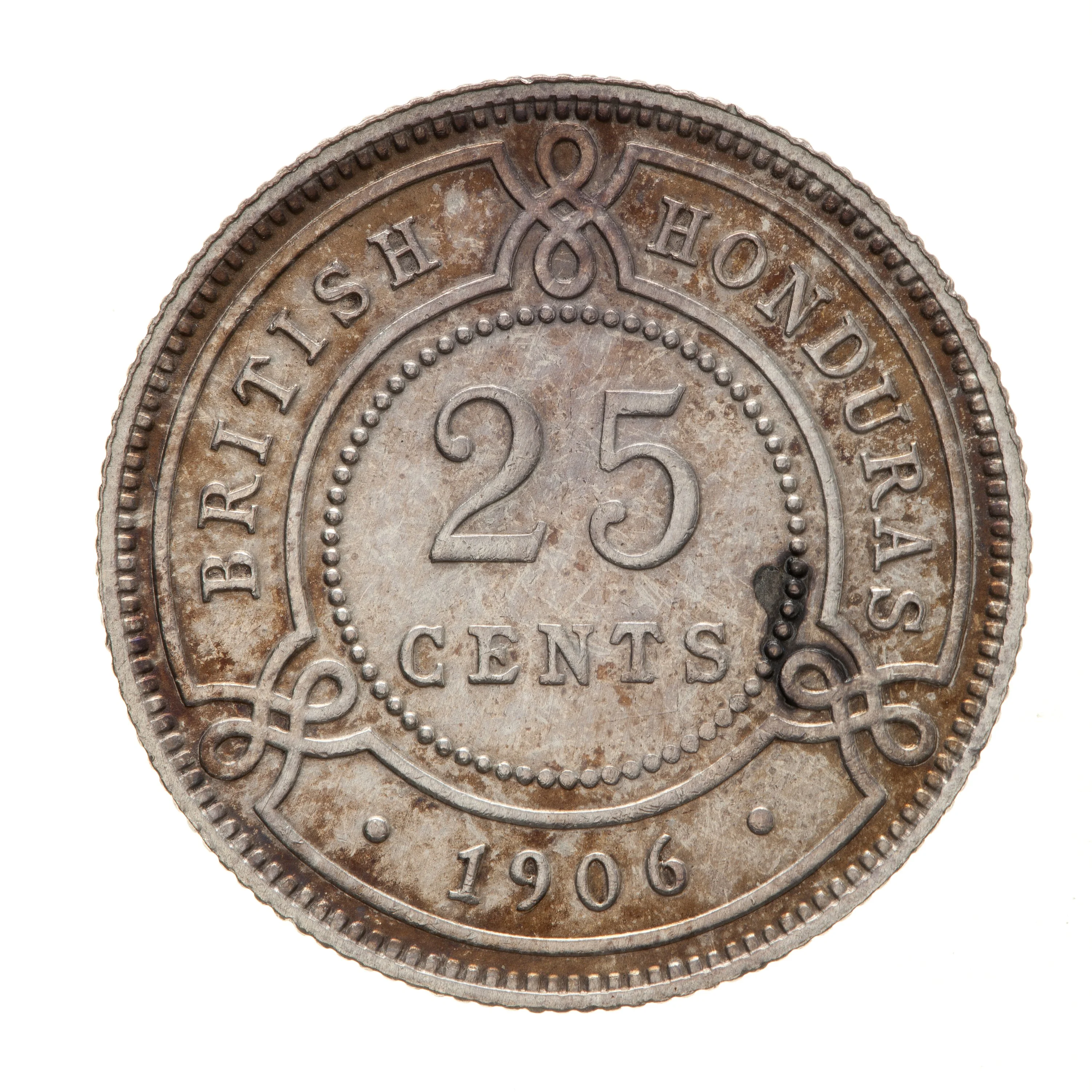
Reverse
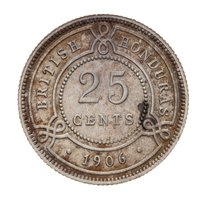
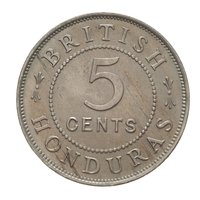
Description:
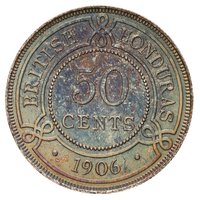
Central beaded circle, toothed rim.
Inscription:
BRITISH HONDURAS
25
CENTS
· 1906 ·
25
CENTS
· 1906 ·
Script: Latin
Edge
Reeded
Categories
| Person> Monarch |
| Mustache/Beard |
| Symbol> Crown |
Mints
| Name | Mark |
|---|---|
| Royal Mint (Tower Hill) | — |
Mintings
| Year | Mint Mark | Mintage | Quality | Collection |
|---|---|---|---|---|
| 1906 | — | 30,000 | ||
| 1907 | — | 60,000 |
Historical background
In 1906, the currency situation in British Honduras (modern-day Belize) was characterized by a complex and somewhat chaotic system of multiple concurrent currencies, a legacy of its colonial economic ties and regional trade. The official currency was the British Honduran dollar, pegged at a fixed rate of 4 shillings 2 pence sterling. However, this unit existed primarily as a unit of account for government transactions. In daily commerce, the physical media of exchange were predominantly foreign silver coins, primarily the Mexican peso, but also US dollars, UK sovereigns, and even Spanish pieces of eight, which circulated freely and were accepted at prevailing market rates.
This multi-currency environment created practical difficulties for trade and bookkeeping, as the fluctuating values of these foreign coins against the official dollar led to confusion and inefficiency. The colony's economy was heavily dependent on the export of mahogany and logwood, with trade flows directed more towards the United States and neighbouring Spanish-American republics than towards the United Kingdom itself. This made the Mexican peso, a strong silver currency in the region, a practical necessity for conducting business, despite the administrative complications it caused for the colonial government.
Consequently, 1906 fell within a period of prolonged debate and transition. Local merchants and the colonial administration had long recognized the problems of this system, and efforts were underway to formalize and simplify the currency. This would culminate just a few years later, in 1907, with the establishment of a Board of Commissioners to oversee the introduction of a new, unified silver coinage for British Honduras, finally aiming to replace the patchwork of foreign currencies with a single, stable national monetary system.
This multi-currency environment created practical difficulties for trade and bookkeeping, as the fluctuating values of these foreign coins against the official dollar led to confusion and inefficiency. The colony's economy was heavily dependent on the export of mahogany and logwood, with trade flows directed more towards the United States and neighbouring Spanish-American republics than towards the United Kingdom itself. This made the Mexican peso, a strong silver currency in the region, a practical necessity for conducting business, despite the administrative complications it caused for the colonial government.
Consequently, 1906 fell within a period of prolonged debate and transition. Local merchants and the colonial administration had long recognized the problems of this system, and efforts were underway to formalize and simplify the currency. This would culminate just a few years later, in 1907, with the establishment of a Board of Commissioners to oversee the introduction of a new, unified silver coinage for British Honduras, finally aiming to replace the patchwork of foreign currencies with a single, stable national monetary system.
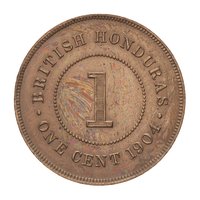
Series: 1904 series
🌟 Limited