

20 centavos – Mozambique
Add to wishlist
Mozambique
Context
Year: 1961
Issuer: Mozambique
Period:
(1951—1975)
Currency:
(1911—1974)
Demonetized: Yes
Total mintage: 12,500,000
Material
References
KM: #
Numista: #2045
Obverse
Description:
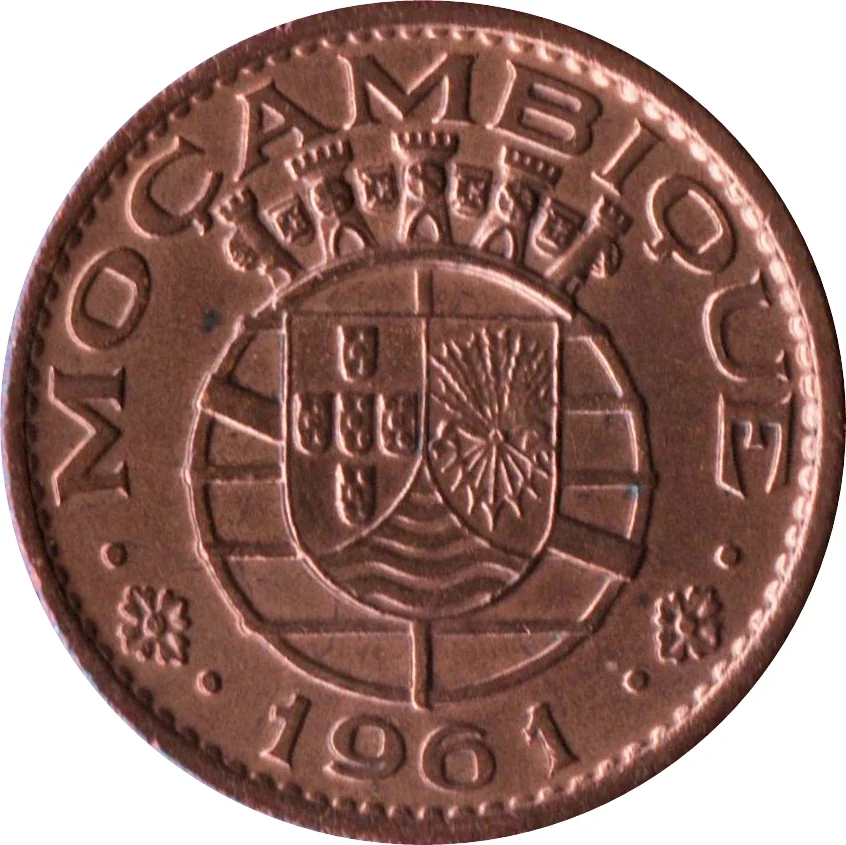
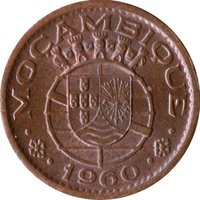
Crowned globe with arms, dated below.
Inscription:
· MOÇAMBIQUE ·
· 1961 ·
· 1961 ·
Translation:
MOZAMBIQUE
1961
1961
Script: Latin
Language: Portuguese
Reverse
Description:
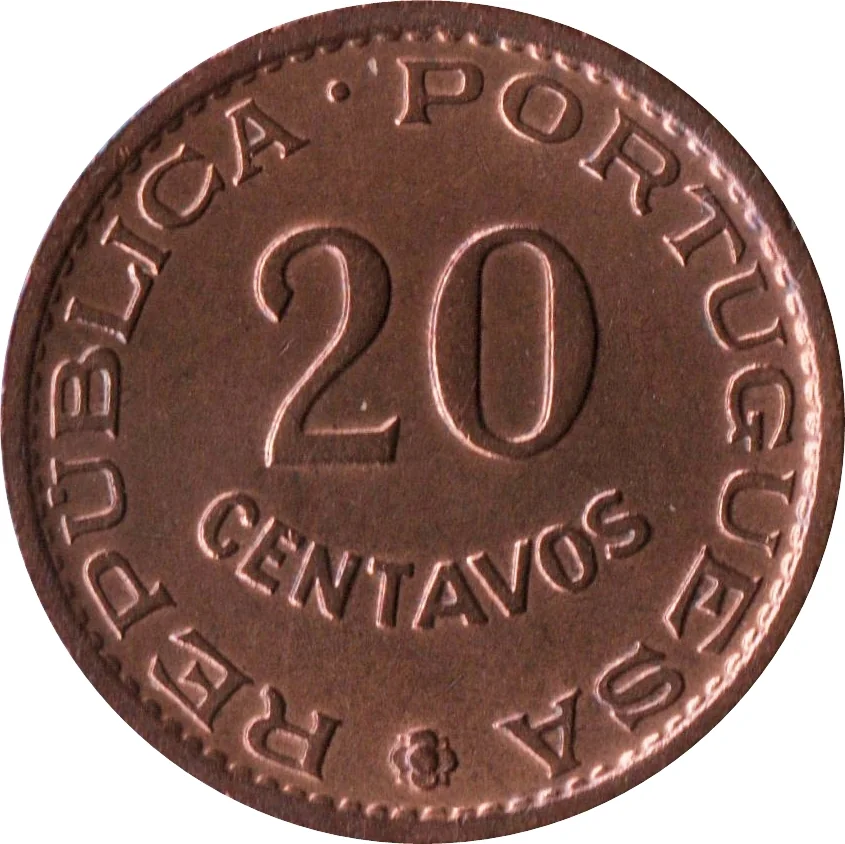
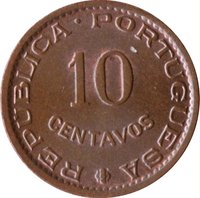
Center value, encircled by legend.
Inscription:
REPÚBLICA · PORTUGUESA
20
CENTAVOS
20
CENTAVOS
Translation:
PORTUGUESE REPUBLIC
20
CENTS
20
CENTS
Script: Latin
Language: Portuguese
Edge
Plain
Categories
| Symbols> Coat of Arms |
Mints
| Name | Mark |
|---|---|
| Imprensa Nacional - Casa da Moeda | — |
Mintings
| Year | Mint Mark | Mintage | Quality | Collection |
|---|---|---|---|---|
| 1961 | — | 12,500,000 |
Historical background
In 1961, Mozambique was a Portuguese overseas province, and its currency situation was entirely dictated by Lisbon. The official currency was the Portuguese escudo (PTE), which circulated at par with the Mozambican escudo (MZE). This system was managed by the Bank of Portugal, with the Bank of Angola (Banco de Angola) authorized to issue notes for Mozambique. There was no independent monetary policy; the colony's financial system was an extension of Portugal's, designed to facilitate trade and resource extraction for the benefit of the metropole.
Economically, the currency regime supported a colonial export-oriented economy. Mozambique's primary exports were agricultural commodities like cotton, cashews, sugar, and tea, alongside minerals. The fixed exchange rate and integrated financial system ensured that profits from these sectors were easily repatriated to Portugal. Furthermore, the escudo's peg to gold via the Bretton Woods system linked Mozambique to international trade, but its internal economy was heavily segmented, with a vast majority of the indigenous population operating outside the formal monetary system in a subsistence or forced-cultivation context.
Politically, this currency integration was a tool of colonial control, reinforcing Lisbon's authority. However, it existed against a backdrop of rising anti-colonial sentiment. The founding of the Frente de Libertação de Moçambique (FRELIMO) in 1962, just a year later, would soon initiate an armed struggle for independence. The impending conflict would eventually disrupt the colonial economic model, but in 1961, the monetary landscape remained one of enforced stability, entirely subservient to Portuguese interests and masking the deep economic inequalities that fueled the growing resistance.
Economically, the currency regime supported a colonial export-oriented economy. Mozambique's primary exports were agricultural commodities like cotton, cashews, sugar, and tea, alongside minerals. The fixed exchange rate and integrated financial system ensured that profits from these sectors were easily repatriated to Portugal. Furthermore, the escudo's peg to gold via the Bretton Woods system linked Mozambique to international trade, but its internal economy was heavily segmented, with a vast majority of the indigenous population operating outside the formal monetary system in a subsistence or forced-cultivation context.
Politically, this currency integration was a tool of colonial control, reinforcing Lisbon's authority. However, it existed against a backdrop of rising anti-colonial sentiment. The founding of the Frente de Libertação de Moçambique (FRELIMO) in 1962, just a year later, would soon initiate an armed struggle for independence. The impending conflict would eventually disrupt the colonial economic model, but in 1961, the monetary landscape remained one of enforced stability, entirely subservient to Portuguese interests and masking the deep economic inequalities that fueled the growing resistance.
Series: 4th System (1952/74)
🌱 Very Common