

1 escudo – Mozambique
Add to wishlist
Mozambique
Context
Years: 1953–1974
Issuer: Mozambique
Period:
(1951—1975)
Currency:
(1911—1974)
Demonetized: Yes
Total mintage: 45,782,000
Material
References
KM: #
Numista: #5951
Obverse
Description:
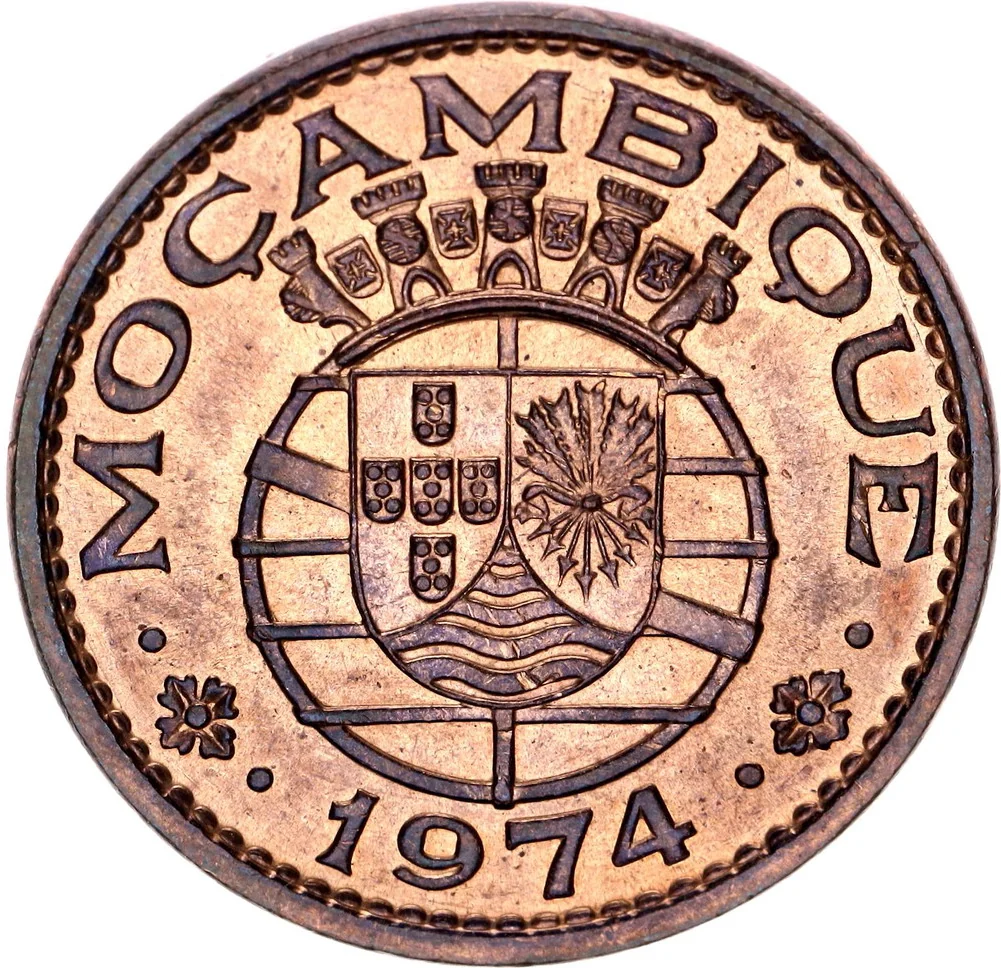
Arms in crowned globe, date beneath.
Inscription:
· MOÇAMBIQUE ·
· 1968 ·
· 1968 ·
Translation:
Mozambique
1968
1968
Script: Latin
Language: Portuguese
Reverse
Description:
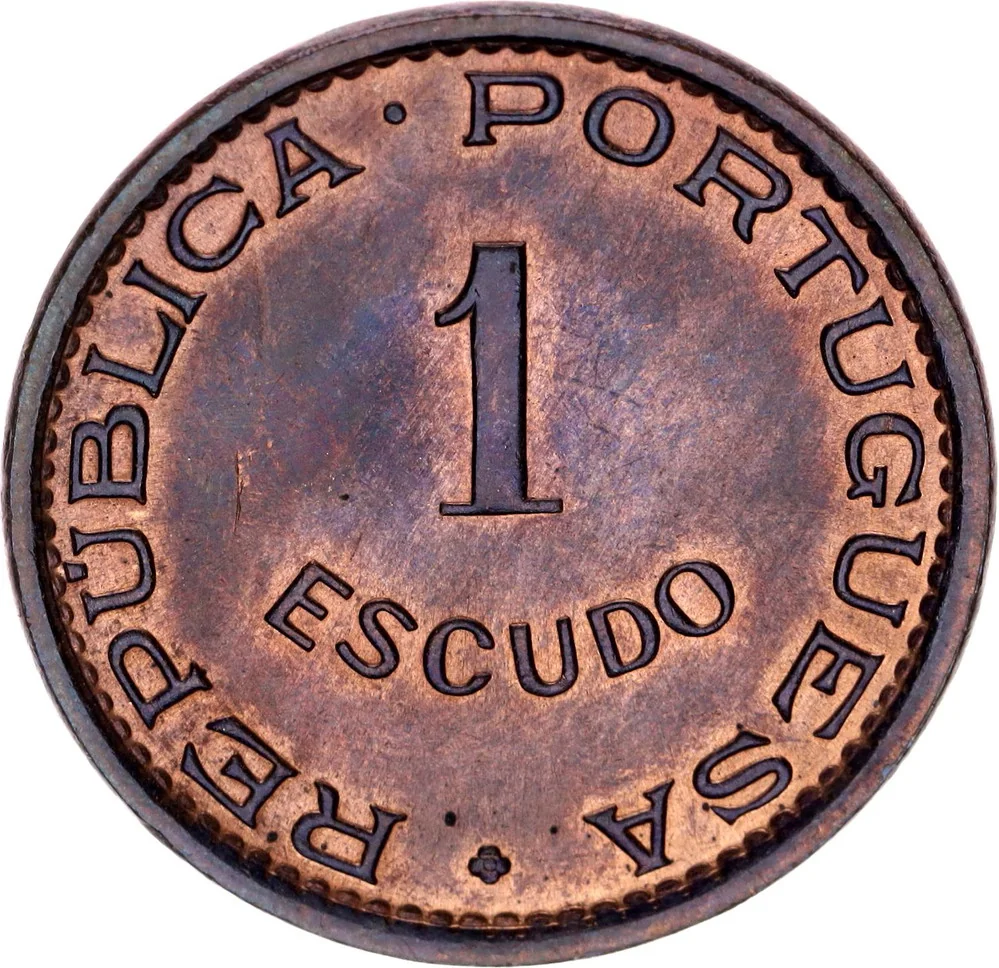
Central value, encircled by legend.
Inscription:
REPÚBLICA · PORTUGUESA
1
ESCUDO
1
ESCUDO
Translation:
Portuguese Republic
1
Shield
1
Shield
Script: Latin
Language: Portuguese
Edge
Plain
Categories
| Symbols> Coat of Arms |
Mints
| Name | Mark |
|---|---|
| Imprensa Nacional - Casa da Moeda | — |
Mintings
| Year | Mint Mark | Mintage | Quality | Collection |
|---|---|---|---|---|
| 1953 | — | 2,013,000 | ||
| 1957 | — | 2,987,000 | ||
| 1962 | — | 600,000 | ||
| 1963 | — | 3,258,000 | ||
| 1965 | — | 5,000,000 | ||
| 1968 | — | 4,500,000 | ||
| 1969 | — | 1,642,000 | ||
| 1973 | — | 501,000 | ||
| 1974 | — | 25,281,000 |
Historical background
In 1953, Mozambique's currency situation was fundamentally shaped by its status as a Portuguese colony, integrated into the broader Portuguese Escudo Zone. The official currency was the Portuguese escudo (PTE), which circulated alongside a unique local branch of Portugal's central bank, the Banco Nacional Ultramarino (BNU). The BNU issued banknotes specifically for Mozambique, denominated in escudos and bearing the colony's name, but these were not a separate, independent currency. They were fully convertible at par with metropolitan Portuguese escudos, firmly tethering Mozambique's monetary policy and value to Lisbon.
The economy was primarily structured to serve Portugal's interests, focusing on the export of agricultural commodities like cotton, cashews, and sugar, as well as providing transit routes for neighbouring landlocked territories. The fixed exchange rate with the Portuguese escudo facilitated trade and capital flows within the empire but left Mozambique vulnerable to Portugal's own economic conditions and policy decisions. There was no autonomous monetary authority; interest rates and money supply were dictated by the needs of the metropole, often prioritising Portuguese stability over local developmental needs.
This period predated any significant moves toward decimalisation or independence. The escudo system, divided into 100 centavos, would remain in place until after independence in 1975. Therefore, the 1953 currency landscape was one of colonial integration and control, characterised by stability through subordination, with all monetary sovereignty residing in Lisbon and administered locally through the Banco Nacional Ultramarino's branch network.
The economy was primarily structured to serve Portugal's interests, focusing on the export of agricultural commodities like cotton, cashews, and sugar, as well as providing transit routes for neighbouring landlocked territories. The fixed exchange rate with the Portuguese escudo facilitated trade and capital flows within the empire but left Mozambique vulnerable to Portugal's own economic conditions and policy decisions. There was no autonomous monetary authority; interest rates and money supply were dictated by the needs of the metropole, often prioritising Portuguese stability over local developmental needs.
This period predated any significant moves toward decimalisation or independence. The escudo system, divided into 100 centavos, would remain in place until after independence in 1975. Therefore, the 1953 currency landscape was one of colonial integration and control, characterised by stability through subordination, with all monetary sovereignty residing in Lisbon and administered locally through the Banco Nacional Ultramarino's branch network.
Series: 4th System (1952/74)
🌱 Very Common