

10 escudos – Mozambique
Add to wishlist
Mozambique
Context
Year: 1966
Issuer: Mozambique
Period:
(1951—1975)
Currency:
(1911—1974)
Demonetized: Yes
Total mintage: 500,000
Material
References
KM: #
Numista: #16658
Value
Bullion value: $8.66
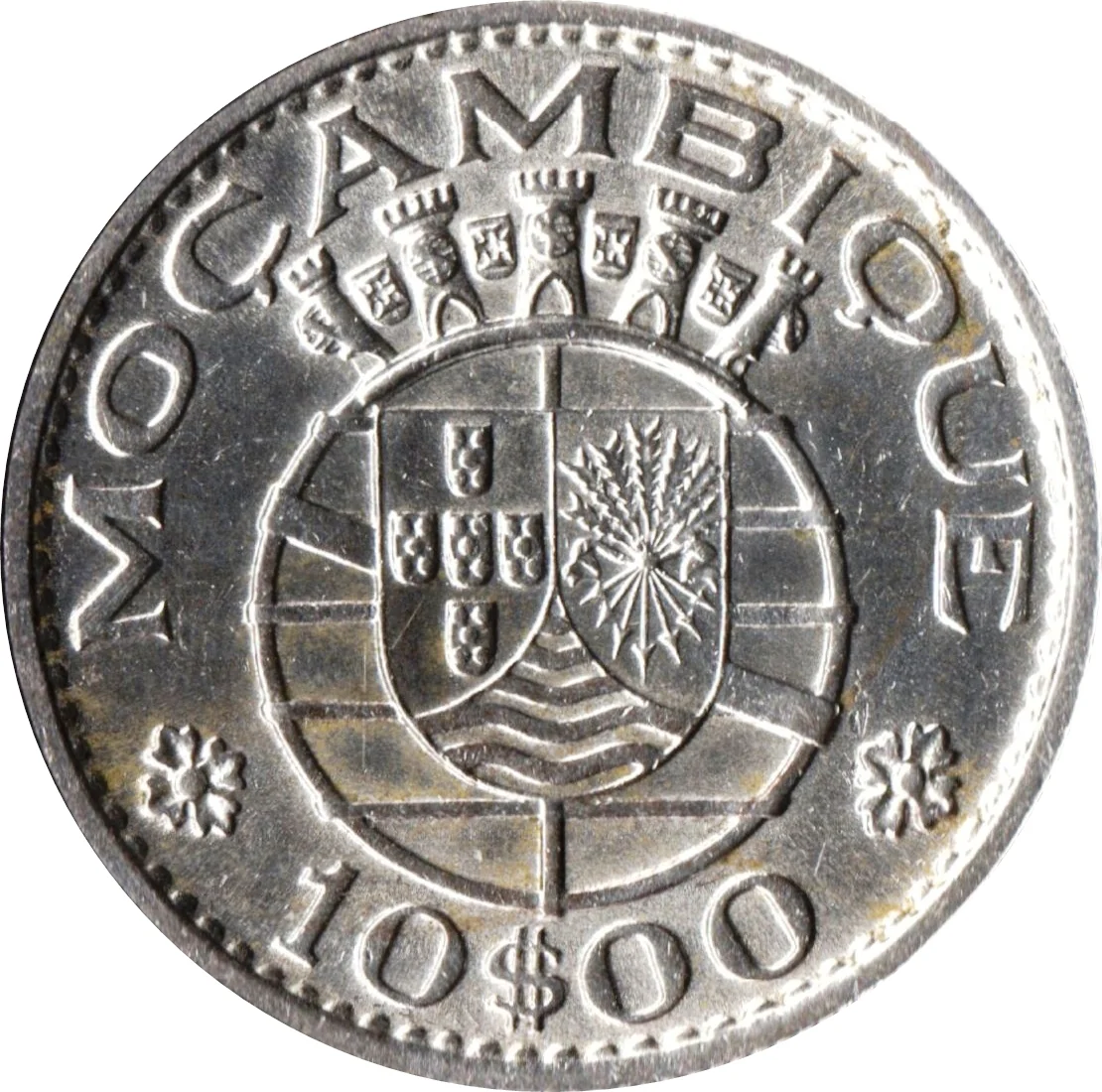
Obverse
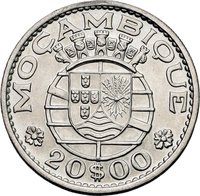
Description:
Portuguese coat of arms on crowned globe, value below.
Inscription:
MOÇAMBIQUE
10$00
10$00
Translation:
MOZAMBIQUE
10.00 Meticais
10.00 Meticais
Script: Latin
Language: Portuguese
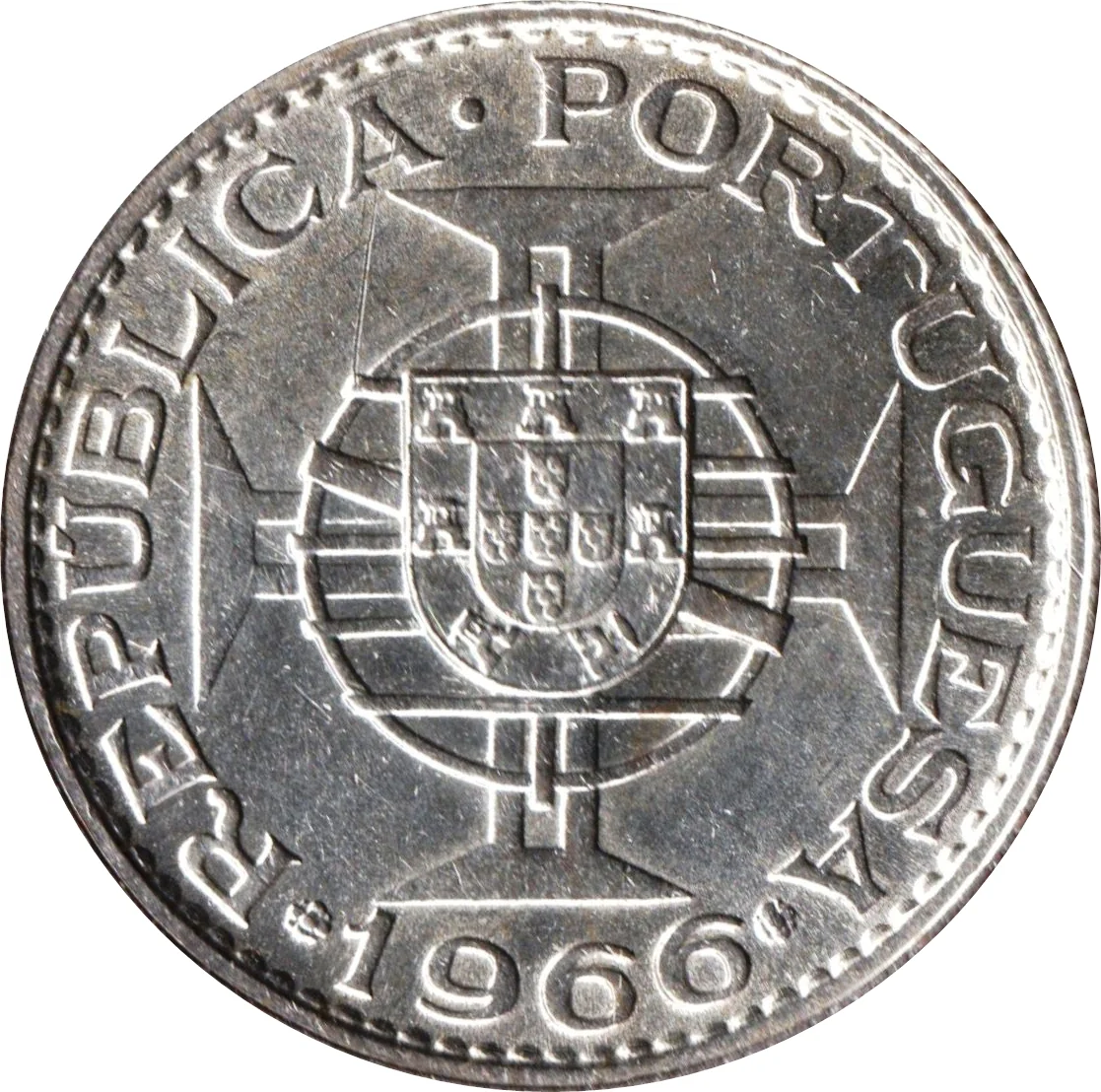
Reverse
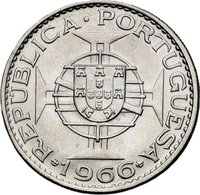
Description:
Portuguese coat of arms on a globe over a cross, with date below.
Inscription:
REPÚBLICA·PORTUGUESA
·1966·
·1966·
Translation:
PORTUGUESE REPUBLIC
·1966·
·1966·
Script: Latin
Language: Portuguese
Edge
Reeded
Mintings
| Year | Mint Mark | Mintage | Quality | Collection |
|---|---|---|---|---|
| 1966 | — | 500,000 |
Historical background
In 1966, Mozambique was a Portuguese overseas province, and its currency situation was entirely dictated by the metropole. The official currency was the Portuguese Escudo (PTE), which circulated interchangeably with the Mozambican Escudo (MZE). While banknotes were issued specifically for Mozambique by the Banco Nacional Ultramarino (the central bank for Portugal's colonies), the currency was pegged at par with the Portuguese escudo and was not an independent monetary instrument. This system ensured that Mozambique's economy and financial flows were tightly integrated with and controlled by Lisbon, serving Portuguese commercial and strategic interests.
The primary economic function of Mozambique within the Portuguese empire at this time was as a source of agricultural exports (like cotton, cashews, and sugar) and as a strategic transport corridor for landlocked neighbours, notably Rhodesia and South Africa. The port of Lourenço Marques (now Maputo) was a critical asset. The unified currency facilitated the repatriation of profits to Portuguese businesses and the financing of the colonial administration and its military efforts. It also simplified trade within the Escudo Zone, but it inherently limited Mozambique's ability to pursue autonomous economic or monetary policies.
This rigid financial integration occurred against the backdrop of the escalating War of Independence (1964-1974). The conflict, led by FRELIMO, was creating significant economic strain through disruption and military expenditure. While the currency itself remained stable on the peg, the war was beginning to undermine the very colonial economic structure the escudo system was designed to support. The situation in 1966, therefore, was one of superficial monetary stability enforced by colonial rule, but with growing underlying pressures from the independence struggle that would ultimately lead to the creation of an independent Mozambican currency a decade later.
The primary economic function of Mozambique within the Portuguese empire at this time was as a source of agricultural exports (like cotton, cashews, and sugar) and as a strategic transport corridor for landlocked neighbours, notably Rhodesia and South Africa. The port of Lourenço Marques (now Maputo) was a critical asset. The unified currency facilitated the repatriation of profits to Portuguese businesses and the financing of the colonial administration and its military efforts. It also simplified trade within the Escudo Zone, but it inherently limited Mozambique's ability to pursue autonomous economic or monetary policies.
This rigid financial integration occurred against the backdrop of the escalating War of Independence (1964-1974). The conflict, led by FRELIMO, was creating significant economic strain through disruption and military expenditure. While the currency itself remained stable on the peg, the war was beginning to undermine the very colonial economic structure the escudo system was designed to support. The situation in 1966, therefore, was one of superficial monetary stability enforced by colonial rule, but with growing underlying pressures from the independence struggle that would ultimately lead to the creation of an independent Mozambican currency a decade later.
🌱 Fairly Common