

10 centavos – Mozambique
Add to wishlist
Mozambique
Context
Years: 1960–1961
Issuer: Mozambique
Period:
(1951—1975)
Currency:
(1911—1974)
Demonetized: Yes
Total mintage: 14,050,000
Material
References
KM: #
Numista: #4294
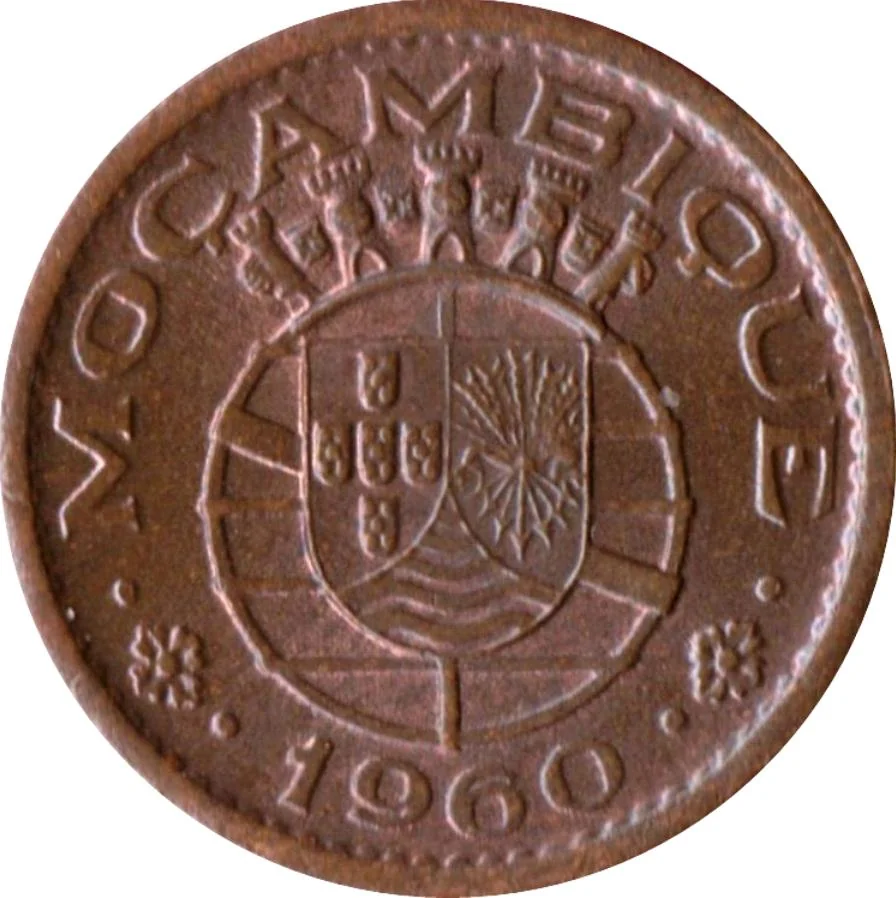
Obverse
Description:
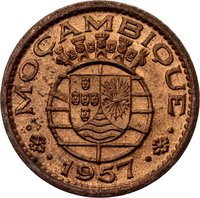
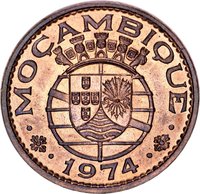
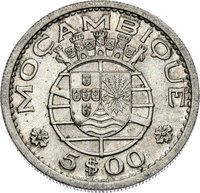
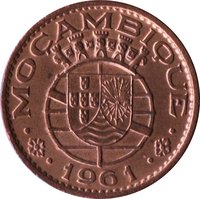
Crowned globe with arms, dated below.
Inscription:
· MOÇAMBIQUE ·
· 1960 ·
· 1960 ·
Translation:
MOZAMBIQUE
1960
1960
Script: Latin
Language: Portuguese
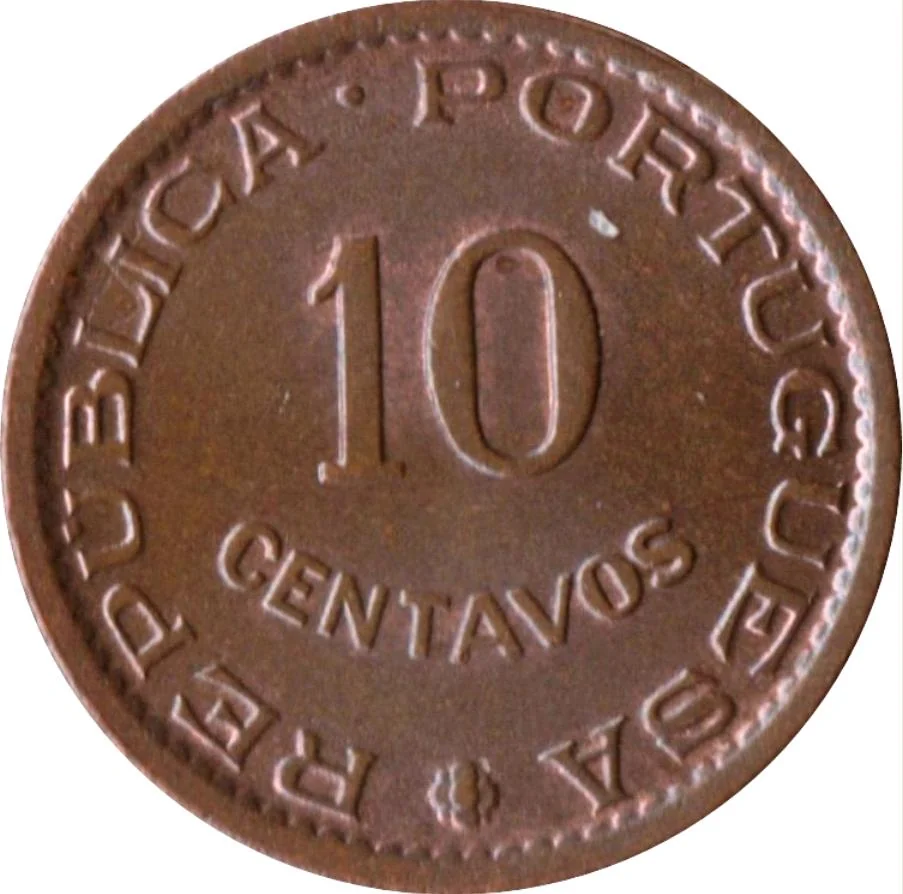
Reverse
Description:
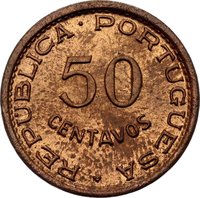
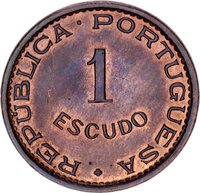
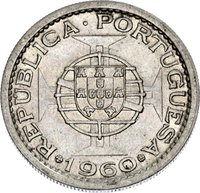
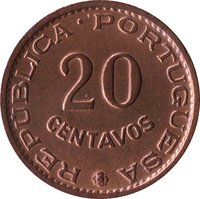
Center value, encircled by legend.
Inscription:
REPÚBLICA · PORTUGUESA
10
CENTAVOS
10
CENTAVOS
Translation:
Portuguese Republic
10
Cents
10
Cents
Script: Latin
Language: Portuguese
Edge
Plain
Categories
| Symbols> Coat of Arms |
Mints
| Name | Mark |
|---|---|
| Imprensa Nacional - Casa da Moeda | — |
Mintings
| Year | Mint Mark | Mintage | Quality | Collection |
|---|---|---|---|---|
| 1960 | — | 3,750,000 | ||
| 1961 | — | 10,300,000 |
Historical background
In 1960, Mozambique was a Portuguese colony, and its currency situation was entirely dictated by Lisbon. The official currency was the Portuguese Escudo (PTE), which was subdivided into 100 centavos. Mozambique did not have an independent central bank or monetary policy; its currency was issued by the Bank of Portugal, and its value was pegged to the Portuguese Escudo at par. This meant that the colony's financial health was intrinsically linked to the economic policies and stability of the metropole, with currency circulating in the form of Portuguese banknotes and coins, as well as some specific notes issued for the "Overseas Provinces."
The economy was heavily extractive and agricultural, designed to benefit Portugal. Currency use was dualistic: the formal colonial economy, including Portuguese settlers, businesses, and a small African elite in urban areas, operated primarily with the escudo. However, a large portion of the indigenous population, especially in rural areas, continued to engage in subsistence farming and local barter systems. Forced labor schemes and the cultivation of cash crops like cotton and cashews for export were mechanisms to integrate the African population into the cash economy, albeit at exploitative rates, to generate foreign exchange for Portugal.
This monetary integration was a tool of colonial control, facilitating the extraction of resources and ensuring Mozambique's economic dependency. There were no discussions of a sovereign Mozambican currency at this time, as the nationalist movements like FRELIMO, founded in 1962, were just beginning to organize. The currency situation in 1960 thus reflected a stable but deeply unequal colonial system, entirely subservient to Lisbon's authority, on the cusp of being challenged by the impending armed struggle for independence that would erupt in 1964.
The economy was heavily extractive and agricultural, designed to benefit Portugal. Currency use was dualistic: the formal colonial economy, including Portuguese settlers, businesses, and a small African elite in urban areas, operated primarily with the escudo. However, a large portion of the indigenous population, especially in rural areas, continued to engage in subsistence farming and local barter systems. Forced labor schemes and the cultivation of cash crops like cotton and cashews for export were mechanisms to integrate the African population into the cash economy, albeit at exploitative rates, to generate foreign exchange for Portugal.
This monetary integration was a tool of colonial control, facilitating the extraction of resources and ensuring Mozambique's economic dependency. There were no discussions of a sovereign Mozambican currency at this time, as the nationalist movements like FRELIMO, founded in 1962, were just beginning to organize. The currency situation in 1960 thus reflected a stable but deeply unequal colonial system, entirely subservient to Lisbon's authority, on the cusp of being challenged by the impending armed struggle for independence that would erupt in 1964.
Series: 4th System (1952/74)
🌱 Very Common