


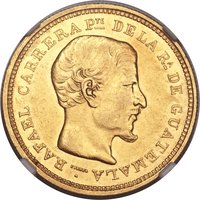
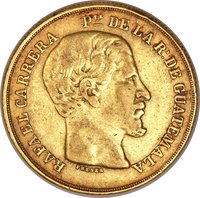
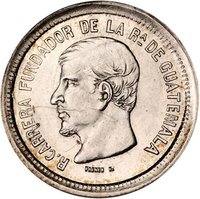
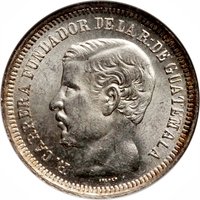
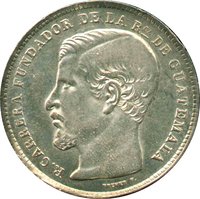
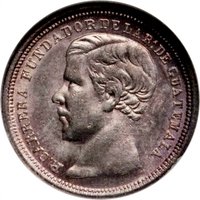
Obverse
Description:
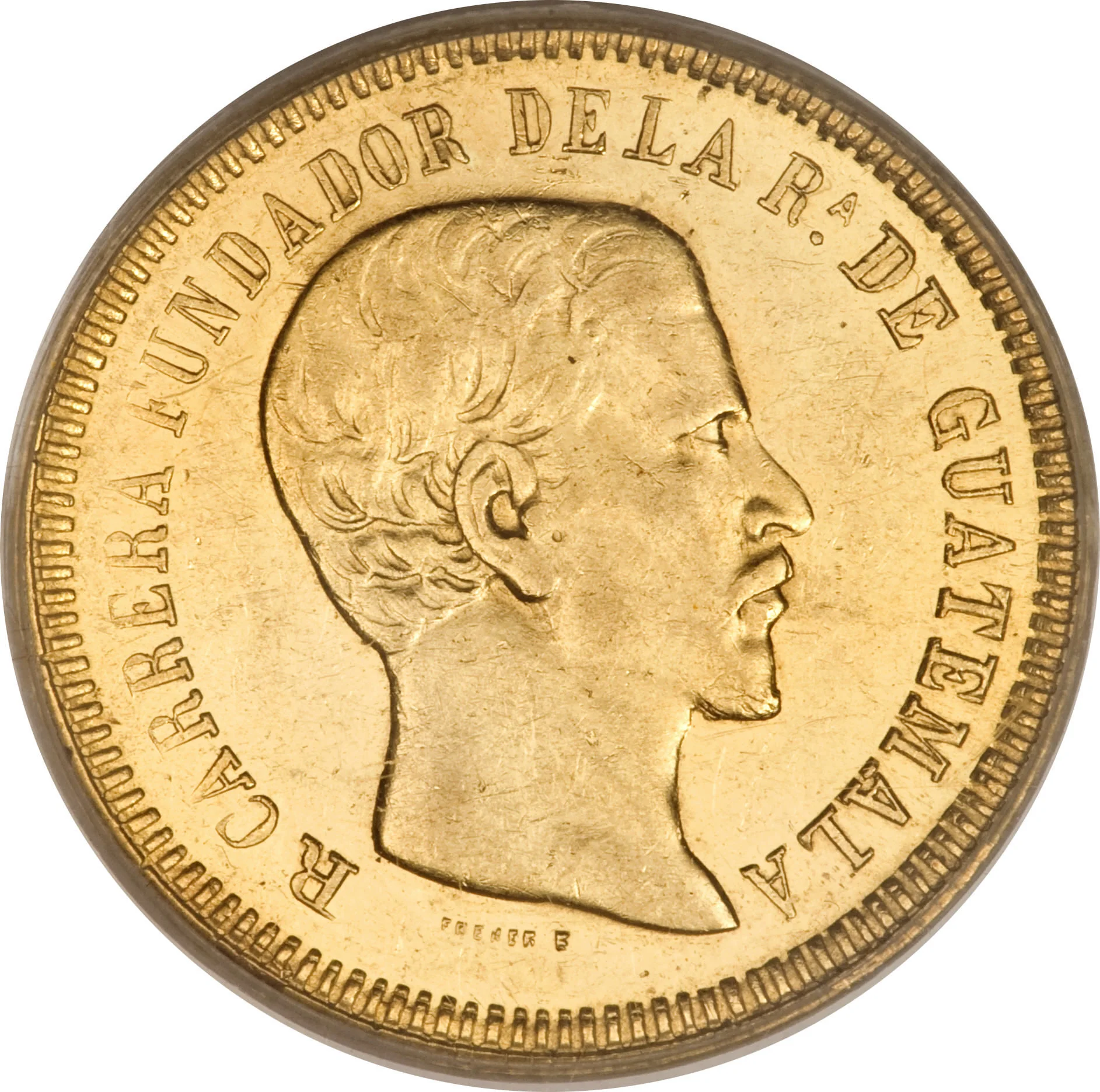
Bust right, legend around, engraver's name at base.
Inscription:
R CARRERA FUNDADOR DE LA RA. DE GUATEMALA
FRENER F
FRENER F
Translation:
R. CARRERA FOUNDER OF THE REPUBLIC OF GUATEMALA
FRENER F
FRENER F
Script: Latin
Language: Spanish
Engraver: Johann-Baptist Frener
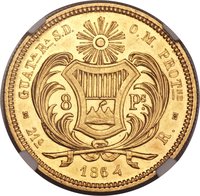
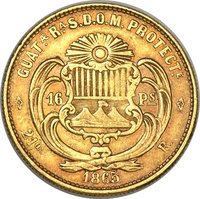
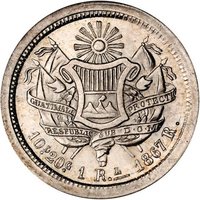
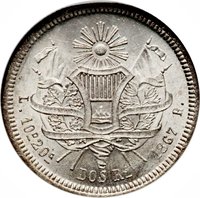
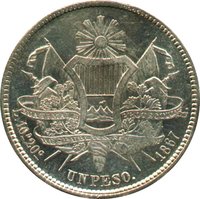
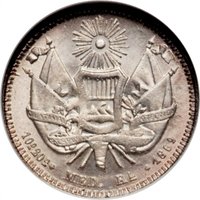
Reverse
Description:
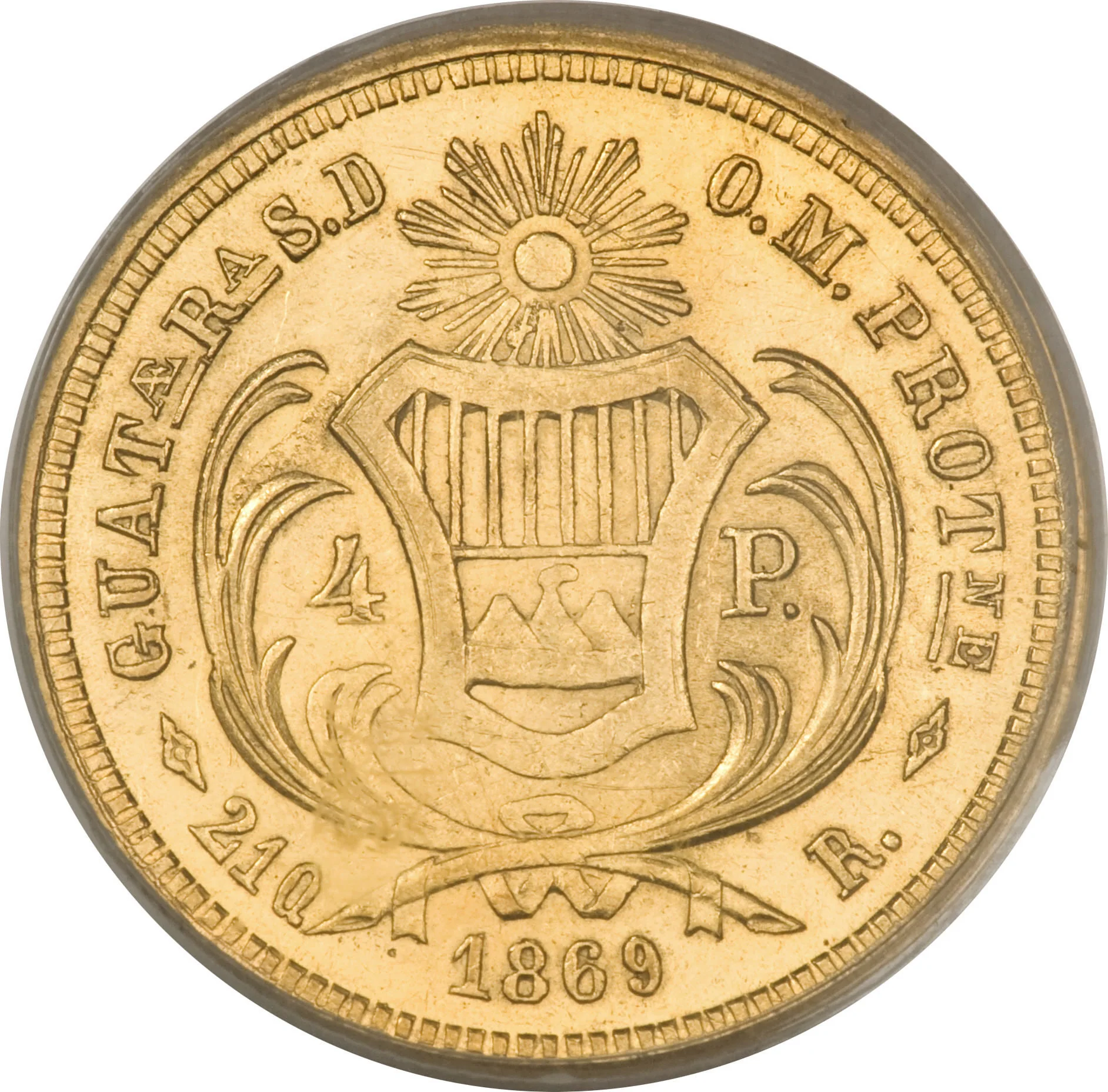
Shield divides value. Legend above. Fineness, date, and initial below.
Inscription:
GUATÆ RA S.D.O.M. PROTNE
4 P.
-21Q 1869 R.-
4 P.
-21Q 1869 R.-
Translation:
Guatemala, by the grace of God, protector of the faith.
4 Pesos
-21Q 1869 R.
4 Pesos
-21Q 1869 R.
Script: Latin
Language: Latin
Engraver: Johann-Baptist Frener
Edge
Categories
| Symbols> Coat of Arms |
| Person> Politician |
Mints
| Name | Mark |
|---|---|
| Casa de Moneda de Guatemala | — |
Mintings
| Year | Mint Mark | Mintage | Quality | Collection |
|---|---|---|---|---|
| 1866 | — | 561 | ||
| 1868 | — | 778 | ||
| 1869 | — | 19,670 |
Historical background
In 1866, Guatemala’s currency situation was characterized by significant instability and a complex mix of circulating media, a legacy of the post-independence period and regional conflicts. The country operated on a bimetallic system de jure, but in practice, the primary circulating coin was the silver peso, often cut into fractional pieces (reales and medios) for smaller transactions. However, the supply of officially minted coinage was insufficient, leading to a heavy reliance on foreign silver, particularly Peruvian, Bolivian, and Mexican coins, which circulated concurrently and at varying values. This created a chaotic and inefficient monetary environment for daily commerce.
The instability was exacerbated by the government's chronic fiscal deficits, a result of costly infrastructure projects and the ongoing political turbulence of the Rafael Carrera regime. To finance its obligations, the government frequently resorted to issuing paper money, known as billetes de tesorería (treasury notes). These notes were not backed by specie (hard currency) and quickly depreciated, causing public distrust and inflation. By 1866, this fiat currency was circulating at a steep discount to silver, effectively creating a two-tier economy where hard coin commanded a premium and was hoarded, further draining it from general circulation.
Consequently, 1866 fell within a prolonged period of monetary confusion that would only begin to find resolution later in the decade. The government recognized the problems, and under the subsequent administration of President Vicente Cerna, steps were taken toward reform. These efforts culminated in the Monetary Law of 1869, which aimed to standardize the currency, introduce a national gold coin (the guatemalteco), and restructure the banking system. Thus, the situation in 1866 represents the troubled peak of these monetary pressures, immediately preceding a concerted, though not immediately successful, push for modernization and stability.
The instability was exacerbated by the government's chronic fiscal deficits, a result of costly infrastructure projects and the ongoing political turbulence of the Rafael Carrera regime. To finance its obligations, the government frequently resorted to issuing paper money, known as billetes de tesorería (treasury notes). These notes were not backed by specie (hard currency) and quickly depreciated, causing public distrust and inflation. By 1866, this fiat currency was circulating at a steep discount to silver, effectively creating a two-tier economy where hard coin commanded a premium and was hoarded, further draining it from general circulation.
Consequently, 1866 fell within a prolonged period of monetary confusion that would only begin to find resolution later in the decade. The government recognized the problems, and under the subsequent administration of President Vicente Cerna, steps were taken toward reform. These efforts culminated in the Monetary Law of 1869, which aimed to standardize the currency, introduce a national gold coin (the guatemalteco), and restructure the banking system. Thus, the situation in 1866 represents the troubled peak of these monetary pressures, immediately preceding a concerted, though not immediately successful, push for modernization and stability.
Series: System: 1859-1870
✨ Legendary