

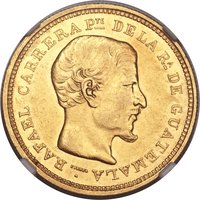
Obverse
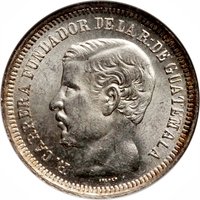
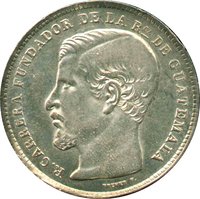
Description:
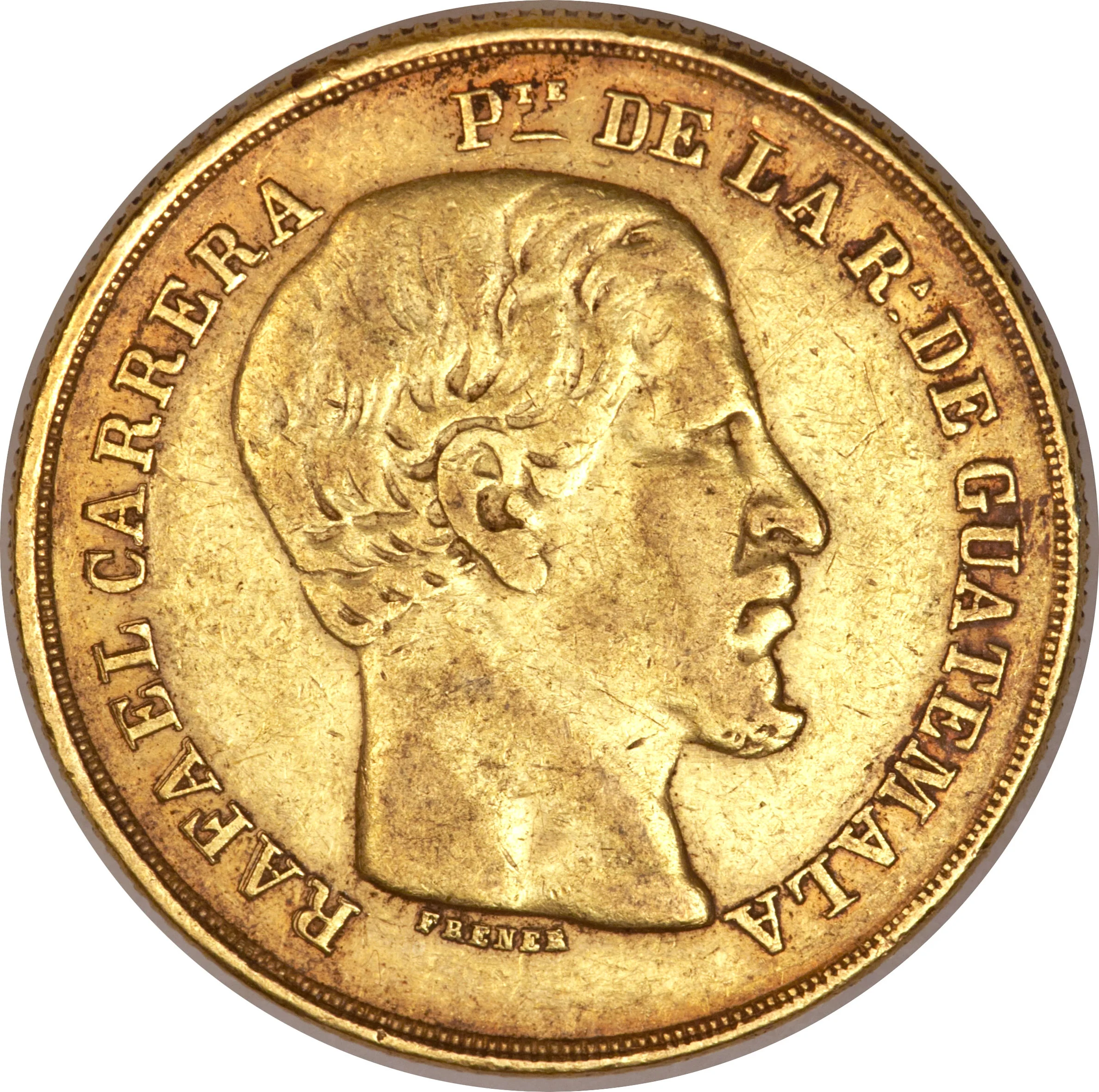
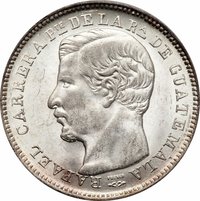
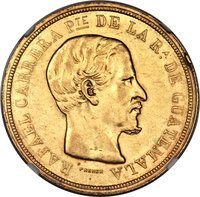
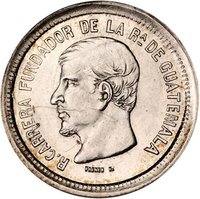
Bust right, legend around, engraver's name at base.
Inscription:
RAFAEL CARRERA PTE DE LA RA. DE GUATEMALA
FRENER
FRENER
Translation:
Rafael Carrera President of the Republic of Guatemala
Founder
Founder
Script: Latin
Language: Spanish
Engraver: Johann-Baptist Frener
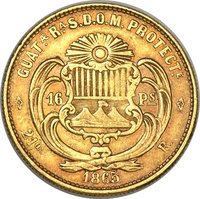
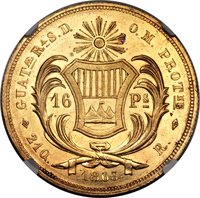
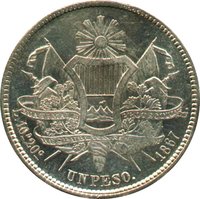
Reverse
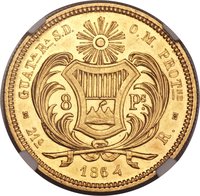
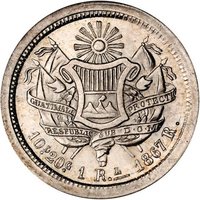
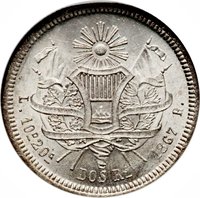
Description:
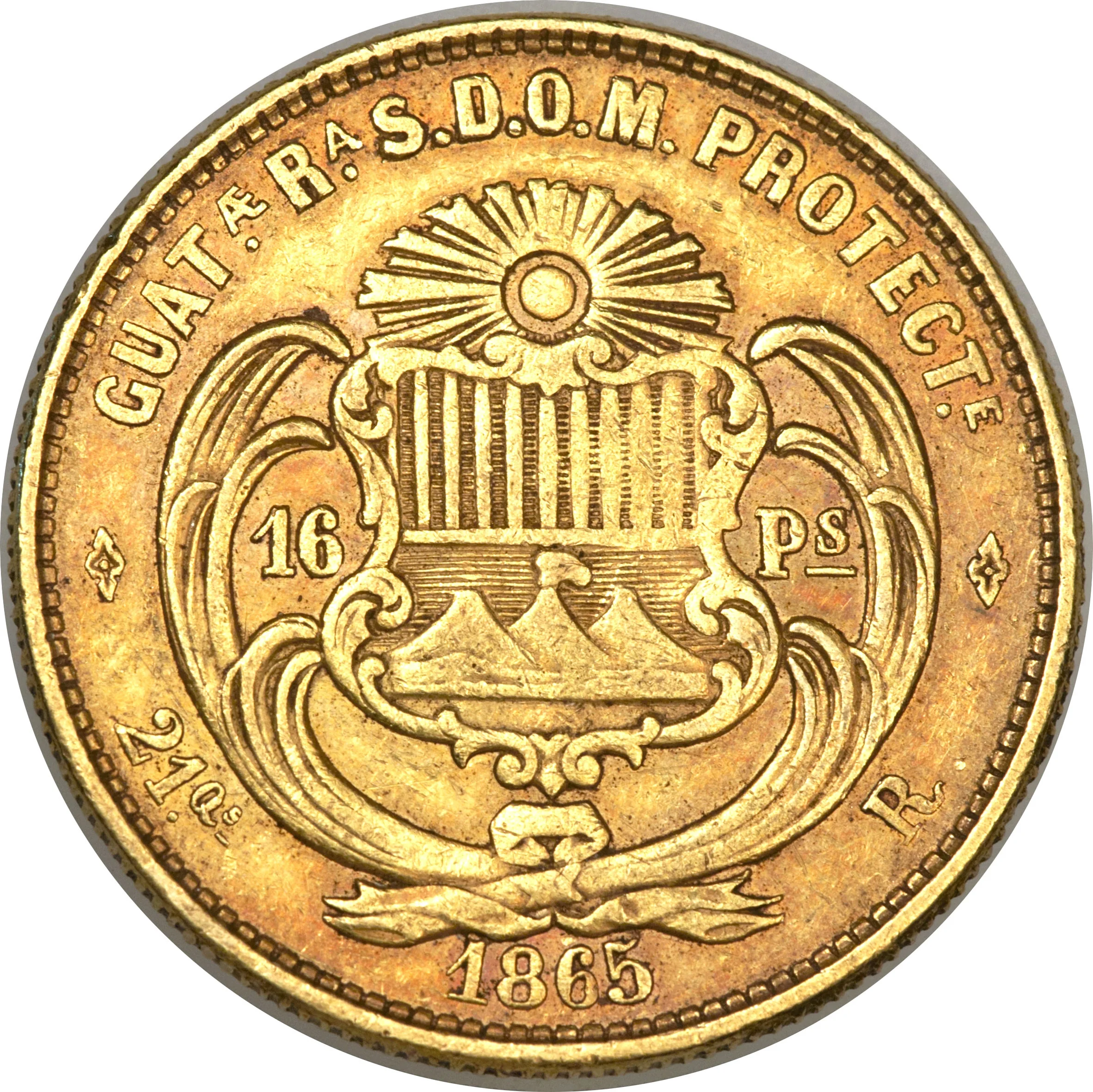
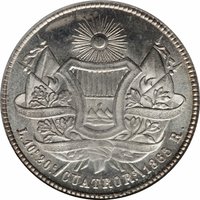
Shield flanked by value, legend around. Fineness, date, and initials below.
Inscription:
GUATÆ. RA. S.D.O.M. PROTECTE.
16 Ps
✤ 21.Qs 1865 R. ✤
16 Ps
✤ 21.Qs 1865 R. ✤
Translation:
Guatemala. By the grace of God, protector.
16 Pesos
✤ 21 Quetzales 1865 R. ✤
16 Pesos
✤ 21 Quetzales 1865 R. ✤
Script: Latin
Engraver: Johann-Baptist Frener
Edge
Categories
| Symbols> Coat of Arms |
| Person> Politician |
Mints
| Name | Mark |
|---|---|
| Casa de Moneda de Guatemala | — |
Mintings
| Year | Mint Mark | Mintage | Quality | Collection |
|---|---|---|---|---|
| 1865 | — | 190 |
Historical background
In 1865, Guatemala's currency system was in a state of transition and confusion, caught between colonial legacy and nascent national ambition. The official currency was the Peso, subdivided into 8 Reales, a system inherited from Spanish rule. However, the actual monetary landscape was a complex mosaic. Alongside limited minting of national coinage, a wide variety of foreign silver coins—especially Peruvian, Bolivian, Chilean, and Mexican pesos—circulated freely, their value determined by weight and fineness rather than face value. This reliance on imported specie made the money supply vulnerable to international trade flows and created practical challenges for daily commerce.
The government of President Vicente Cerna, continuing the conservative policies of Rafael Carrera, faced significant economic pressures. A major preoccupation was the chronic shortage of fractional currency (small change), which severely hampered retail trade and the payment of wages. To address this, the Cerna administration authorized the minting of low-denomination coins, notably copper cuartillos (quarter-reales). However, these often suffered from public distrust and were prone to counterfeiting, failing to fully resolve the small change crisis. Furthermore, the state's fiscal weakness, reliant heavily on indirect taxes and customs duties, limited its capacity to implement comprehensive monetary reform or establish a strong, unified national currency.
This fragmented system reflected Guatemala's broader economic position. The economy was primarily agrarian and export-oriented, centered on cochineal dye (and increasingly coffee), with currency needs heavily tied to financing imports and the export sector. There was no central bank; monetary policy was essentially administrative. The situation in 1865 was one of pragmatic accommodation rather than orderly control, setting the stage for future reforms. It would take the Liberal Revolution of 1871 and subsequent governments to aggressively pursue monetary modernization, including decimalization and the later creation of the Quetzal in the 1920s, to bring lasting uniformity to the nation's currency.
The government of President Vicente Cerna, continuing the conservative policies of Rafael Carrera, faced significant economic pressures. A major preoccupation was the chronic shortage of fractional currency (small change), which severely hampered retail trade and the payment of wages. To address this, the Cerna administration authorized the minting of low-denomination coins, notably copper cuartillos (quarter-reales). However, these often suffered from public distrust and were prone to counterfeiting, failing to fully resolve the small change crisis. Furthermore, the state's fiscal weakness, reliant heavily on indirect taxes and customs duties, limited its capacity to implement comprehensive monetary reform or establish a strong, unified national currency.
This fragmented system reflected Guatemala's broader economic position. The economy was primarily agrarian and export-oriented, centered on cochineal dye (and increasingly coffee), with currency needs heavily tied to financing imports and the export sector. There was no central bank; monetary policy was essentially administrative. The situation in 1865 was one of pragmatic accommodation rather than orderly control, setting the stage for future reforms. It would take the Liberal Revolution of 1871 and subsequent governments to aggressively pursue monetary modernization, including decimalization and the later creation of the Quetzal in the 1920s, to bring lasting uniformity to the nation's currency.
Series: System: 1859-1870
✨ Legendary