

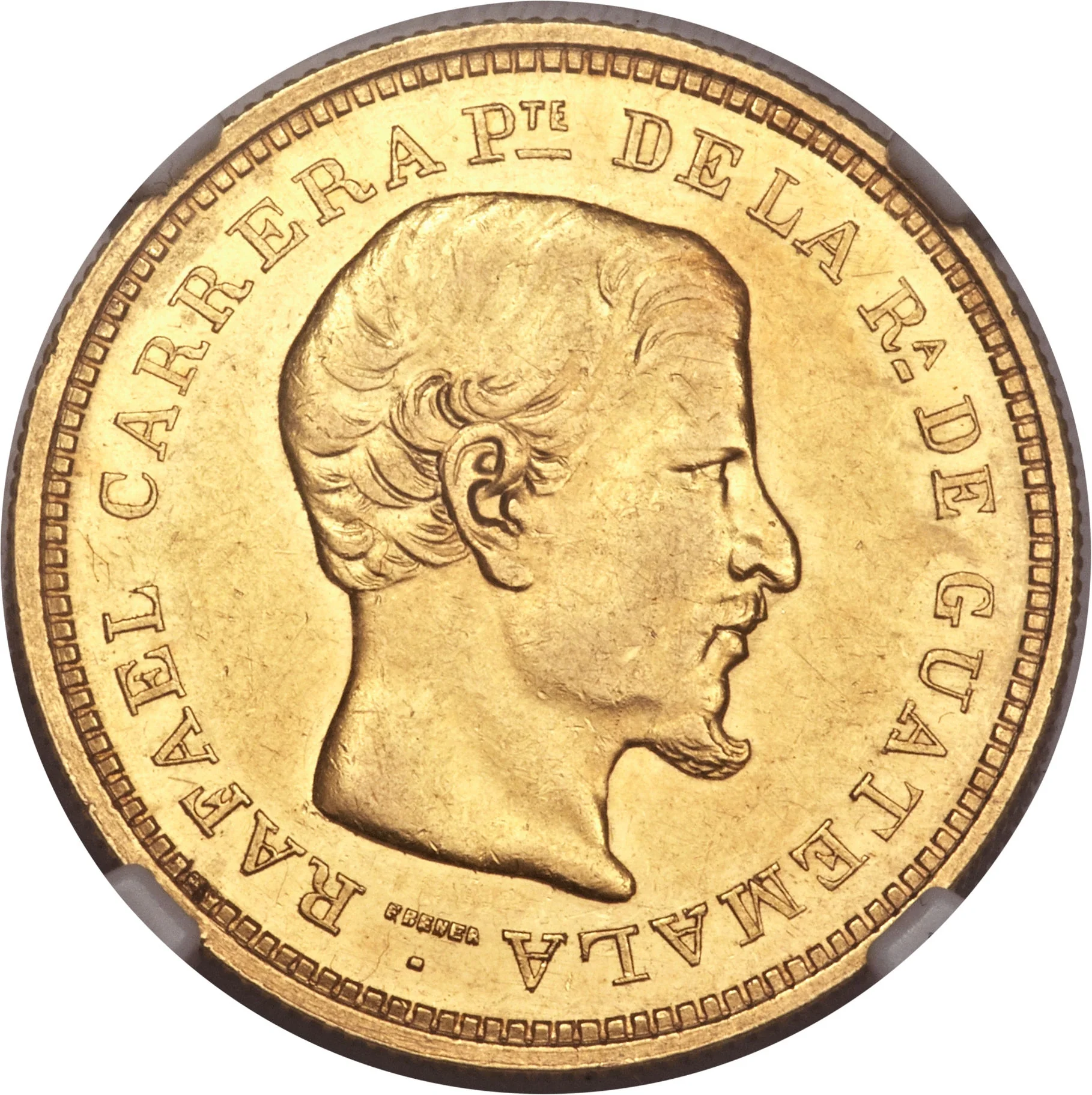
Obverse
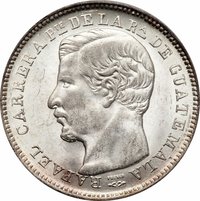
Description:
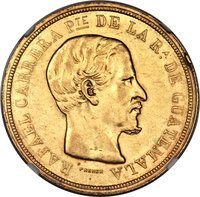
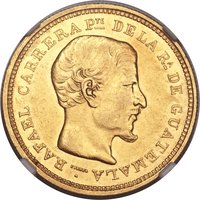
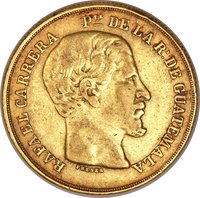
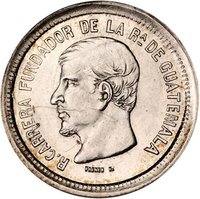
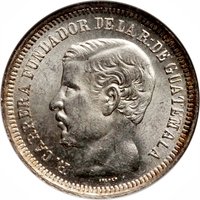
Bust right, legend around, engraver's name at base.
Inscription:
RAFAEL CARRERA PTE DE LA RA DE GUATEMALA
FRENER F
FRENER F
Translation:
Rafael Carrera President of the Republic of Guatemala
Founder of the Republic
Founder of the Republic
Script: Latin
Language: Spanish
Engraver: Johann-Baptist Frener
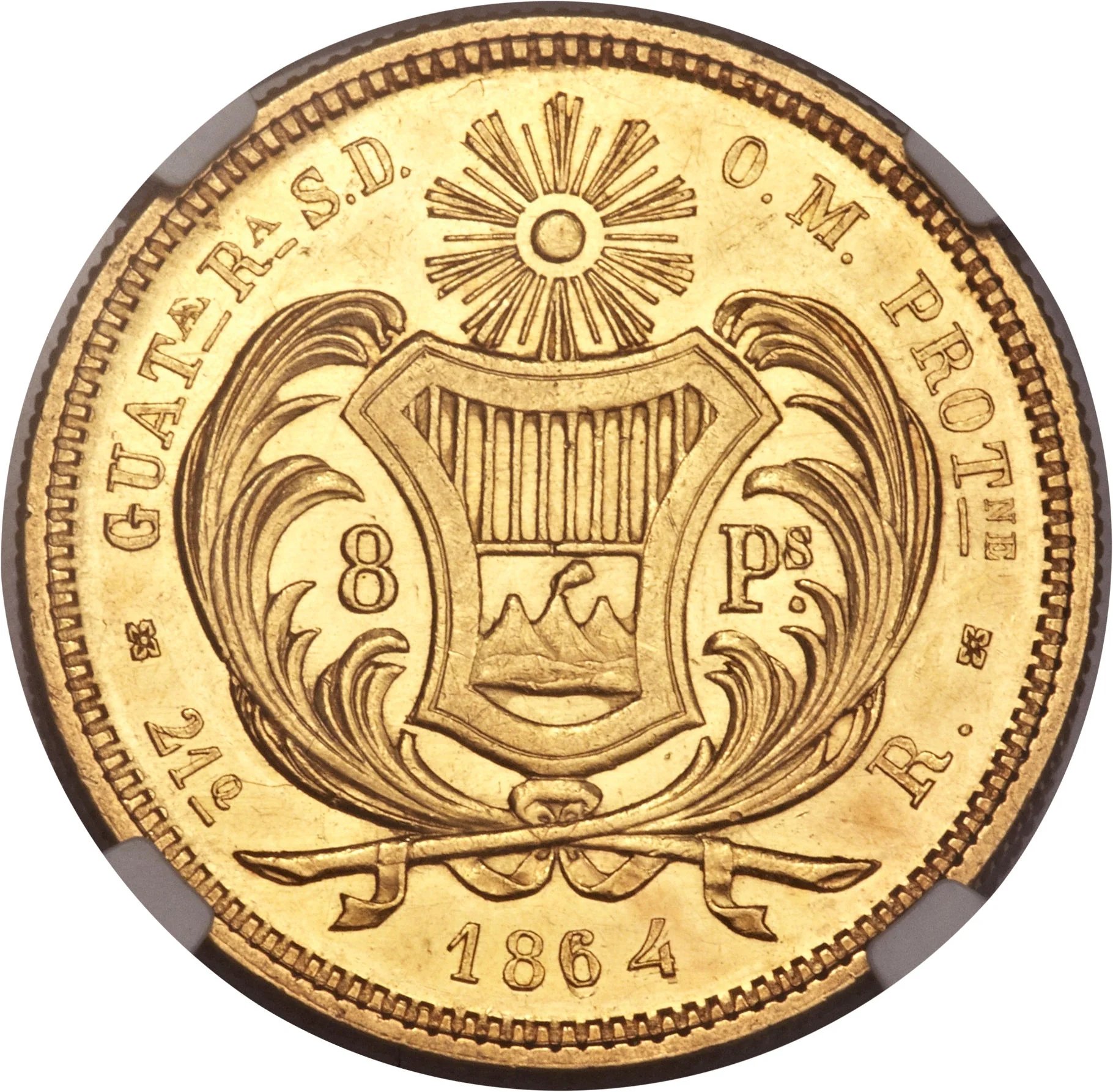
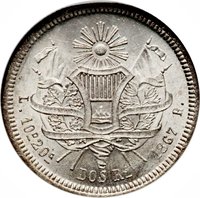
Reverse
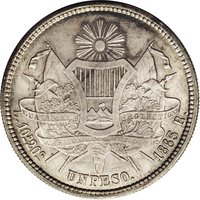
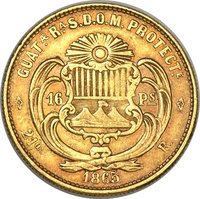
Description:
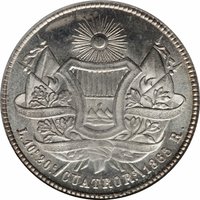
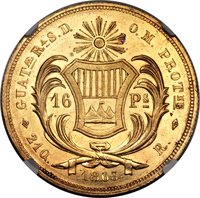
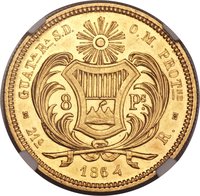
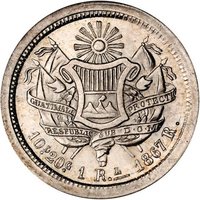
Shield flanked by value, legend around. Fineness, date, and initials below.
Inscription:
GUATÆ RA S.D.O.M. PROTNE
8 Ps.
-21Q 1864 R.-
8 Ps.
-21Q 1864 R.-
Translation:
Guatemala, by the Grace of God, Protector of the Most Holy Dominion. 8 Pesos. -21Q 1864 R.
Script: Latin
Language: Latin
Engraver: Johann-Baptist Frener
Edge
Categories
| Symbols> Coat of Arms |
| Person> Politician |
Mints
| Name | Mark |
|---|---|
| Casa de Moneda de Guatemala | — |
Mintings
| Year | Mint Mark | Mintage | Quality | Collection |
|---|---|---|---|---|
| 1864 | — | 474 |
Historical background
In 1864, Guatemala's currency situation was characterized by a complex and unstable system inherited from the colonial era and the early years of independence. The primary circulating medium was the silver real, with eight reales equaling one peso. However, the system was plagued by a severe shortage of minted coinage, leading to widespread use of cut and fragmented coins (known as macuquinas or moneda de necesidad) and a reliance on foreign coins, particularly Spanish, Mexican, and Peruvian pieces. This scarcity of official currency stifled commercial transactions and created significant inefficiencies in the economy, as the value and authenticity of fragmented coins were constantly in question.
The political context under the conservative regime of President Rafael Carrera (in power since the 1850s) was one of relative stability but economic isolation. While Carrera had restored order, his government had not yet implemented a comprehensive monetary reform. The economic model remained largely agrarian and protectionist, with the powerful coffee oligarchy beginning to emerge. The lack of a strong, unified national currency reflected the country's fragmented infrastructure and the government's limited capacity to exert centralized economic control beyond Guatemala City. The circulation of foreign and debased coinage was symptomatic of this broader administrative challenge.
Consequently, the year 1864 fell within a period of mounting pressure for monetary modernization that would culminate in significant reforms later in the decade. The inconveniences of the existing system were becoming intolerable for both the state and the growing export-oriented coffee producers, who needed reliable financial instruments for international trade. This demand set the stage for the pivotal Monetary Law of 1869, which would formally decimalize the currency, introduce the Guatemalan peso as the national unit, and establish the first official mint (Casa de Moneda), marking the true beginning of a unified national monetary system in Guatemala.
The political context under the conservative regime of President Rafael Carrera (in power since the 1850s) was one of relative stability but economic isolation. While Carrera had restored order, his government had not yet implemented a comprehensive monetary reform. The economic model remained largely agrarian and protectionist, with the powerful coffee oligarchy beginning to emerge. The lack of a strong, unified national currency reflected the country's fragmented infrastructure and the government's limited capacity to exert centralized economic control beyond Guatemala City. The circulation of foreign and debased coinage was symptomatic of this broader administrative challenge.
Consequently, the year 1864 fell within a period of mounting pressure for monetary modernization that would culminate in significant reforms later in the decade. The inconveniences of the existing system were becoming intolerable for both the state and the growing export-oriented coffee producers, who needed reliable financial instruments for international trade. This demand set the stage for the pivotal Monetary Law of 1869, which would formally decimalize the currency, introduce the Guatemalan peso as the national unit, and establish the first official mint (Casa de Moneda), marking the true beginning of a unified national monetary system in Guatemala.
Series: System: 1859-1870
✨ Legendary