

10 Francs – Switzerland
Switzerland
Context
Years: 1911–1922
Issuer: Switzerland 
Period:
(since 1848)
Currency:
(since 1850)
Demonetization: 29 July 1944
Total mintage: 2,650,000
Material
References
KM: #Click to copy to clipboard36
Numista: #3950
Value
Exchange value: 10 CHF = $12.93
Bullion value: $484.69
Obverse
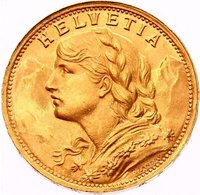
Description:
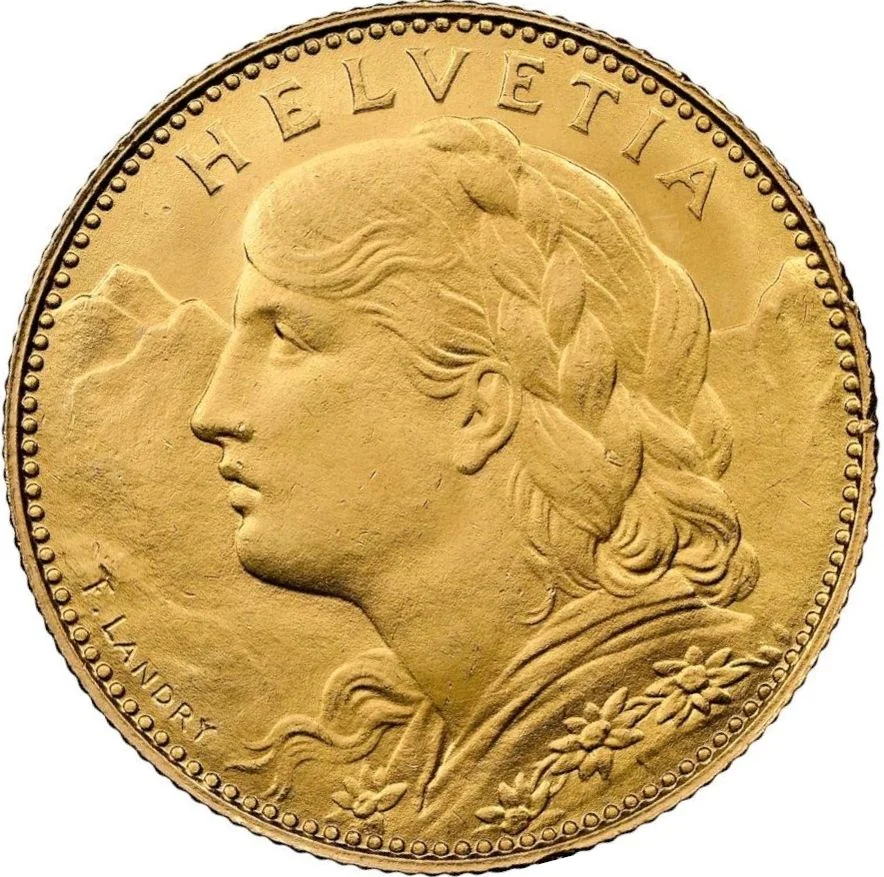
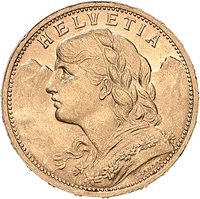
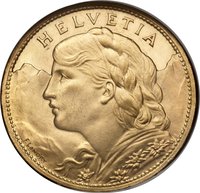
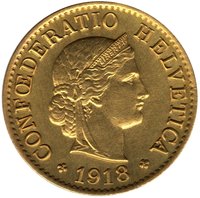
Young woman from Oberhasli with braided hair and an edelweiss garland, facing left against mountains.
Inscription:
HELVETIA
F . LANDRY
F . LANDRY
Translation:
HELVETIA
F. LANDRY
F. LANDRY
Script: Latin
Designer: Fritz Ulysse Landry
Reverse
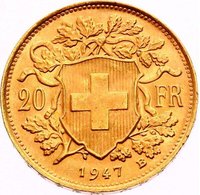
Description:
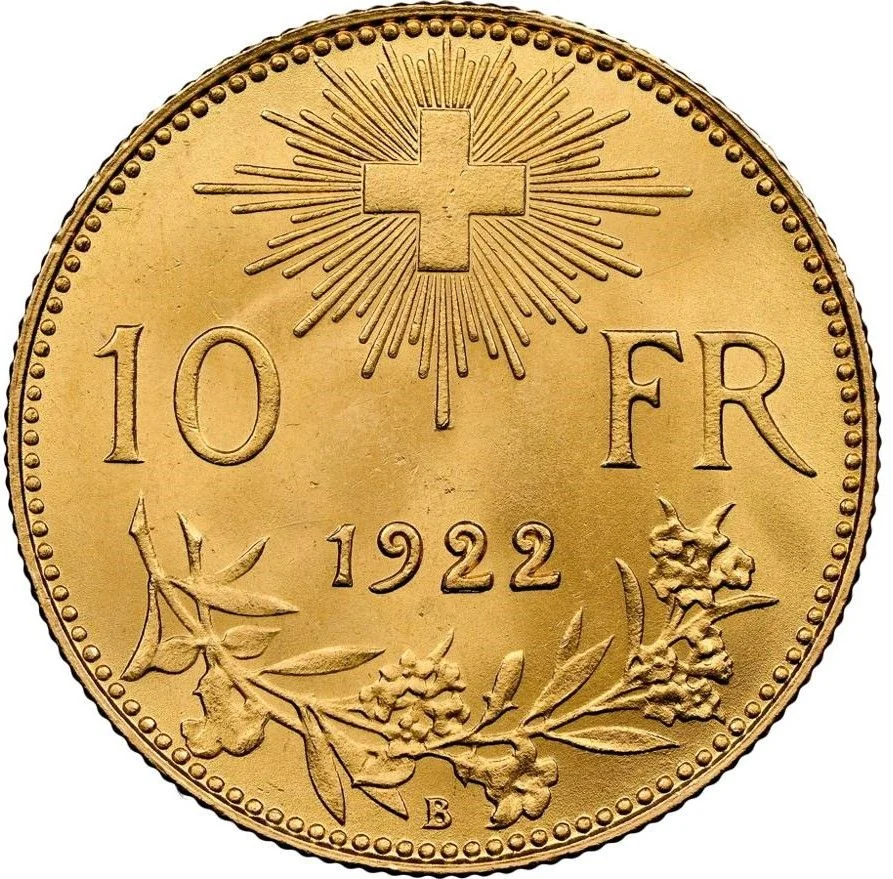
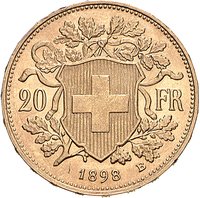
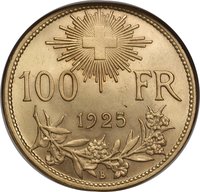
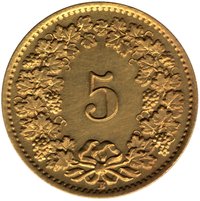
Swiss coat of arms with sunburst, Alpenrose branch below.
Inscription:
10 FR
1922
B
1922
B
Script: Latin
Designer: Fritz Ulysse Landry
Edge
Reeded.
Mints
| Name | Mark |
|---|---|
| Bern | B |
Mintings
Historical background
In 1911, Switzerland’s currency situation was defined by its adherence to the Latin Monetary Union (LMU), a treaty established in 1865 with France, Belgium, Italy, and later Greece. This agreement created a bimetallic standard, fixing the values of gold and silver coins to ensure they circulated freely across member states. Swiss francs were thus legally interchangeable with French francs, Italian lire, and other member currencies, facilitating regional trade and stability. However, by 1911, the Union was under severe strain due to the overproduction of silver coins by some members and the global shift toward a gold standard, leading to imbalances and periodic suspensions of silver coin convertibility.
Domestically, Switzerland’s currency was a mix of federal coins, banknotes from numerous private cantonal banks, and foreign LMU coins. The Swiss National Bank (SNB), founded in 1907, had begun issuing its own uniform banknotes to consolidate the money supply, but the process was still ongoing. Consequently, the physical money in circulation in 1911 remained heterogeneous, with a significant portion being foreign silver coins whose intrinsic value sometimes fell below their face value, posing a subtle threat to Switzerland’s monetary reserves.
The year 1911 fell within a period of quiet crisis and transition. While the LMU framework provided nominal stability, Swiss authorities were increasingly focused on protecting the country’s gold reserves and preparing for a more independent monetary future. The escalating tensions within the Union, which would ultimately lead to its de facto collapse with the outbreak of World War I, prompted cautious preparations within Switzerland to strengthen the franc’s foundation on gold and the sole authority of the SNB, setting the stage for the modern Swiss franc system.
Domestically, Switzerland’s currency was a mix of federal coins, banknotes from numerous private cantonal banks, and foreign LMU coins. The Swiss National Bank (SNB), founded in 1907, had begun issuing its own uniform banknotes to consolidate the money supply, but the process was still ongoing. Consequently, the physical money in circulation in 1911 remained heterogeneous, with a significant portion being foreign silver coins whose intrinsic value sometimes fell below their face value, posing a subtle threat to Switzerland’s monetary reserves.
The year 1911 fell within a period of quiet crisis and transition. While the LMU framework provided nominal stability, Swiss authorities were increasingly focused on protecting the country’s gold reserves and preparing for a more independent monetary future. The escalating tensions within the Union, which would ultimately lead to its de facto collapse with the outbreak of World War I, prompted cautious preparations within Switzerland to strengthen the franc’s foundation on gold and the sole authority of the SNB, setting the stage for the modern Swiss franc system.
Series: Vreneli series
🌱 Fairly Common