

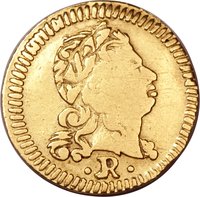
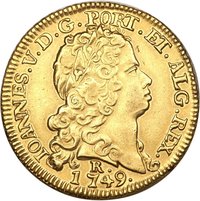
Obverse
Description:
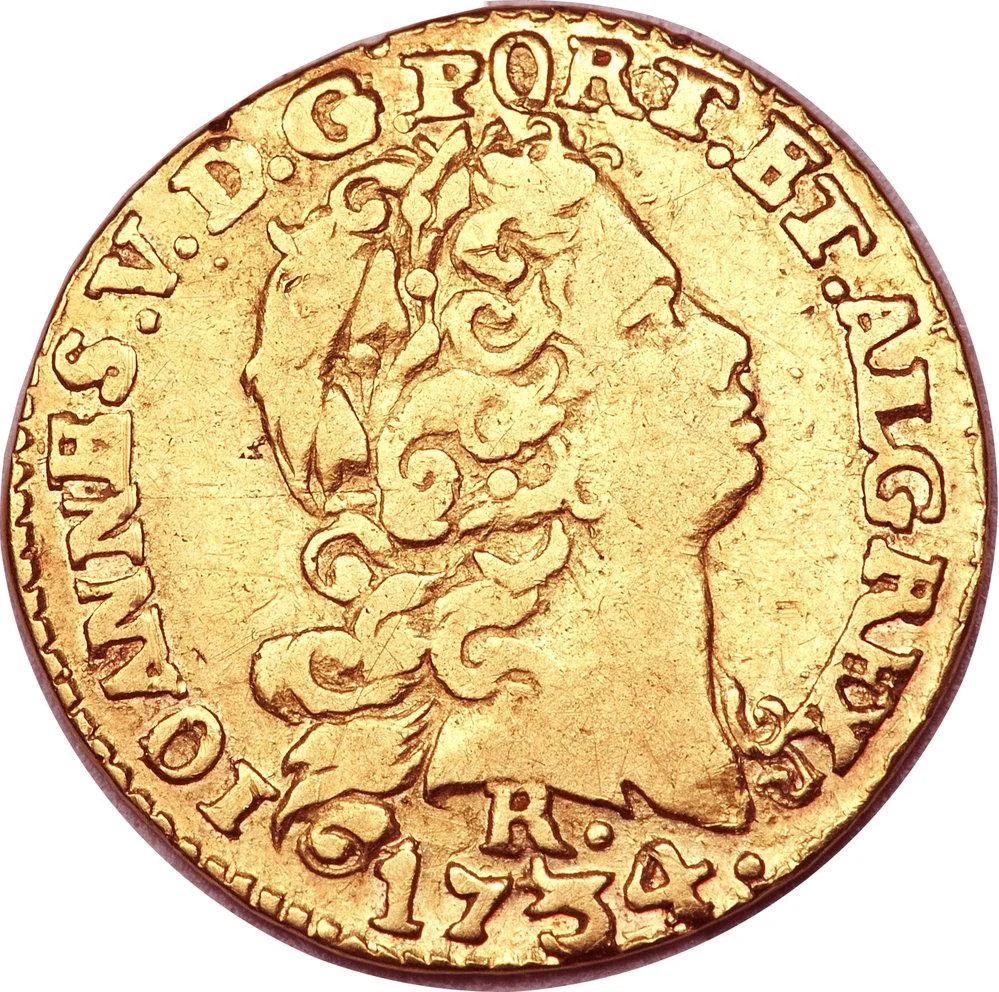
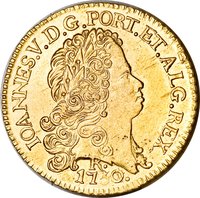
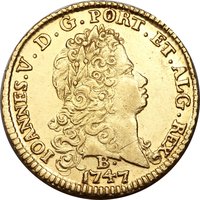
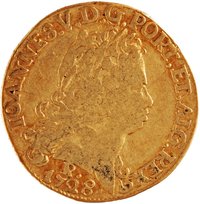
João V bust right, date, and mintmark R.
Inscription:
IOANNES.V.D.G.PORT.ET.ALG.REX
R.
1734.
R.
1734.
Script: Latin
Engraver: Antônio Mengin
Designer: Vieira Lusitano
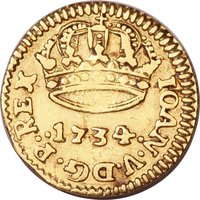
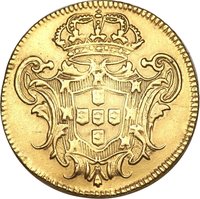
Reverse
Description:
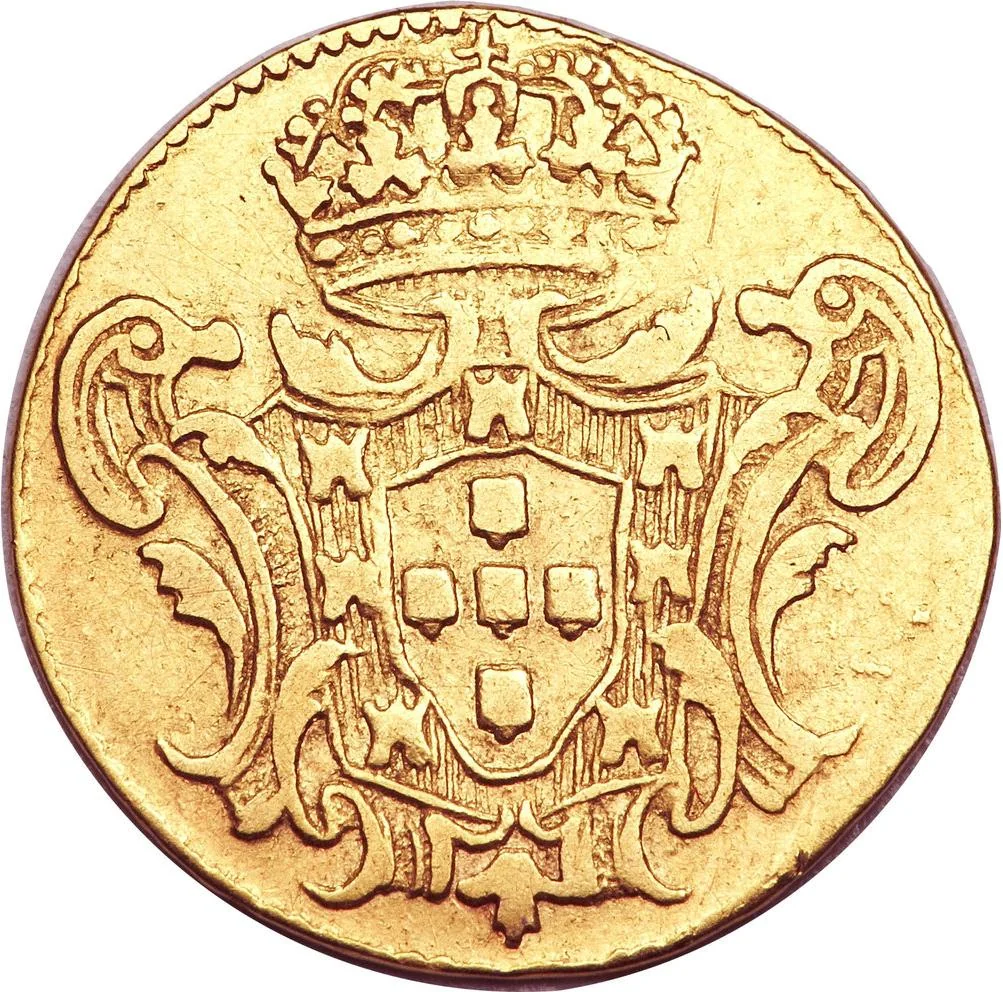
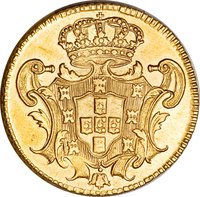
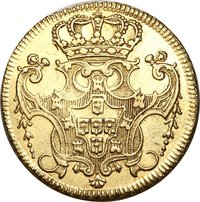
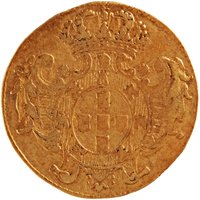
João V's crowned coat of arms.
Edge
Reeded.
Mints
| Name | Mark |
|---|---|
| Casa da Moeda do Brasil | R |
Historical background
In 1734, the Portuguese colony of Brazil was grappling with a severe and chronic currency shortage. The economic system was fundamentally extractive, designed to ship raw materials—primarily gold, sugar, and tobacco—to Portugal. While vast quantities of gold flowed from the mines of Minas Gerais, the Portuguese Crown tightly controlled its circulation, mandating that a significant portion be sent directly to Lisbon as the royal "fifth" (o quinto), and further restricting minting to official Portuguese mints. This policy, combined with a trade imbalance where imports from Portugal exceeded colonial exports, systematically drained physical coin from the colony.
The lack of official coinage led to a chaotic and multifaceted monetary environment. To facilitate daily transactions, a variety of substitutes circulated. These included macacos—gold dust or flakes weighed for small purchases—as well as commodity money like sugar, tobacco, and even cattle in certain regions. Perhaps most importantly, a system of credit and barter dominated commerce, with transactions recorded in ledgers using the real as a unit of account, even when no physical coins were exchanged. This reliance on credit bound the local economy closely to merchant networks and plantation owners.
This scarcity was a direct point of tension with Portugal. Colonial merchants and planters increasingly agitated for the establishment of a local mint to stem the outflow of gold and stabilize the economy. Their pressure would eventually bear fruit; in 1694, a mint had been established in Bahia but was soon transferred to Rio de Janeiro and then closed. The persistent crisis of the early 1730s set the stage for the pivotal reopening of the Rio de Janeiro Mint (Casa da Moeda) in 1734–35, which began to produce the first gold coins minted within Brazil itself, a significant step toward financial autonomy within the imperial framework.
The lack of official coinage led to a chaotic and multifaceted monetary environment. To facilitate daily transactions, a variety of substitutes circulated. These included macacos—gold dust or flakes weighed for small purchases—as well as commodity money like sugar, tobacco, and even cattle in certain regions. Perhaps most importantly, a system of credit and barter dominated commerce, with transactions recorded in ledgers using the real as a unit of account, even when no physical coins were exchanged. This reliance on credit bound the local economy closely to merchant networks and plantation owners.
This scarcity was a direct point of tension with Portugal. Colonial merchants and planters increasingly agitated for the establishment of a local mint to stem the outflow of gold and stabilize the economy. Their pressure would eventually bear fruit; in 1694, a mint had been established in Bahia but was soon transferred to Rio de Janeiro and then closed. The persistent crisis of the early 1730s set the stage for the pivotal reopening of the Rio de Janeiro Mint (Casa da Moeda) in 1734–35, which began to produce the first gold coins minted within Brazil itself, a significant step toward financial autonomy within the imperial framework.
Series: Serie of Shields
✨ Legendary