


Obverse
Description:
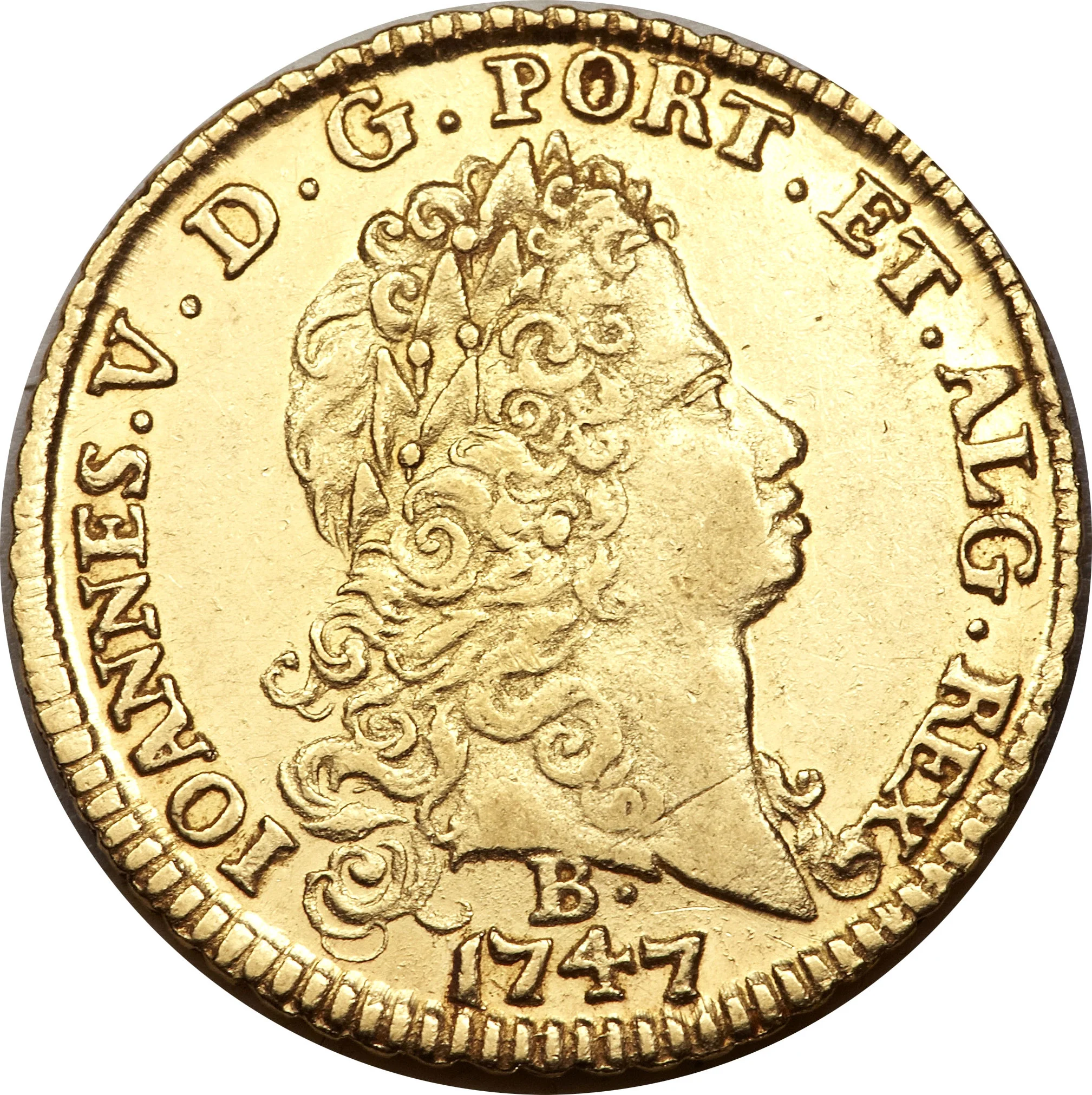
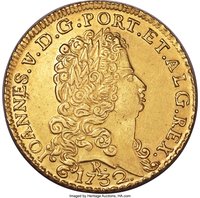
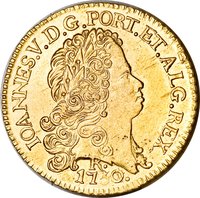
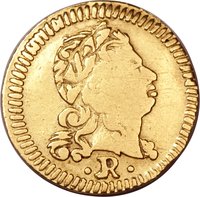
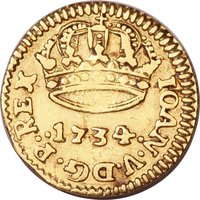
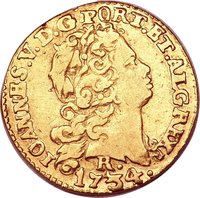
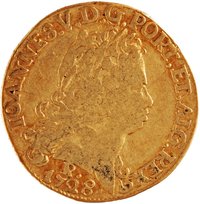
João V bust right, date, and mintmark B.
Inscription:
IOANNES.V.D.G.PORT.ET.ALG.REX
B
1732
B
1732
Script: Latin
Reverse
Description:
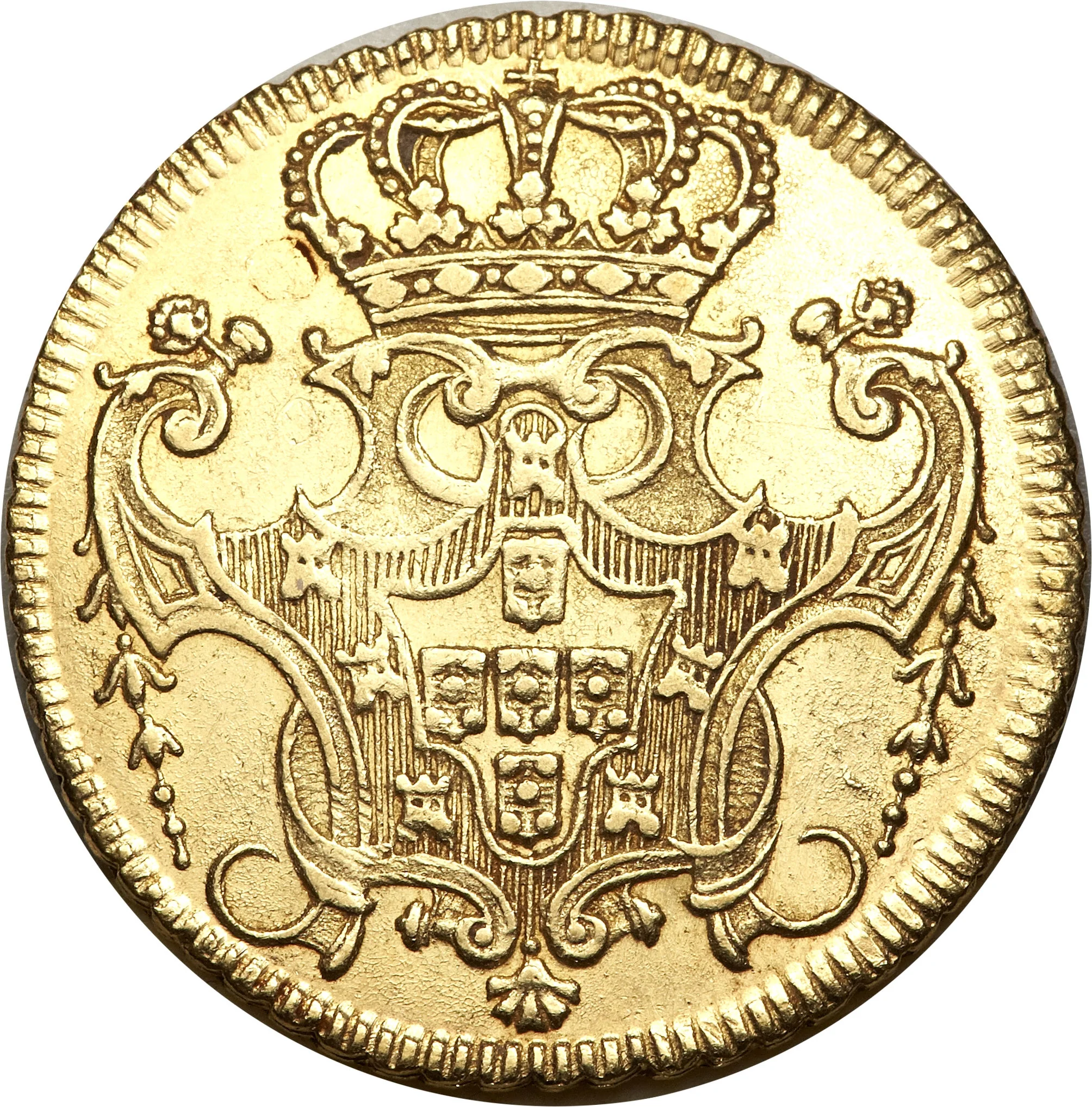
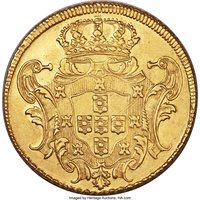
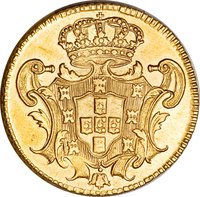
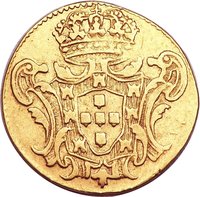
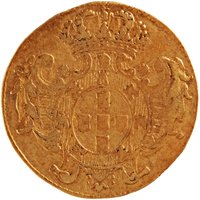
João V's crowned coat of arms.
Edge
Reeded.
Mints
| Name | Mark |
|---|---|
| Bahia | B |
Mintings
Historical background
In 1732, Brazil was a Portuguese colony operating under a complex and often chaotic monetary system. The primary currency in circulation was the Portuguese real (plural: réis), whose value was officially tied to gold and silver. However, the colony suffered from a severe and chronic shortage of minted coinage. This scarcity was due to Portugal's mercantilist policies, which drained wealth—especially gold from the recently discovered mines in Minas Gerais—back to the metropole, while restricting Brazil's ability to mint its own money. The physical lack of coins crippled everyday commerce and official transactions alike.
To cope with this scarcity, a bewildering variety of alternative currencies circulated alongside the few official coins. These included commodity money like sugar, tobacco, and cacao, which were officially sanctioned for certain tax payments. More commonly, people used foreign coins, particularly Spanish-American pieces of eight, which were often cut into fragments to make change. Perhaps most uniquely, the Portuguese crown issued provisional paper notes, known as papel selado, for large transactions. This created a multi-layered system where the value of a transaction could depend on the form of payment used, leading to confusion and rampant fraud.
The situation was further complicated by the discovery of gold. While gold dust and nuggets themselves became a medium of exchange in mining regions, their inconsistent purity caused valuation problems. The crown responded by establishing mints in Brazil, like the Casa da Moeda in Rio de Janeiro (founded 1703), to coin gold into standardized moedas. Nevertheless, in 1732, the system remained strained. The fundamental tension between Portugal's extractive goals and the colony's need for a functional money supply resulted in an unstable economic environment, where unofficial and improvised currencies were essential for the daily survival of the local economy.
To cope with this scarcity, a bewildering variety of alternative currencies circulated alongside the few official coins. These included commodity money like sugar, tobacco, and cacao, which were officially sanctioned for certain tax payments. More commonly, people used foreign coins, particularly Spanish-American pieces of eight, which were often cut into fragments to make change. Perhaps most uniquely, the Portuguese crown issued provisional paper notes, known as papel selado, for large transactions. This created a multi-layered system where the value of a transaction could depend on the form of payment used, leading to confusion and rampant fraud.
The situation was further complicated by the discovery of gold. While gold dust and nuggets themselves became a medium of exchange in mining regions, their inconsistent purity caused valuation problems. The crown responded by establishing mints in Brazil, like the Casa da Moeda in Rio de Janeiro (founded 1703), to coin gold into standardized moedas. Nevertheless, in 1732, the system remained strained. The fundamental tension between Portugal's extractive goals and the colony's need for a functional money supply resulted in an unstable economic environment, where unofficial and improvised currencies were essential for the daily survival of the local economy.
Series: Serie of Shields

✨ Legendary