

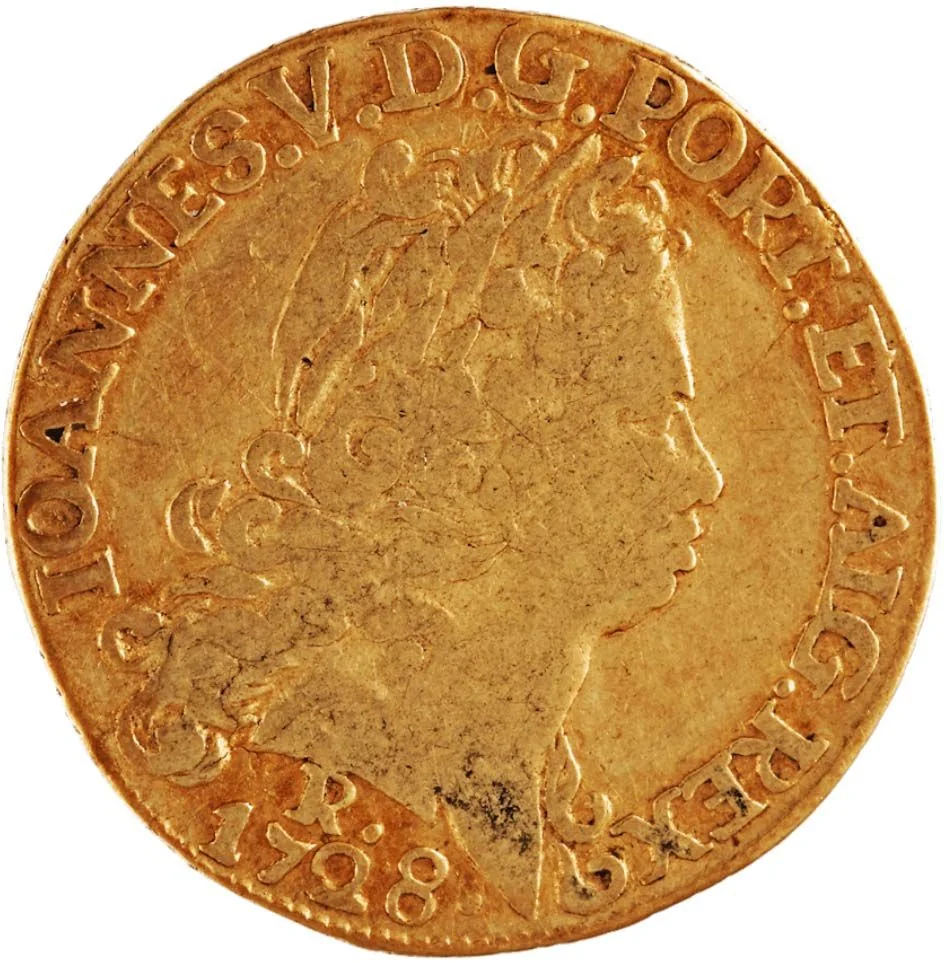
Obverse
Description:
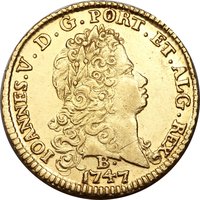
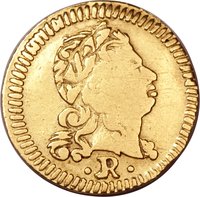
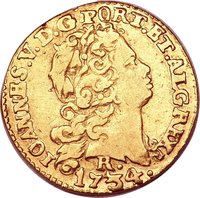
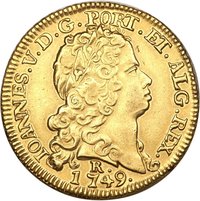
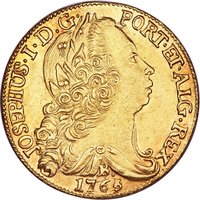
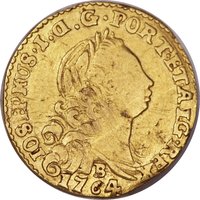
João V bust right, date, and mintmark R.
Inscription:
IOANNES. V. D. G. PORT. ET. ALG. REX.
Script: Latin
Engraver: Antônio Mengin
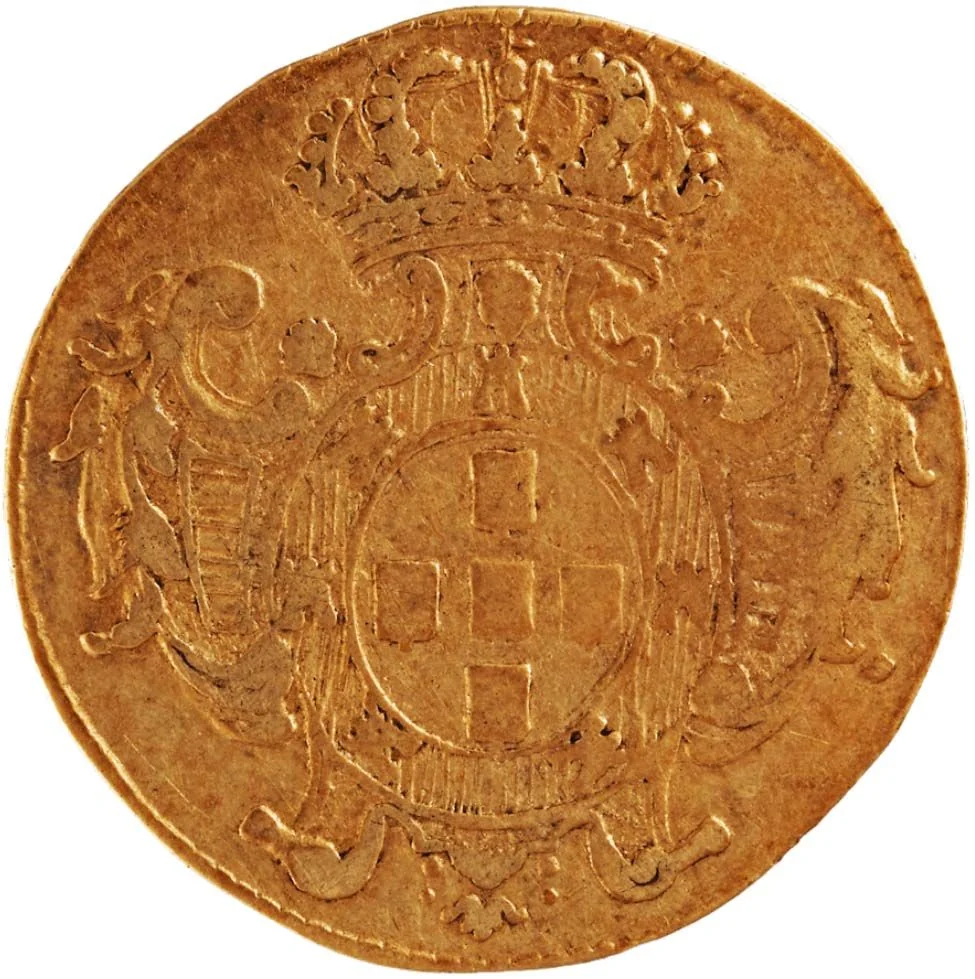
Reverse
Description:
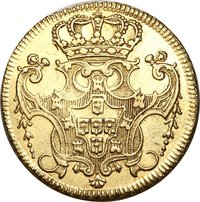
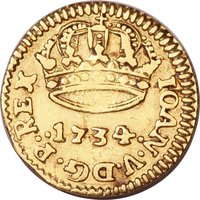
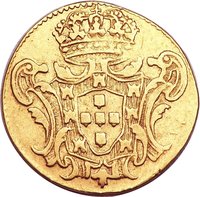
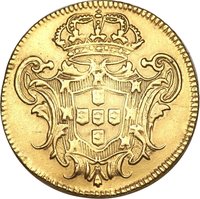
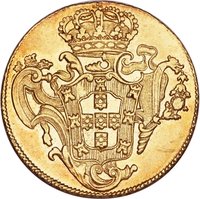
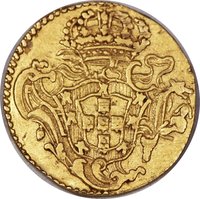
João V, King of Portugal and the Algarves.
Script: Latin
Edge
Reeded.
Mints
| Name | Mark |
|---|---|
| Casa da Moeda do Brasil | R |
Mintings
| Year | Mint Mark | Mintage | Quality | Collection |
|---|---|---|---|---|
| 1736 | R | — |
Historical background
In 1736, Brazil's currency situation was characterized by profound instability and scarcity, rooted in its colonial relationship with Portugal. The primary circulating medium was the Portuguese real (plural: réis), but the colony suffered from a chronic shortage of official coinage. This was due to Portugal's mercantilist policies, which drained wealth to the metropole, and the fact that much of Brazil's economic activity was based on barter, commodity money (like sugar, tobacco, and cacao), and crude locally minted "clipped" coins of inconsistent value. The lack of sufficient small-denomination coins for daily transactions severely hampered internal trade and market efficiency.
The monetary chaos was further exacerbated by the widespread circulation of foreign coins, particularly Spanish-American pieces of eight, which entered through contraband and trade in the southern regions. These coins, along with gold dust and unminted gold from the recently discovered mines in Minas Gerais, created a complex and unofficial multi-currency system. The Portuguese Crown, seeking control over the newfound mineral wealth, had established the first official mint in Brazil in 1694, but its output was still insufficient. By 1736, the Crown was actively trying to standardize and tax gold production, leading to smuggling and the circulation of illicit gold to avoid the royal fifth (quinto).
Ultimately, the currency situation in 1736 reflected a transitional and strained economy. The gold boom was shifting Brazil's economic center southward and intensifying the demand for a reliable monetary system, yet colonial administration struggled to keep pace. This period set the stage for the Crown's more assertive reforms later in the 1740s, including the crackdown on smuggling and the establishment of additional mints, aiming to impose order, capture revenue, and firmly tether Brazil's monetary life to Lisbon's control.
The monetary chaos was further exacerbated by the widespread circulation of foreign coins, particularly Spanish-American pieces of eight, which entered through contraband and trade in the southern regions. These coins, along with gold dust and unminted gold from the recently discovered mines in Minas Gerais, created a complex and unofficial multi-currency system. The Portuguese Crown, seeking control over the newfound mineral wealth, had established the first official mint in Brazil in 1694, but its output was still insufficient. By 1736, the Crown was actively trying to standardize and tax gold production, leading to smuggling and the circulation of illicit gold to avoid the royal fifth (quinto).
Ultimately, the currency situation in 1736 reflected a transitional and strained economy. The gold boom was shifting Brazil's economic center southward and intensifying the demand for a reliable monetary system, yet colonial administration struggled to keep pace. This period set the stage for the Crown's more assertive reforms later in the 1740s, including the crackdown on smuggling and the establishment of additional mints, aiming to impose order, capture revenue, and firmly tether Brazil's monetary life to Lisbon's control.
Series: Serie of Shields
✨ Legendary