

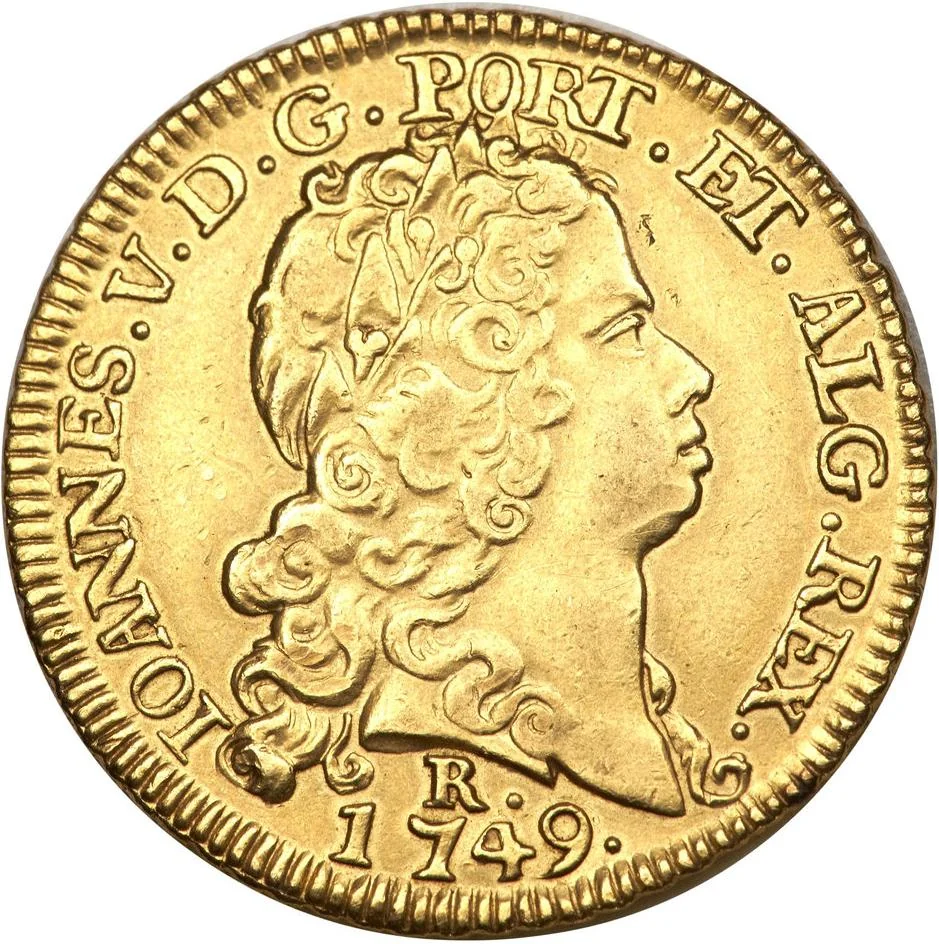
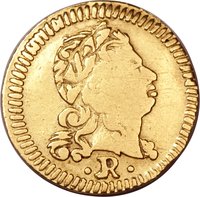
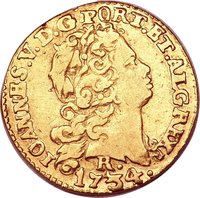
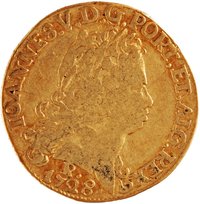
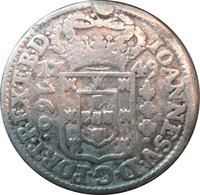
Obverse
Description:
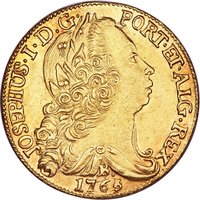
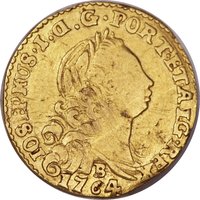
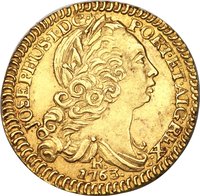
João V bust right, date, and mintmark R.
Inscription:
IOANNES. V. D. G. PORT. ET. ALG. REX.
R.
1749.
R.
1749.
Script: Latin
Engraver: Antônio Mengin
Designer: Vieira Lusitano
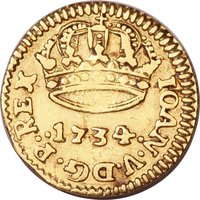
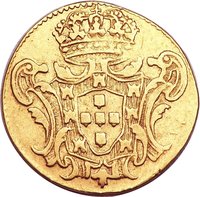
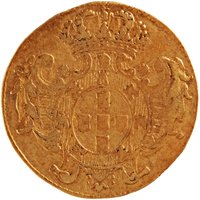
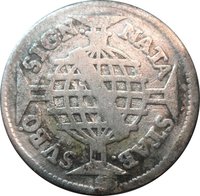
Reverse
Description:
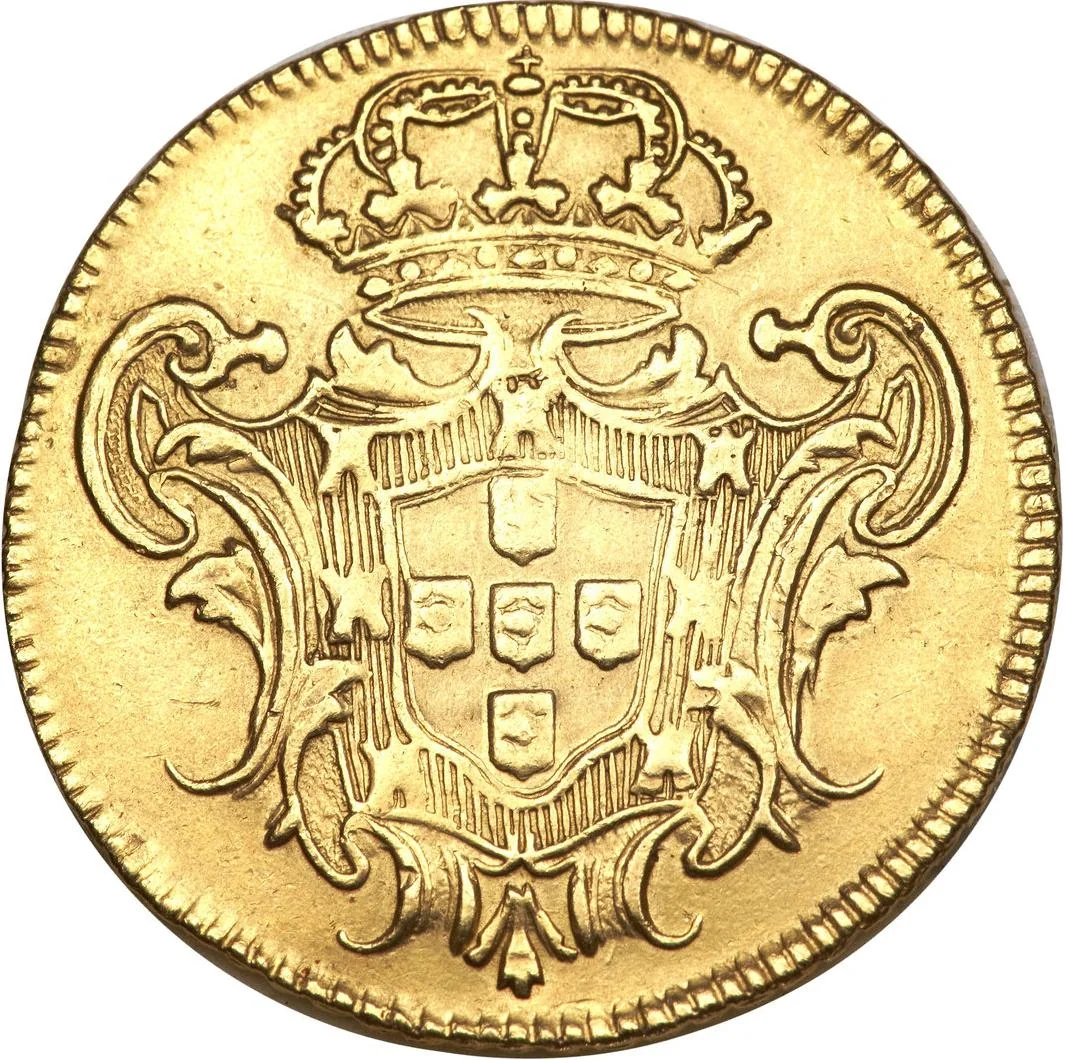
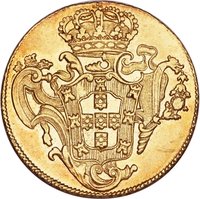
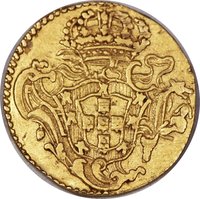
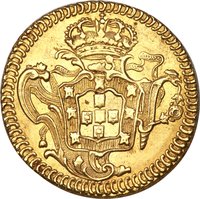
João V's crowned coat of arms.
Edge
Reeded.
Mints
| Name | Mark |
|---|---|
| Casa da Moeda do Brasil | R |
Historical background
In 1739, Brazil was a Portuguese colony operating under a complex and often chaotic monetary system. The primary currency in circulation was the Portuguese real (plural: réis), but the colony suffered from a severe shortage of official coinage. This scarcity was a chronic issue, as Portugal restricted the minting and export of coinage to its colony, aiming to keep precious metals flowing back to the metropolis. Consequently, a wide variety of foreign coins—most notably Spanish American pesos (often called "patacas") and gold coins from other European empires—circulated freely alongside the official currency, their values constantly negotiated and fluctuating.
The economic reality was further defined by the recent discovery of immense gold deposits in Minas Gerais in the late 17th century. By 1739, Brazil was in the midst of a massive gold boom, which transformed the colony's economy and made it the centerpiece of the Portuguese Empire. However, this newfound wealth exacerbated monetary problems. While gold dust and gold bars (known as "ouro em pó" and "ouro em barra") served as a major medium of exchange and store of value, especially for large transactions, the lack of sufficient small-denomination coinage crippled everyday commerce. This led to the widespread use of primitive substitutes, such as cacao beans in the north and even homemade token coins issued by local merchants.
To address this disorder, the Portuguese Crown had established the Casa da Moeda do Brasil (Brazilian Mint) in Bahia in 1694, later moving it to Rio de Janeiro in 1699. By 1739, the mint was actively producing gold coins, primarily the moeda denomination, struck from Brazilian gold. However, production could not keep pace with demand, and the monetary system remained fragmented and unreliable. The situation was one of stark contrast: a colony flowing with raw gold wealth, yet struggling with a dysfunctional everyday currency system that relied on a patchwork of foreign coins, commodity money, and limited local minting, all under the strict and often extractive control of the Portuguese monarchy.
The economic reality was further defined by the recent discovery of immense gold deposits in Minas Gerais in the late 17th century. By 1739, Brazil was in the midst of a massive gold boom, which transformed the colony's economy and made it the centerpiece of the Portuguese Empire. However, this newfound wealth exacerbated monetary problems. While gold dust and gold bars (known as "ouro em pó" and "ouro em barra") served as a major medium of exchange and store of value, especially for large transactions, the lack of sufficient small-denomination coinage crippled everyday commerce. This led to the widespread use of primitive substitutes, such as cacao beans in the north and even homemade token coins issued by local merchants.
To address this disorder, the Portuguese Crown had established the Casa da Moeda do Brasil (Brazilian Mint) in Bahia in 1694, later moving it to Rio de Janeiro in 1699. By 1739, the mint was actively producing gold coins, primarily the moeda denomination, struck from Brazilian gold. However, production could not keep pace with demand, and the monetary system remained fragmented and unreliable. The situation was one of stark contrast: a colony flowing with raw gold wealth, yet struggling with a dysfunctional everyday currency system that relied on a patchwork of foreign coins, commodity money, and limited local minting, all under the strict and often extractive control of the Portuguese monarchy.
Series: Serie of Shields
✨ Legendary