

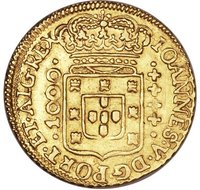
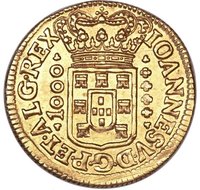
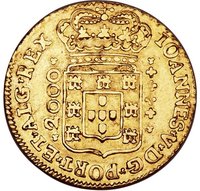
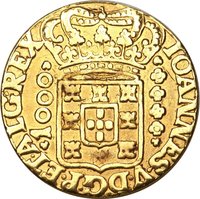
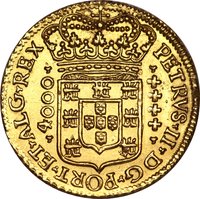
Obverse
Description:
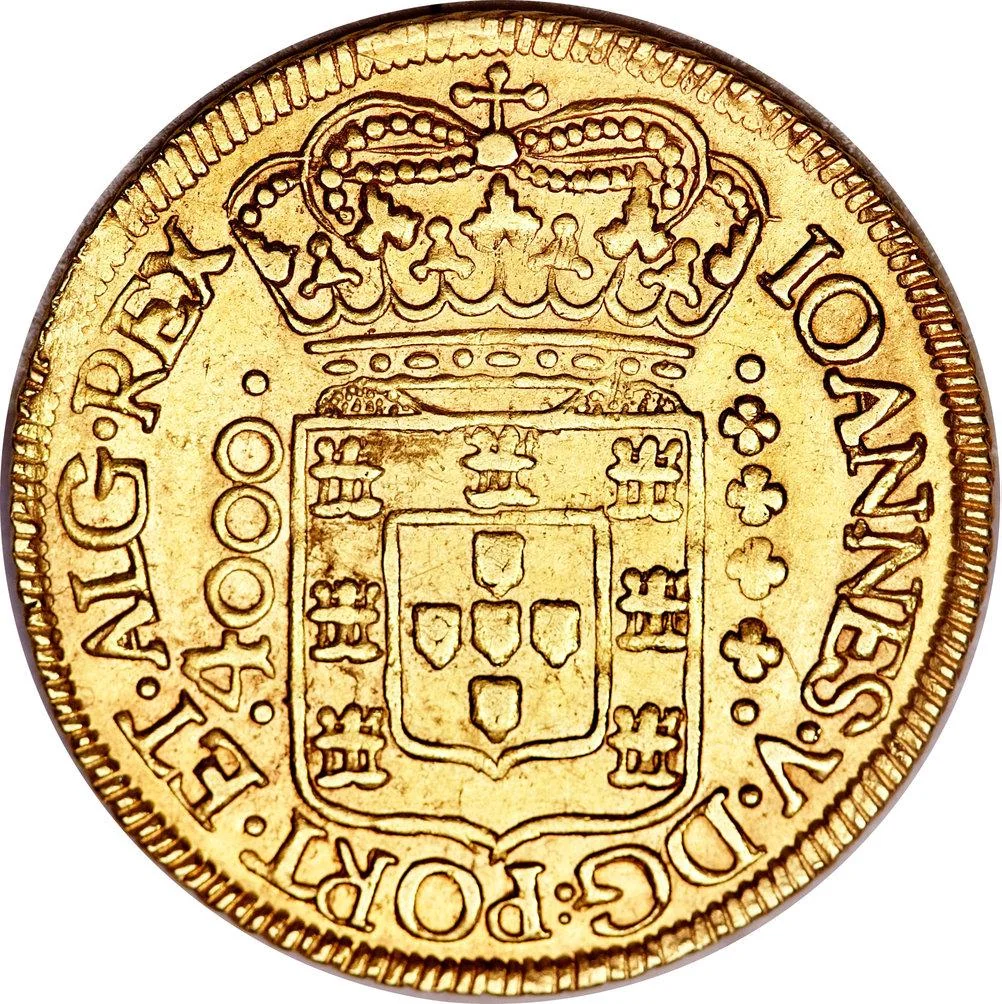
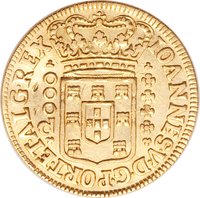
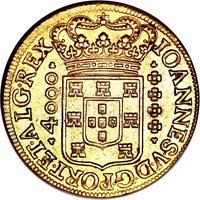
Portuguese arms crowned, flanked by 4000 and four flowers.
Inscription:
IOANNES.V.D.G.REX.PORT.ET.ALG.REX
*4000*
*4000*
Script: Latin
Engravers: Antônio Mengin, Bernardo Jorge
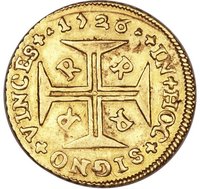
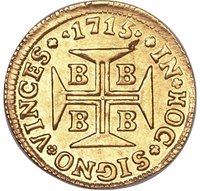
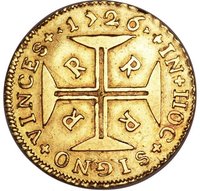
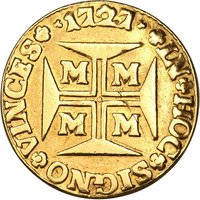
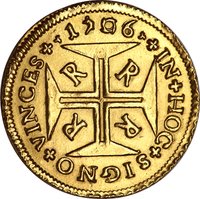
Reverse
Description:
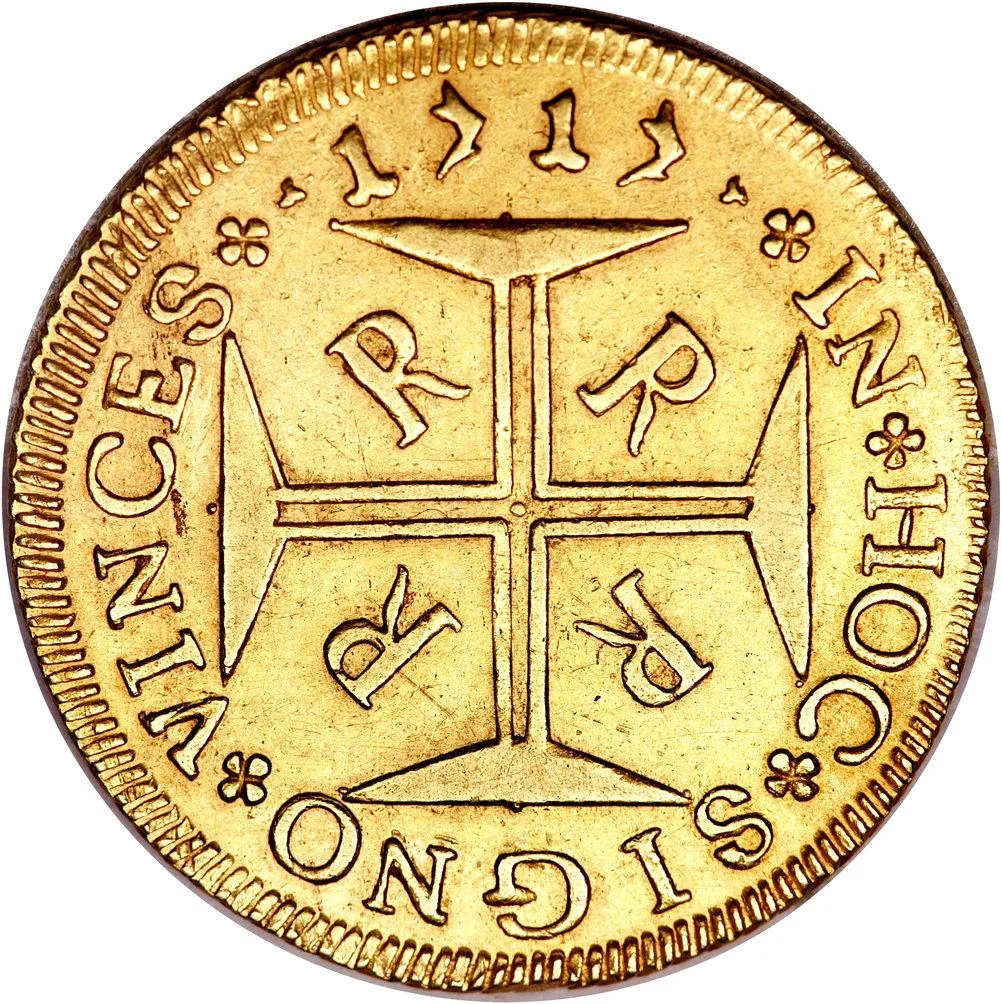
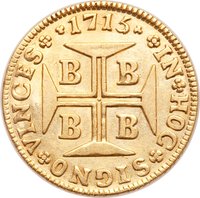
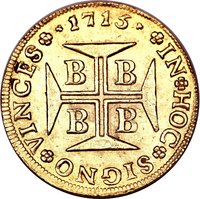
Cross of Christ flanked by four diagonal R's and date.
Inscription:
*1715*
IN HOC SIGNO VINCES
R R R R
IN HOC SIGNO VINCES
R R R R
Script: Latin
Engravers: Antônio Mengin, Bernardo Jorge
Edge
Reeded.
Mints
| Name | Mark |
|---|---|
| Casa da Moeda do Brasil | RRRR |
Mintings
| Year | Mint Mark | Mintage | Quality | Collection |
|---|---|---|---|---|
| 1707 | RRRR | 93,584 | ||
| 1708 | RRRR | — | ||
| 1709 | RRRR | 93,586 | ||
| 1710 | RRRR | 81,612 | ||
| 1711 | RRRR | 34,665 | ||
| 1712 | RRRR | 55,302 | ||
| 1713 | RRRR | 88,331 | ||
| 1714 | RRRR | 383,545 | ||
| 1715 | RRRR | 166,687 | ||
| 1716 | RRRR | 461,261 | ||
| 1717 | RRRR | 427,688 | ||
| 1718 | RRRR | 456,758 | ||
| 1719 | RRRR | 214,072 | ||
| 1720 | RRRR | 293,983 | ||
| 1721 | RRRR | 496,415 | ||
| 1722 | RRRR | 279,062 | ||
| 1723 | RRRR | — | ||
| 1724 | RRRR | 337,011 | ||
| 1725 | RRRR | — | ||
| 1726 | RRRR | — | ||
| 1727 | RRRR | — |
Historical background
In 1707, Brazil was a Portuguese colony operating within a complex and strained monetary system. The official currency was the Portuguese real (plural: réis), but the economy suffered from a severe and chronic shortage of coinage. This scarcity was due to Portugal's mercantilist policies, which drained wealth to the metropole, and the colony's own trade imbalances. To facilitate everyday transactions, a wide variety of foreign coins, particularly Spanish-American pieces of eight, circulated unofficially alongside crudely minted local tokens and even commodity money like sugar in some regions.
The monetary landscape was further complicated by the discovery of gold in Minas Gerais at the end of the 17th century. By 1707, the gold rush was accelerating, but it initially worsened the currency crisis. The gold itself was not yet being efficiently minted into coin within the colony, and the flood of people and goods to the mining region caused rampant inflation and economic dislocation in the coastal areas. Royal authorities struggled to control the flow of gold and collect the royal fifth (o quinto), leading to smuggling and a vast informal economy.
Consequently, the currency situation in 1707 was one of disorder and transition. The Portuguese Crown was attempting to impose order and extract wealth, while colonists and merchants navigated a patchwork of undervalued official coins, overvalued foreign specie, and volatile commodity values. This unstable environment highlighted the growing economic importance of Brazil to Portugal and set the stage for the eventual establishment of colonial mints, the first of which in Rio de Janeiro would begin operations in 1703 but was still working to stabilize the local money supply.
The monetary landscape was further complicated by the discovery of gold in Minas Gerais at the end of the 17th century. By 1707, the gold rush was accelerating, but it initially worsened the currency crisis. The gold itself was not yet being efficiently minted into coin within the colony, and the flood of people and goods to the mining region caused rampant inflation and economic dislocation in the coastal areas. Royal authorities struggled to control the flow of gold and collect the royal fifth (o quinto), leading to smuggling and a vast informal economy.
Consequently, the currency situation in 1707 was one of disorder and transition. The Portuguese Crown was attempting to impose order and extract wealth, while colonists and merchants navigated a patchwork of undervalued official coins, overvalued foreign specie, and volatile commodity values. This unstable environment highlighted the growing economic importance of Brazil to Portugal and set the stage for the eventual establishment of colonial mints, the first of which in Rio de Janeiro would begin operations in 1703 but was still working to stabilize the local money supply.
Series: Serie of Doubloons
💎 Extremely Rare