

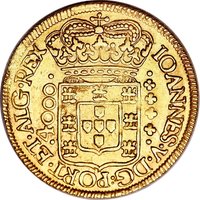
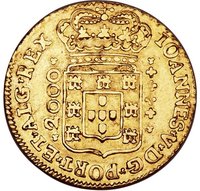
Obverse
Description:
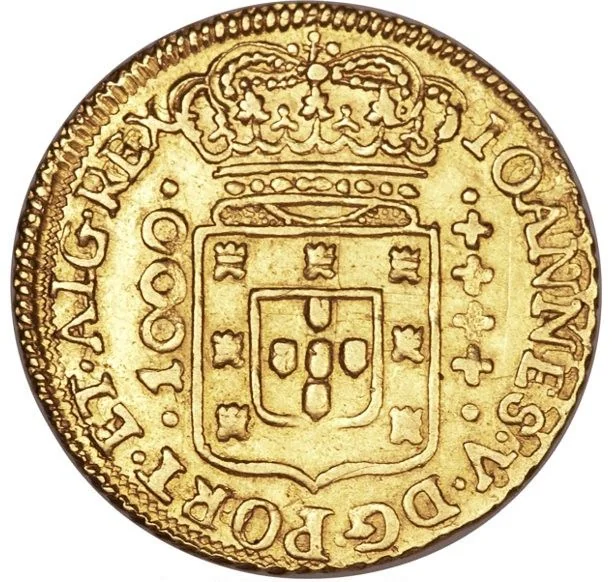
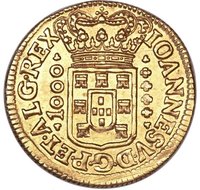
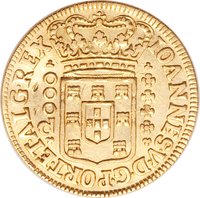
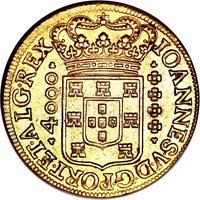
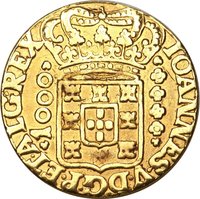
Portuguese arms crowned, flanked by 1000 and four flowers.
Inscription:
IOANNES.V.D.G.P.ET.ALG.REX.
1000
1000
Script: Latin
Engraver: Antônio Mengin
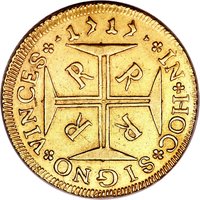
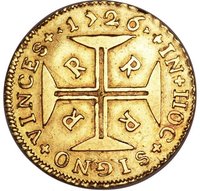
Reverse
Description:
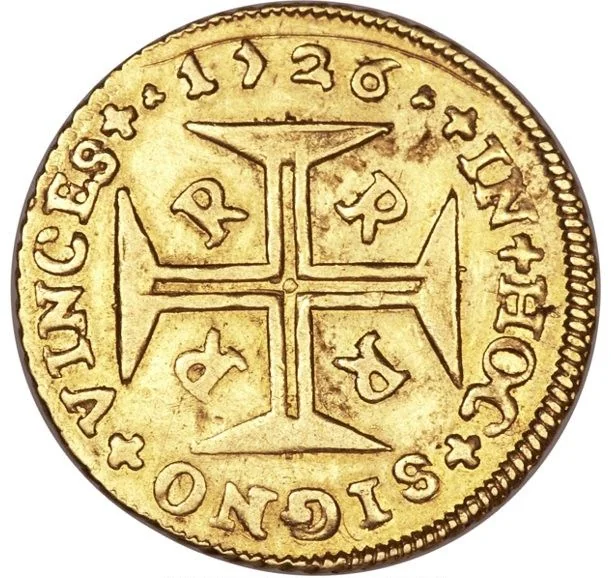
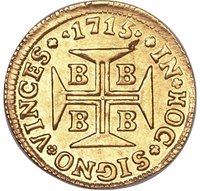
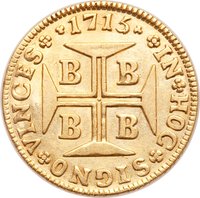
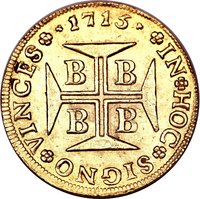
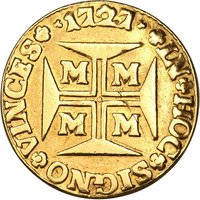
Cross of Christ flanked by four diagonal R's and date.
Inscription:
IN HOC SIGNO VINCES
RRRR
RRRR
Script: Latin
Engraver: Antônio Mengin
Edge
Reeded.
Mints
| Name | Mark |
|---|---|
| Casa da Moeda do Brasil | RRRR |
Historical background
In 1708, Brazil was a Portuguese colony grappling with a severe and chaotic currency crisis rooted in the scarcity of official coinage. The primary circulating medium was the Portuguese real (plural: réis), but the colony suffered from a chronic shortage of minted coins due to Portugal's mercantilist policies, which drained bullion to the metropolis. This scarcity was acutely felt in the mining regions of Minas Gerais, where a gold rush was beginning to transform the colony's economy but lacked the necessary monetary instruments for daily transactions and commerce.
To cope, society relied on a problematic patchwork of alternatives. The most common were crude, locally struck "clipped" coins of silver and gold, often adulterated and of irregular weight. Barter was widespread, with commodities like sugar, tobacco, and even slaves serving as units of exchange. Most significantly, the colony ran on a vast system of credit and debt, recorded in ledgers using the real as a unit of account, but with little physical money actually changing hands. This unstable environment fostered fraud, complicated trade, and led to frequent disputes over the value and authenticity of the few coins in circulation.
The Portuguese Crown, recognizing that the monetary anarchy was hindering tax collection and control over the newfound gold wealth, was on the verge of decisive action. In 1708, the situation reached a tipping point, prompting the establishment of the first official mint in Brazil, the Casa da Moeda do Brasil, in Salvador da Bahia in 1694, to be relocated to Rio de Janeiro in 1708 due to security concerns. Its mission was to standardize the currency, strike gold coins from Brazilian ore, and impose royal authority on the economy. Thus, 1708 represents a pivotal year of transition from a disorderly bazaar of substitutes toward a more regulated, coin-based monetary system under crown control.
To cope, society relied on a problematic patchwork of alternatives. The most common were crude, locally struck "clipped" coins of silver and gold, often adulterated and of irregular weight. Barter was widespread, with commodities like sugar, tobacco, and even slaves serving as units of exchange. Most significantly, the colony ran on a vast system of credit and debt, recorded in ledgers using the real as a unit of account, but with little physical money actually changing hands. This unstable environment fostered fraud, complicated trade, and led to frequent disputes over the value and authenticity of the few coins in circulation.
The Portuguese Crown, recognizing that the monetary anarchy was hindering tax collection and control over the newfound gold wealth, was on the verge of decisive action. In 1708, the situation reached a tipping point, prompting the establishment of the first official mint in Brazil, the Casa da Moeda do Brasil, in Salvador da Bahia in 1694, to be relocated to Rio de Janeiro in 1708 due to security concerns. Its mission was to standardize the currency, strike gold coins from Brazilian ore, and impose royal authority on the economy. Thus, 1708 represents a pivotal year of transition from a disorderly bazaar of substitutes toward a more regulated, coin-based monetary system under crown control.
Series: Serie of Doubloons
✨ Legendary